Founders Unfiltered: Christian Hodges, Founder of the iGaming Roundtable
In this interview, Hodges discusses the realities of entrepreneurship, the importance of protecting trust within a community, the challenges of scaling without compromising quality, and why he believes the industry may be moving towards smaller, more focused events.
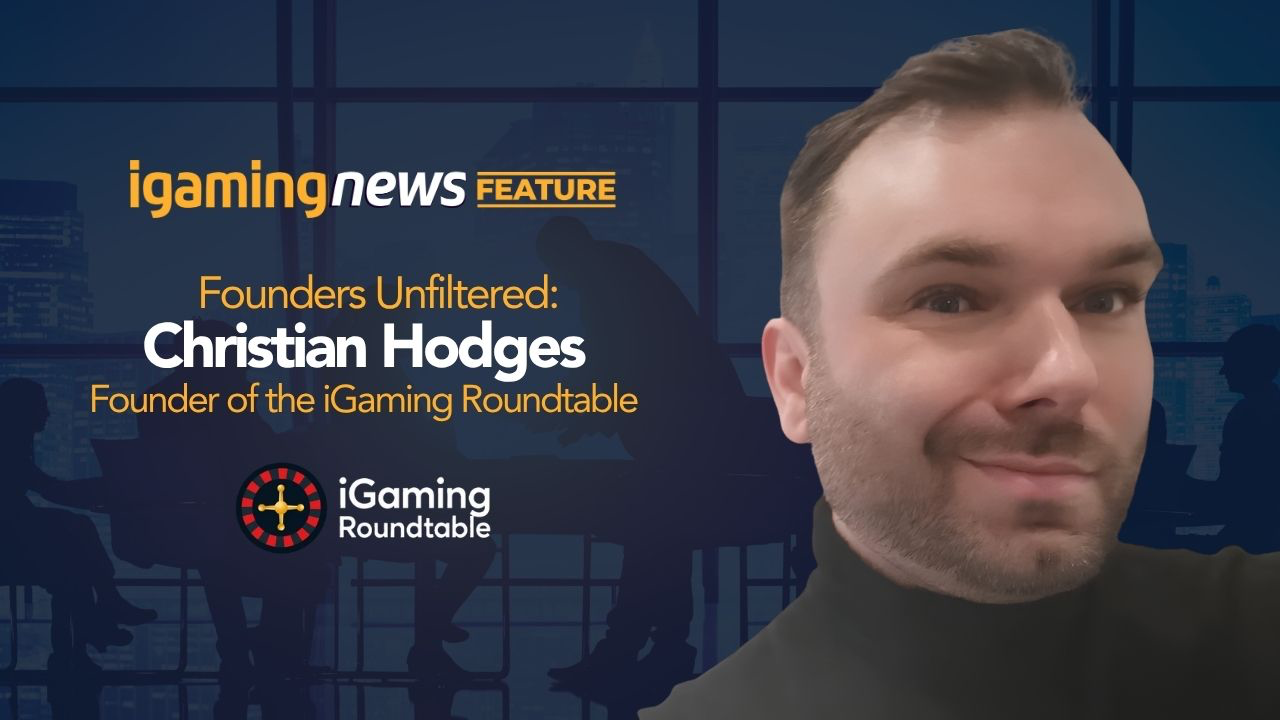
The latest instalment of our "Founders Unfiltered" series features Christian Hodges, Founder of the iGaming Roundtable, a community built around senior-level connections, trust and meaningful relationships across the iGaming industry.
Rather than following the traditional event model, Hodges set out to create something more selective; a community where seniority, credibility and genuine engagement come before scale. From building the iGaming Roundtable, community and launching its Boardroom Series to navigating competition, imitation and the challenges of convincing operators to embrace a different approach, his journey offers a candid look at what it takes to build an independent business in a crowded industry.
In this interview, Hodges discusses the realities of entrepreneurship, the importance of protecting trust within a community, the challenges of scaling without compromising quality, and why he believes the industry may be moving towards smaller, more focused events.
He also shares some straightforward advice for aspiring founders: just start, learn as you go, and build relationships — not simply connections.
1. What was the original idea behind your company, and what convinced you to take the leap and build it?
I wanted to build a community that people actually trusted. Not something built on spam and volume, but something senior level gated from the start. Most of what exists in this industry is built to grow as fast as possible, and trust gets treated as an afterthought. I built iGRT the other way round. Trust and seniority gating were the product, not something bolted on once the numbers looked good.
2. What has been the hardest part of building the business that nobody warned you about?
Imitation. I didn't realize that doing something genuinely innovative would mean being copied so many times. Early on it annoyed me, new WhatsApp groups popping up, formats that looked suspiciously familiar. Now I'm just flattered every time I see it happen. It's confirmation the model works. What it doesn't do is replicate the trust behind it, and that's the part nobody can actually copy.
3. What has been your biggest mistake as a founder, and what did it teach you?
Being too lenient in the groups in the early days. When you're building something quality, that quality gets threatened the moment you're inconsistent with policy. I learned that a strict agenda around what is and isn't acceptable in the community isn't bureaucracy, it's the thing protecting the entire asset. Once I tightened it up, the value of the community actually became visible.
4. Was there ever a point when you seriously questioned whether the business would succeed? What happened?
Yes. Just before the first Boardroom Series event, I was getting pushback on ticket sales and genuinely started to question whether this was going anywhere. That event sold out.
5. What is the biggest lesson you have learned about leadership and building the right team?
Just start. Don't try to perfect anything to begin with. People spend far too long planning and not enough time doing. Make it happen and learn as you go, don't expect perfection from day one, but make sure you actually learn when you get something wrong. My honest advice to anyone sitting in a job they've outgrown is simple. Quit the toxic job and start.
6. What has been your biggest challenge when it comes to growing and scaling the business?
Getting operators to understand what makes us different. The iGaming industry is flooded with events, and unfortunately a lot of it is fake panels and awards that don't mean anything. Cutting through that noise to land a genuine message, that we actually do this differently, has been the real challenge. It's not a supply problem, there's no shortage of events competing for the same room. It's a credibility problem.
7. What do you think the iGaming industry gets wrong about entrepreneurship and innovation?
Speed over trust. The industry has absorbed a lot of startup culture that doesn't actually fit how iGaming works. Founders launch fast, raise loud, and expect operator trust to follow the announcement. It doesn't. Operators don't care how much you've raised or how polished your deck is, they care whether you're going to protect their time and their reputation, and that only gets proven over repeated interactions, not a press release. You can't buy your way into a closed door. Most people coming into this industry from outside don't understand that until they've already burned the goodwill trying to move faster than trust actually allows.
That's the piece I'd want the industry to sit with. Everyone treats innovation as a speed problem. In iGaming it's a trust problem, and trust has its own timeline that no amount of capital or ambition shortens.
8. Which current iGaming trend do you believe is genuinely transformative, and which is being overhyped?
Smaller, boutique events are the genuinely transformative shift. The big expos are expensive to attend and expensive to sponsor, and we've seen huge demand from senior operator contacts who want direct, meaningful connection rather than another badge in a crowd of thousands.
That demand isn't a passing trend, it's a correction against a format that stopped serving the people it was supposed to serve.
9. What has founding a company cost you personally, beyond money?
Honestly, nothing. Building my own company was always the life dream. People expect a founder to answer this with a list of sacrifices, but for me this is the thing I always wanted to build. That's not a dodge, it's the truth.
10. If you could go back to day one, what would you tell yourself, and what would you do differently?
Build relationships. Build relationships. Build relationships. It's not just about who you know, it's how well you actually know them. Being connected with people is one thing, having a real relationship with them is the thing that matters. That's the advice I'd give anyone starting out, and it's the one thing I'd tell myself to take more seriously from day one.