Founders Unfiltered: David Natroshvili, Founder & CEO of SPRIBE
The interview covers the challenges of scaling a fast-growing business, learning to let go as a founder, building teams that challenge conventional thinking and why simplicity can sometimes be the most powerful form of innovation.
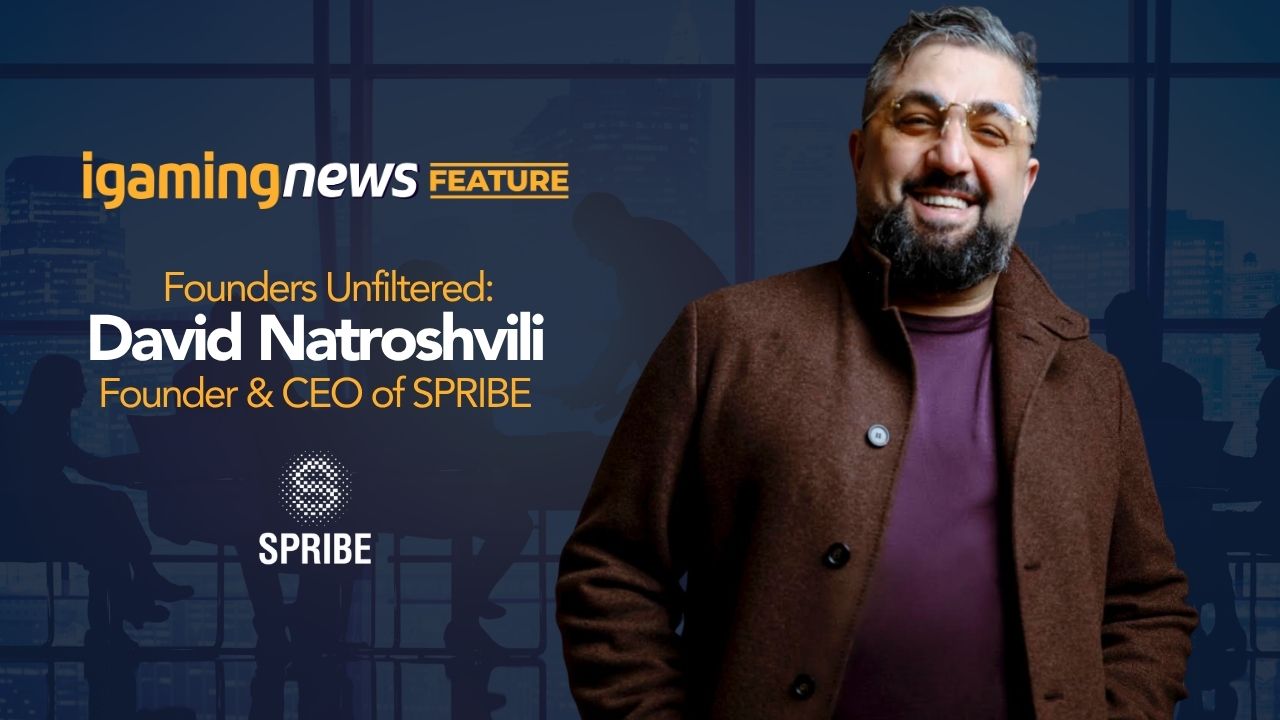
Welcome to the Founders Unfiltered, a new iGaming News series where we go behind the brands to hear directly from the founders shaping the industry. Across the series, we’ll speak to entrepreneurs from across the iGaming ecosystem about the realities of building a business — from the original idea and taking the leap, to navigating failure, scaling teams and staying ahead in a rapidly evolving market.
For our first interview, we speak with David Natroshvili, Founder & CEO of SPRIBE, the company behind the hugely influential Aviator game. From challenging established ideas about online casino gaming to building a product that helped create an entirely new category, this conversation explores the thinking, risks and lessons behind SPRIBE’s journey.
The interview covers the challenges of scaling a fast-growing business, learning to let go as a founder, building teams that challenge conventional thinking and why simplicity can sometimes be the most powerful form of innovation.
Here, SPRIBE’s founder opens up about the decisions, setbacks and lessons that have shaped the company and what it really takes to build a business capable of lasting beyond its first big success.
1. What was the original idea behind your company, and what convinced you to take the leap and build it?
The original idea behind SPRIBE was actually quite simple: online casino had become too predictable.
When we started, the industry was dominated by traditional slots and table games, while the way people consumed entertainment outside gambling was changing dramatically. Everything was becoming faster, more interactive and more social. We felt there was a disconnect.
We believed there was space for a completely different type of gaming experience — something simple enough to understand immediately but engaging because players were part of a shared experience.
That thinking eventually led to Aviator. At the time, there was no guarantee players or operators would embrace something so different. But that was also the reason to do it. If the idea had felt completely safe, somebody would probably already have built it.
2. What has been the hardest part of building the business that nobody warned you about?
Success creates its own problems.
In the beginning, your challenge is survival. You need to build something people want, convince partners to believe in it and establish yourself in the market. Once you start growing quickly, the challenge changes completely.
Suddenly, you have more people, more markets, more partners and more decisions being made every day. The processes that worked when you were a small team stop working.
Nobody really warns you how difficult it is to professionalise a company without destroying the speed and mentality that made it successful in the first place.
For me, that has been one of the hardest parts of scaling SPRIBE: introducing structure without introducing unnecessary bureaucracy.
3. What has been your biggest mistake as a founder, and what did it teach you?
One mistake was believing for too long that being involved in more decisions meant having more control over the quality of the business.
It doesn’t.
As a founder, particularly in the early years, you become accustomed to knowing everything that is happening. That works when the company is small. At scale, it becomes a limitation — for you and for everyone around you.
I had to learn to trust strong people with genuinely important decisions rather than simply delegate execution.
There is a big difference between delegation and ownership. If you hire talented people but still require every meaningful decision to come back to you, you haven’t really empowered them.
4. Was there ever a point when you seriously questioned whether the business would succeed? What happened?
Of course. I think any founder who says otherwise either has a very selective memory or has been incredibly lucky.
There were moments early on when we had built something we believed in but didn’t yet have evidence that the market would agree.
Aviator was not an obvious product at the time. Today, crash games are an established category, but you have to remember that we were asking operators and players to embrace something fundamentally different from the casino experiences they already understood.
The turning point wasn’t one huge moment. It was seeing the same behaviour repeat across different partners and markets. Players understood the game immediately, they returned to it, and importantly, they interacted with each other around it.
That’s when we realised we weren’t just seeing temporary curiosity. We had created something with the potential to become a category-defining product.
5. What is the biggest lesson you have learned about leadership and building the right team?
Hire people who can challenge you.
Founders naturally have strong opinions. You have to — otherwise you probably wouldn’t start a company. But as the business grows, conviction can become dangerous if everyone around you simply agrees with you.
I don’t want senior people at SPRIBE whose job is to confirm what I already think. I want people who understand their area better than I do and are comfortable telling me when they think I’m wrong.
The other lesson is that culture is defined much more by behaviour than by statements on a wall. People watch which decisions get rewarded, what standards leaders accept and how the company behaves when something goes wrong. That becomes your real culture.
6. What has been your biggest challenge when it comes to growing and scaling the business?
Maintaining quality while moving quickly.
Growth creates constant pressure to do more: enter another market, integrate another operator, launch another product, hire another team. The temptation is to treat growth itself as evidence that you are succeeding.
But uncontrolled growth can weaken a company very quickly.
For SPRIBE, the challenge has been making sure the organisation, technology and people scale alongside the commercial opportunity.
Aviator’s growth also created another challenge: how do you build a company around a phenomenal flagship product without allowing the company to become dependent on one success?
That question has influenced a lot of our thinking about product development and the long-term direction of SPRIBE.
7. What do you think the iGaming industry gets wrong about entrepreneurship and innovation?
The industry sometimes confuses innovation with adding more things.
More features, more mechanics, more content, more technology — none of those automatically make a product innovative.
Some of the strongest innovations are actually about removing complexity.
Aviator is a good example. The core concept is extremely simple. You don’t need a long tutorial to understand what is happening. The innovation came from the experience around that simplicity: the pace, multiplayer environment and social interaction.
I also think companies talk too much about being “first.” Being first is irrelevant if nobody cares about what you’ve created. Entrepreneurship isn’t about producing the most unusual idea. It’s about recognising a change in behaviour or an unmet need and building something people genuinely want.
8. Which current iGaming trend do you believe is genuinely transformative, and which is being overhyped?
The shift towards interactive, social and entertainment-led gaming is genuinely transformative.
Younger audiences have grown up with multiplayer games, streaming, social platforms and instant digital interaction. They don’t necessarily want gambling to be a completely isolated experience. That behavioural change is much bigger than any individual game mechanic.
It’s one of the reasons we believe so strongly in the evolution of Aviator and experiences such as Aviator Live.
AI, meanwhile, is both transformative and overhyped.
It will fundamentally change areas such as analytics, personalisation, fraud detection, customer support and internal operations. But simply putting “AI” into a product description doesn’t make the product better. Right now, there is a lot of technology looking for a problem instead of a real problem being solved with technology.
9. What has founding a company cost you personally - beyond money?
Time, mainly.
When you build a company, particularly one that grows quickly, it is very difficult to switch it off mentally. Even when you’re technically not working, some part of your mind is usually thinking about a problem, a decision or what comes next.
There are periods where the company inevitably takes time from relationships, friends, family and yourself.
There is also a psychological cost to responsibility that isn’t discussed enough. As the company grows, decisions affect hundreds of employees, partners and many more people indirectly. You become very conscious of that.
I’ve had to learn that being permanently available doesn’t necessarily make you a better founder. Sometimes the opposite is true. You need enough distance to think clearly.
10. If you could go back to day one, what would you tell yourself - and what would you do differently?
I would tell myself that almost everything will take longer than you expect — except success, which can arrive much faster than you’re prepared for.
I would probably invest earlier in people, structure and systems capable of supporting scale. When you’re starting a company, it feels inefficient to build for problems you don’t have yet. But once rapid growth begins, you’re suddenly trying to rebuild parts of the organisation while running at full speed.
At the same time, I wouldn’t remove the mistakes. Many of the decisions I would make differently today are obvious only because we made the wrong ones first.
The biggest thing I would tell myself is not to become comfortable.
The moment you start believing that yesterday’s success guarantees tomorrow’s relevance is probably the moment someone else starts building what comes next.