Founders Unfiltered: Avanti Studios’ Jonas Delin on Rethinking Live Casino and Taking the Leap Again
In this edition of Founders Unfiltered, Delin discusses the conviction behind Avanti’s digital dealers, the technical setbacks that tested his confidence and why explaining a new product category can be as demanding as building it.
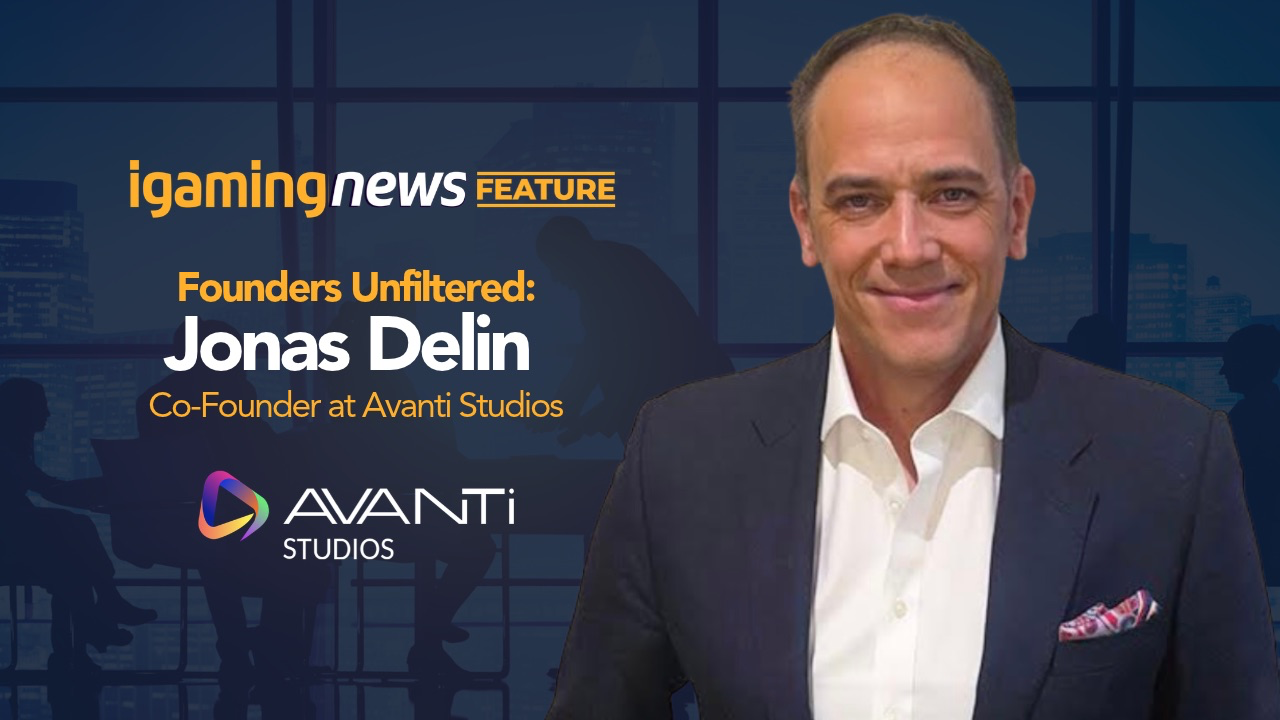
Having founded Authentic Gaming and previously worked at LeoVegas, Jonas Delin was no stranger to building businesses in iGaming. But co-founding Avanti Studios meant taking on a different challenge: questioning the physical studio model underpinning live casino and bringing together video game technology, motion capture and regulated gambling.
In this edition of Founders Unfiltered, Delin discusses the conviction behind Avanti’s digital dealers, the technical setbacks that tested his confidence and why explaining a new product category can be as demanding as building it. He also reflects on recruiting beyond iGaming, navigating certification timelines and the personal cost of starting again — including the questions that keep even experienced founders awake at 3am.
1. What was the original idea behind your company, and what convinced you to take the leap and build it?
I felt quite strongly that the traditional live casino model had hit a ceiling. Delivering real-time, high-quality streams requires massive physical studios, huge workforces, and astronomical operational overheads.
Expanding into localised markets meant hiring native-speaking dealers for every language and setting up regional physical footprints.
The idea behind Avanti was to provide a solution for all of these issues. We build lifelike digital live dealers and virtual environments by combining AAA video game technology, specifically Unreal Engine and motion-capture tech, with high-grade RNG and real-time streaming.
This provides absolute scalability, infinite table expansion, zero human error, and cuts studio overhead by up to 60% without losing the human feel of a live croupier.
Having previously worked for established, successful companies such as LeoVegas and having founded Authentic Gaming, co-founding Avanti was another big move for me, perhaps bigger than ever before.
But my absolute faith in our technology made taking the leap an easy choice.
2. What has been the hardest part of building the business that nobody warned you about?
Bridging two vastly different industries: top-tier AAA game development and regulated iGaming compliance.
Merging motion-capture technology, cloud rendering, and complex game engines with strict regional gambling frameworks, like GLI certifications or local RNG regulations, requires building tech from scratch.
Educating regulators, partners, and operators that a digital-dealer product is provably fair and legally distinct from traditional video stream setups took immense patience.
3. What has been your biggest mistake as a founder, and what did it teach you?
Assuming the market would immediately understand that "digital dealers" aren't cheap 3D avatars or basic video slots.
We didn't communicate clearly, or early enough, how our technology captures the nuance, authority, and presence of elite Mayfair land-based croupiers via motion-capture suits.
It taught us that when introducing a disruptive, hybrid category, messaging and proof-of-concept are just as critical as the underlying codebase.
4. Was there ever a point when you seriously questioned whether the business would succeed? What happened?
I admit I did have doubts when we were testing early rendering models through cloud streaming protocols on mobile devices.
The latency was initially too high, and streaming high-fidelity 3D environments in real time strained lower-end smartphones.
Live casino lives or dies on instantaneous responsiveness. We had to go back to the drawing board and build our own light, proprietary cloud-based streaming protocol.
The day that protocol ran silky smooth at sub-second latency on a mid-range phone in low-bandwidth conditions, we knew we had a real product.
5. What is the biggest lesson you have learned about leadership and building the right team?
Do not build a team exclusively from within the iGaming bubble.
To make a real leap in software, you need specialists who have solved these problems in other industries.
Our engineering core includes talent from AAA game development studios, motion capture artists, and cloud infrastructure engineers working alongside veteran iGaming compliance and product experts.
Alignment around a shared vision matters far more than identical background experience.
6. What has been your biggest challenge when it comes to growing and scaling the business?
Managing the sheer speed of demand versus regulatory rollout timelines.
Operators love the commercial pitch: infinite localised tables with no monthly fixed costs or setup fees.
However, entering key target markets like Spain, Ontario, or the UK requires individual local adaptations, testing, and distribution partner alignment.
Maintaining patience while ensuring we launch flawlessly in each jurisdiction is a continuous balance.
7. What do you think the iGaming industry gets wrong about entrepreneurship and innovation?
The industry often mistakes incremental tweaks for true innovation. Adding a new side bet or rebranding a video slot gets labelled as "disruption".
True innovation requires rethinking underlying cost structures, distribution models, and hardware dependencies.
Many founders also overcomplicate things with trend-chasing, like fully autonomous AI avatars before the technology is actually ready, instead of focusing on what delivers immediate, rock-solid value to operators and players today.
8. Which current iGaming trend do you believe is genuinely transformative, and which is being overhyped?
The convergence of AAA video game engines (like Unreal Engine) with RNG and cloud gaming protocols is pretty transformative. It unlocks infinite scale while providing deep localisation and hyper-customisation for operators.
I’d say that generative, fully autonomous AI conversational croupiers are overhyped. The tech simply isn't at the trust, latency, or regulatory safety level required for high-stakes gambling.
Players want fast, flawless, authentic action, not a chatbot hallucinating card values.
9. What has founding a company cost you personally — beyond money?
Time and mental bandwidth.
Even as an experienced founder who previously built scale operations, starting a new disruptive venture means waking up at 3am thinking and questioning yourself about everything you’re doing.
Passion is not enough; you need to be obsessed with what you are doing.
10. If you could go back to day one, what would you tell yourself — and what would you do differently?
I'd tell myself: "Trust the core technology thesis, but double your timeline estimates for a go-to-market, certified product."
As for what I'd do differently, I would have engaged key compliance bodies and testing labs even earlier in the engine-development process to shorten our initial route-to-market cycle.
Having said that, I’m incredibly proud of what Avanti has built, and our product is fast becoming a success, so what we did must have been mostly right.