Founders Unfiltered: PlayAIO’s Josh Gibbs on Earning Belief Before You Have Proof
In this edition of Founders Unfiltered, Josh tells iGaming News what it took to win his first client, why he had to rethink a product that drew interest but failed to sell, and what founding a business cost him personally.
Listen to this article
British female voice
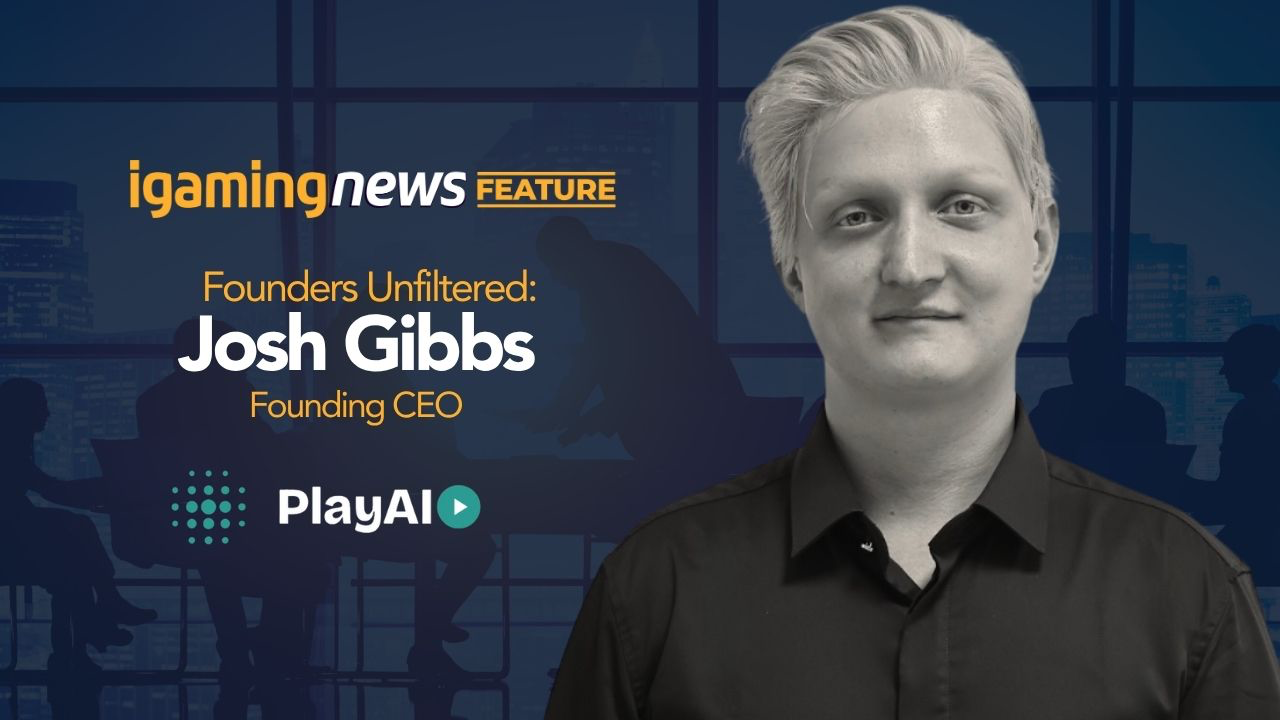
As head of data at a player account management platform, Josh kept hearing the same pitch from AI suppliers. A tool had delivered an uplift for one operator, so it could do the same for his. But knowing what the data looked like behind the scenes, he struggled to see where that uplift would come from. Conversations with around ten industry decision-makers confirmed that others shared his doubts. That experience led him to found PlayAIO.
In this edition of Founders Unfiltered, Josh tells iGaming News what it took to win his first client, why he had to rethink a product that drew interest but failed to sell, and what founding a business cost him personally. He also explains where he sees real value in AI for iGaming, from giving operators more freedom to build distinctive front ends to measuring success through player retention and operating costs.
1. What was the original idea behind your company, and what convinced you to take the leap and build it?
The idea came from the problems I kept running into at PAMs and sportsbooks. Third parties kept pushing solutions built on a generic hype cycle: "this worked for one company and delivered this uplift." That might be true, but it says nothing about your business or your operation. It assumes all operators and all markets are similar, and we all know they aren't.
I was Head of Data at a PAM, and I kept sitting through pitches from AI companies, knowing full well what the data behind the scenes looked like and thinking "that's not right, this isn't applicable." The moment it tipped was when the price came through. I asked myself what the honest uplift would be, and the answer was probably nothing.
I didn't want to rely on my own view, so we spoke to around ten decision makers in the market, including heads of data, CROs and CEOs, to check whether the problem was real. It was. Many felt the same but felt they had no options, and they were gambling on third parties and hoping. I had a very supportive partner, so I didn't have to justify the decision at home. I saw the problem and went headfirst into the solution. That's what PlayAIO was founded on: removing the guesswork. Understand your own data and what it indicates, and the next steps become simple and actionable.
2. What has been the hardest part of building the business that nobody warned you about?
Selling someone on a half-baked product. With your first client, you're selling a vision and an untested product, and it always takes far longer to get that vision across than you expect. Everyone tells you building a business takes time, but they don't tell you that the slowest part is earning belief before you have proof.
After that comes the work around the product: contracts, legal, integration, compliance and finance all take a huge amount of time to build processes around. As a fresh-faced founder, you think everything is easy because of AI or a tool, and then reality kicks in. And most startups do fail, however good the idea. To succeed, you pick yourself up and go again.
3. What has been your biggest mistake as a founder, and what did it teach you?
Undervaluing the insights from my pipeline and the people around me. About a year and a half ago we built a product and focused the whole business on it. The interest was there, but the sales weren't. It's incredibly easy as a founder to put your head in the sand and convince yourself it will work.
The lesson is that you have to pivot, no matter how much you've sold yourself on the idea. Even if clients say they like the concept, find another way to apply it. That's what we did: the product became the structure of our market intelligence portal, which combines external and internal reporting into single metrics to focus on. That's what an experienced founder knows: if it isn't working, change it. As a first-time founder, you end up selling yourself on the product.
4. Was there ever a point when you seriously questioned whether the business would succeed? What happened?
You wouldn't be a founder if there weren't weeks or months when you question why you're doing this. I can't speak for every founder, but in those periods you wake up, check your emails and LinkedIn, and see another competitor, or another prospect you were pitching who just hasn't replied.
There wasn't one specific moment, but a collection of periods like that. What got me through was talking to others and reminding myself why I started this in the first place.
5. What is the biggest lesson you have learned about leadership and building the right team?
Don't build a team of yes people. As a founder, you're so laser-focused on the problem, the client and the solution that you sometimes forget the details. You hire people to give you a clearer picture, and in my experience, most of the time when my team challenges me, it's for the right reasons.
In the early phase you need people who will do that, and they don't always come from large Tier 1 operators. They come from everywhere, but startup people are different. They tend to be generalists who want to get stuck in whether or not they know the answer. The larger the organisation, the more specialists it creates and the more people need structure and process. Every meeting is a challenge, with new ideas and new ways the platform could break. These are the people who drive innovation. AI is very good at replicating, but not the best at innovating.
6. What has been your biggest challenge when it comes to growing and scaling the business?
Remembering that you have a bottom line. Cash flow and payment terms matter far more in the early phases than you think. It's a boring answer, but it matters more than people give it credit for.
When you're growing, or giving the illusion of growth, you need to know your numbers. Are you bankrolling the business on investor or your own funds, or growing it through client revenue? One is sustainable and the other isn't, and the unsustainable one only becomes obvious when it blows up. Think of suppliers at a conference: one year they have a £250,000 stand, the next two salespeople walking the floor.
Sometimes it's better to show progress through true client revenue than growth funded only by investors. The days of easy VC money are gone, so treat every expense as your own. The bigger you go, the bigger you need to go next time to show growth.
7. What do you think the iGaming industry gets wrong about entrepreneurship and innovation?
iGaming often thinks there's no real innovation or entrepreneurship in the industry, but people who think that aren't looking hard enough. The ones truly innovating rarely get the coverage they deserve. Tier 1 operators won't take a chance on a smaller business because of risk and compliance. But look at the products on the edge of SBC and you'll see the innovation. More than ever, people are leaving large organisations because they understand a real problem at scale.
8. Which current iGaming trend do you believe is genuinely transformative, and which is being overhyped?
Both of my answers come under the AI banner.
The transformative one is AI-powered front-end builders. Front-end differentiation was always a huge cost and took a whole team to build. Now it's finally possible to differentiate without that overhead, which frees the team up to innovate and experiment far more.
The overhyped one is chatbots. I understand the commercials behind them, but communication with the player is the only way to build real affinity with a product, and you're replacing that with a robot. However good they get, they'll keep optimising for efficiency rather than the relationship.
My test for whether an AI product is real is whether it shows longer-term growth, with retention rising while operational costs fall. Many people now judge success on a single metric. In gaming, if you cut costs and hold retention, that's an actionable result. Without a real problem and a plan, AI just becomes another sunk cost.
9. What has founding a company cost you personally, beyond money?
It has cost me friends, relationships and partnerships. Founding a business is different to anything I've done. There's a quote from Elon Musk that being a founder is like "eating glass and staring into the abyss". It's a horrible mindset, but it's true. We keep pushing because we have a slightly unhealthy belief that this will change the industry, and, if I'm honest, a subconscious desire to be known for doing it.
Founding a business isn't for people who just want money or to be their own boss. They'll fail. It's for people who truly want to make change. It isn't fun, but your passion and belief are what drive you forward, day in and day out.
10. If you could go back to day one, what would you tell yourself, and what would you do differently?
Stop feeling that you don't belong. In the early days I felt like a fake: I had a company, but I hadn't sold myself on it yet. You don't need a job title to belong in those rooms, you've already earned your chance to be there.
If I started again, I'd focus less on the product alone and more on selling myself, and the people around me, on why we're doing this together. That belief is what keeps you going through the 18-hour days. Confidence in yourself is different from loyalty to the product. Be ruthless about the product, as I learnt the hard way, but never doubt that you belong. Mistakes will happen and you learn from all of them. Keep going.
Stay ahead of iGaming
Get the week's key stories, industry insight and exclusive interviews in your inbox.
One email a week. Unsubscribe any time. More about our newsletter