Founders Unfiltered: BETON’s Roman Balashov On Why Speed Without Structure Is Borrowed Time
BETON CEO and Owner Roman Balashov speaks to iGaming News about scaling a product-led business, building effective teams, the role of AI and why technology alone is no longer enough.
Building a successful iGaming business requires more than technology. Leadership, structure and the ability to adapt become increasingly important as companies move from their early stages into periods of sustained growth.
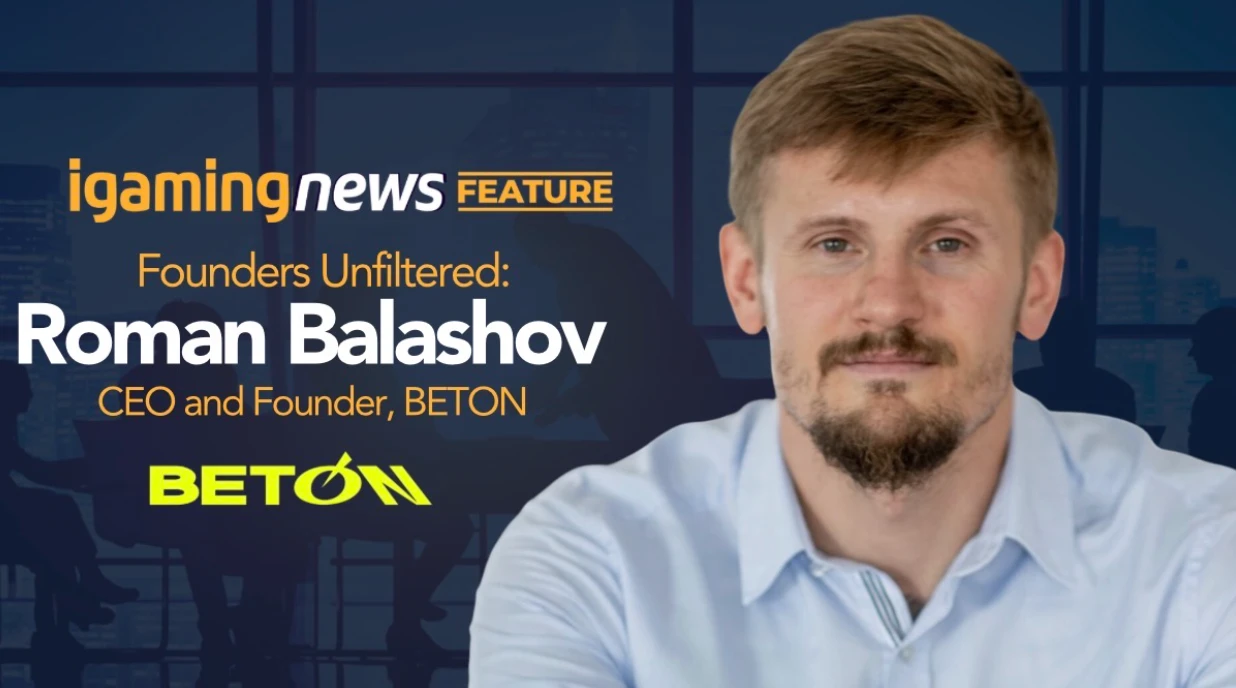
In the latest edition of Founders Unfiltered, iGaming News speaks with Roman Balashov, CEO and Owner of CITYCODE LLC, which operates the BETON brand, about the realities of building and scaling a product-led business in an increasingly competitive industry.
From moving beyond a service mindset and introducing greater structure to navigating difficult decisions and developing a team capable of supporting long-term growth, Balashov discusses the lessons that have shaped his approach as a founder.
He also explains why artificial intelligence could transform the user experience, why technology alone is becoming less effective as a differentiator and why trust, consistency and long-term partnerships remain central to BETON’s strategy.
1. What Was The Original Idea Behind Your Company, And What Convinced You To Take The Leap And Build It?
“When we launched BETON, we already had a ready-made technical solution, which is not typical in our market. The real question was whether we could build a product company around it.
“What convinced me was the understanding that technology on its own would not stay a differentiator for long. What would matter in the long run was how the product treats people and how quickly the team can learn and adapt. That is what we decided to build.”
2. What Has Been The Hardest Part Of Building The Business That Nobody Warned You About?
“The shift from a service mindset to a product mindset. It changes everything: how you plan, whom you hire, how you measure success.
“The second thing is that growth exposes every weak process. What works for a team of twenty breaks at a hundred. Nobody tells you that scaling is mostly about discipline.”
3. What Has Been Your Biggest Mistake As A Founder, And What Did It Teach You?
“In the early days, we relied too long on individual effort instead of building systems. It felt fast, but it did not scale.
“When the team grew, the same people who carried the company on their shoulders became a bottleneck. The lesson for me was simple: speed without structure is borrowed time.
“Today, we build the process first, then accelerate.”
4. Was There Ever A Point When You Seriously Questioned Whether The Business Would Succeed? What Happened?
“Every founder has moments of doubt. For me, they came at decision points, when we had to choose between growing fast and growing well.
“In those moments, I focused on what we could control: the quality of the product, the team, and long-term partnerships. That focus helped us move forward without losing direction.”
5. What Is The Biggest Lesson You Have Learned About Leadership And Building The Right Team?
“Hire people who are stronger than you in their area and give them real ownership.
“A team’s maturity shows in how it handles bad news: quickly, openly, and without looking for someone to blame.
“And culture is not what you say during onboarding. It is what you accept on an ordinary working day.”
6. What Has Been Your Biggest Challenge When It Comes To Growing And Scaling The Business?
“Keeping control as the team grows. For me, growth always means more discipline.
“We had to turn startup energy into systems: clear roles, measurable goals, regular reviews.
“The same applies to partnerships. We measure them in years and prefer long-term relationships with sports clubs and other partners over short-term visibility.”
7. Which Current iGaming Trend Do You Believe Is Genuinely Transformative, And Which Is Being Overhyped?
“Transformative: AI inside the product, from personalization to tools that protect the user, such as limits and time-outs.
“We see that users actively opt for time-outs — what we call cool-offs — and this builds long-term trust.
“Overhyped: the idea that technology alone is a competitive advantage. Fast verification was a differentiator a few years ago. Today it is the baseline.
“What really makes a difference now is trust and how you treat people.”
8. If You Could Go Back To Day One, What Would You Tell Yourself — And What Would You Do Differently?
“I would tell myself to build systems earlier and to invest in the team before it feels necessary.
“I would also say: think in years, not quarters, about partners, brand, and people.
“Trust is built slowly and only through consistency, so be patient with it.”