Brazil Betting Ban Faces Supreme Court Scrutiny As Industry Challenges Government Secrecy
Brazil's gambling industry has urged the Supreme Federal Court to restore the regulated betting market amid growing questions over the government's decision to restrict access to documents supporting its nationwide ban.
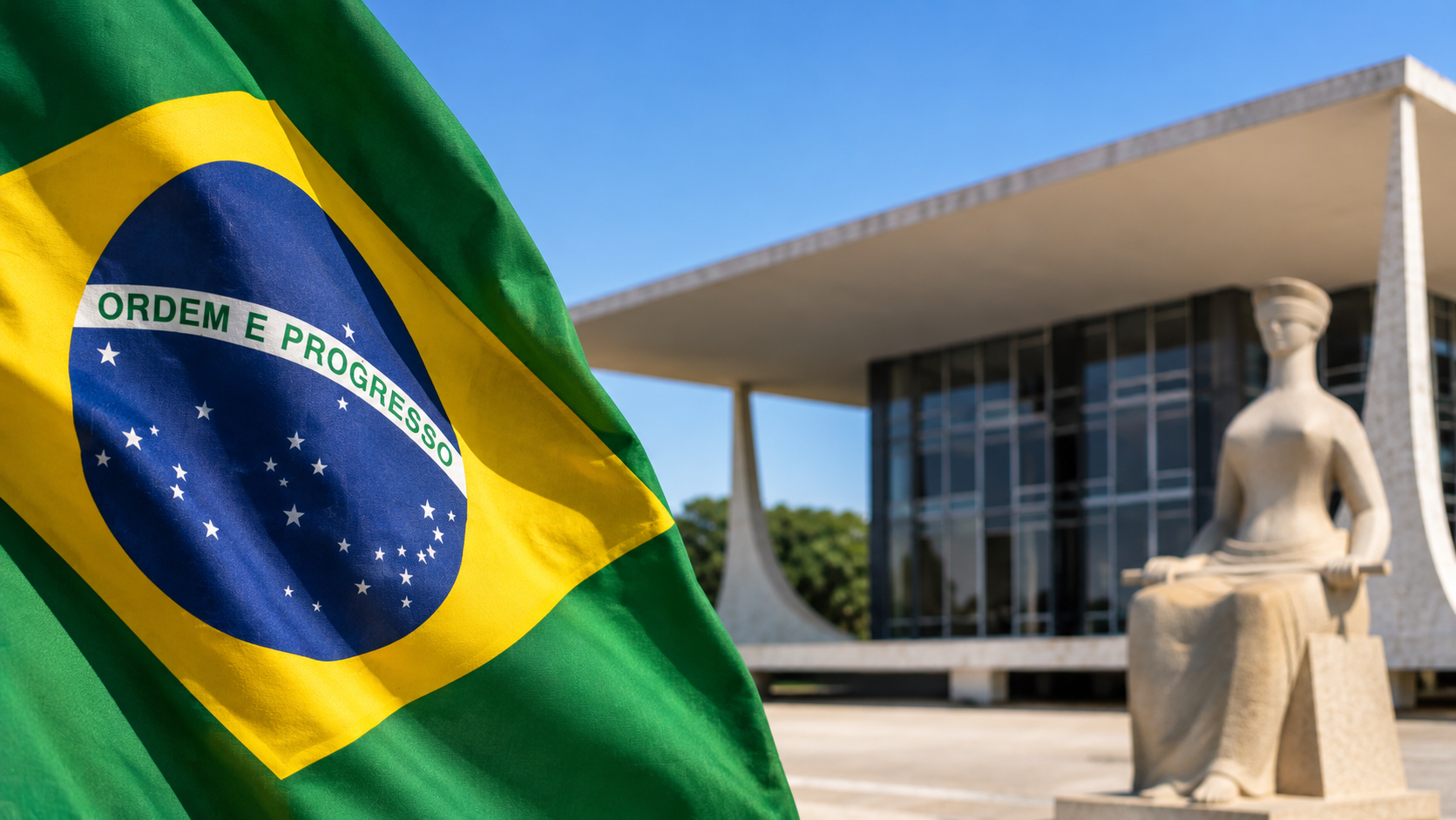
Brazil's Supreme Federal Court (STF) has heard competing arguments over the government's nationwide betting ban, with licensed operators, football clubs and industry associations calling for the restoration of regulated gambling while federal authorities defended the prohibition on public health and consumer protection grounds.
The hearing, held on 3 November and overseen by Justice Luiz Fux, brought together 34 organisations to examine Provisional Measure 1.394, introduced by President Luiz Inácio Lula da Silva in September. The measure effectively shut down Brazil's regulated betting market and is now facing constitutional challenges from industry bodies seeking to suspend its implementation.
The dispute has intensified following revelations that the government restricted access to documents used to prepare the prohibition for five years. Separate disclosures have also raised questions about whether economic, fiscal and regulatory impact assessments were conducted before the measure was introduced.
Government Defends Ban As Necessary Consumer Protection Measure
Representatives from Brazil's Ministries of Justice, Health and Finance, alongside the Attorney General's Office (AGU), defended the prohibition during the Supreme Court hearing. They argued that the regulated betting framework had failed to provide adequate protection against gambling-related financial difficulties, addiction and wider social harm.
Justice Minister Wellington César Lima e Silva described betting platforms as an “architecture of unspeakable dependency”, maintaining that government intervention was both relevant and urgent. AGU head Jorge Messias also defended the decision, arguing that the existence of a licensing framework did not necessarily demonstrate that it had achieved sufficient consumer protection.
“Recognising this effort does not oblige us to close our eyes to its limitations,” Messias said, acknowledging the work undertaken by licensed operators. “Reviewing a policy in light of its results is the responsibility of the State.”
Messias argued that the previous framework had become “materially unconstitutional due to insufficient protection of constitutionally protected assets”, presenting the prohibition as a response to shortcomings in the government's earlier regulatory approach.
Industry representatives challenged that interpretation, warning that eliminating licensed gambling could redirect consumers towards illegal platforms operating beyond Brazilian regulatory oversight. The Brazilian Institute for Responsible Gaming (IBJR) requested an injunction suspending the measure until Congress reaches a decision or the Supreme Court determines its constitutionality.
Celso Mori, representing the IBJR, emphasised that Brazil's decision to regulate betting followed years of legislative debate rather than an abrupt policy change.
“The country, through its Congress, opted for regulated gambling,” Mori said. “But it didn't happen overnight. It was after years of legislative processes.”
He questioned the consequences of reversing that decision, warning that prohibition could encourage clandestine gambling rather than eliminate demand.
Football Clubs And Researchers Call For Stronger Safeguards
Several Brazilian football organisations supported maintaining a regulated market with additional protections. Flamengo argued that stricter oversight would provide a more effective response than prohibition, while Corinthians offered to participate in campaigns addressing gambling addiction and illegal betting operators.
The Brazilian Paralympic Committee also advocated stronger consumer protection measures, including betting limits, age restrictions and greater responsibility for operators to identify potentially harmful gambling behaviour.
Researchers from the Economic Regulation Laboratory at Rio de Janeiro State University (UERJ) presented eight proposed safeguards that could accompany the reopening of the regulated market. Their recommendations included prohibiting credit-funded betting transactions, introducing betting limits linked to individual taxpayer identification numbers and strengthening checks on customer eligibility.
The proposals also covered improvements to self-exclusion systems, auditable regulatory records, advertising restrictions, mandatory funding for gambling treatment and prevention through Brazil's public health system, and a defined catalogue of permitted betting products.
UERJ representative Marcello Trindade Paulo suggested that any transition should include measurable regulatory milestones, taking account of existing contracts, employment and supervisory arrangements. The university proposed assessment periods of 180 and 360 days if the prohibition remains in place, while arguing that reopening should be conditional on implementing stronger safeguards.
The hearing also examined the financial consequences for businesses that had paid BRL30 million for five-year betting authorisations before the government abruptly changed its position. Industry representatives questioned the decision to prohibit refunds and impose immediate restrictions on gambling advertising after operators had invested under the previous regulatory framework.
Five-Year Secrecy Order Raises Questions Over Evidence Behind Ban
Alongside the constitutional proceedings, the government is facing scrutiny over its decision to classify documents associated with the drafting of Provisional Measure 1.394.
The restriction was authorised on 24 September by Victor Oliveira Fernandes, Secretary for Digital Rights at the Ministry of Justice and Public Security. It covers documents used to prepare the measure and prevents public access for five years, with the ministry citing potential risks to public safety, health and Brazil's financial and economic stability.
The classification became publicly known more than a month after the ban was introduced, by which time industry associations had already launched legal challenges. The presidency's Chief of Staff's Office has separately withheld legal opinions relating to the measure, citing attorney-client privilege.
Questions have also emerged over the existence of supporting impact assessments. In a memorandum submitted to the Supreme Court on 24 October, industry organisations ABRAJOGO, Sindibets SP and AMIG referred to a Ministry of Finance response indicating that its technical departments had identified no studies or estimates examining the ban's economic, fiscal, regulatory or social consequences.
The Ministry of Sport has also reportedly stated that it found no record of formal consultation before the measure was issued, while payment providers and gambling operators have questioned the absence of prior engagement concerning the proposed prohibition.
However, the reported absence of studies within individual departments does not establish that the classified documents contain no supporting analysis. Their contents remain unavailable for independent examination, leaving the government's evidence and decision-making process subject to further legal scrutiny.
Operators Question Licence Fees And Legal Certainty
The secrecy surrounding the measure has added to concerns about the treatment of companies that entered Brazil's regulated market after paying substantial authorisation fees.
Licensed operators paid BRL30 million for five-year permits, but the provisional measure expressly rules out refunds despite bringing their authorised activities to an early end. Industry representatives are considering legal avenues to recover payments, with the total value of potential claims estimated at approximately BRL2.5 billion.
José Frederico Cimino Manssur, a lawyer specialising in betting regulation, questioned whether the government could retain the full authorisation fees after withdrawing the ability to operate.
“The government authorised operations for five years, received the payment and ended the activity before that period was over,” he said.
Manssur argued that retaining payments for periods during which businesses are prohibited from operating could face legal challenges. He also warned that the combination of early market closure, restrictions on refunds and limited transparency created uncertainty for companies that had invested under government-approved rules.
Fellipe Fraga, Chief Business Officer of Brazilian operator Stellar Gaming, raised similar concerns about the consequences for investment and international commercial relationships. He said the absence of prior consultation had made it more difficult for domestic operators to reassure foreign suppliers and partners about the stability of Brazil's regulatory environment.
“The problem is not limited to gaming and betting: the message reaches any industry considering investing in Brazil,” Fraga said. “A country needs transparency and legal certainty to grow. In this instance, I believe Brazil failed to offer either.”
Legal specialists have suggested that Justice Fux could require the government to provide additional information during the constitutional proceedings, regardless of the administrative classification imposed on the documents. Such a request could help establish what evidence supported the prohibition and whether less restrictive alternatives were considered.
Supreme Court Decision Remains Pending
The Supreme Court hearing concluded without a ruling on whether Provisional Measure 1.394 should remain in force, be suspended or be accompanied by transitional arrangements.
Justice Fux must now determine the next steps in the constitutional challenges, including the request for interim relief submitted by industry representatives. The proceedings could also examine the proportionality of the prohibition, the treatment of existing licences and the government's justification for restricting access to supporting documents.
Congress faces a separate deadline to consider the provisional measure, with the initial 60-day period ending on 23 November. If lawmakers have not reached a decision by that date, the consideration period can be extended by a further 60 days.
For Brazil's gambling industry, the immediate priority remains securing a legal route to resume regulated operations. The government's position is that prohibition is necessary to address serious social and public health concerns, while operators and sporting organisations maintain that stronger safeguards within a licensed market would provide more effective protection than an outright ban.
The outcome will determine not only the future of Brazil's regulated betting sector but also how the country addresses investments made under its previous licensing framework and the legal consequences of reversing an established gambling policy.