iGaming News Feature: The Future of Bingo
Our latest feature brings together senior voices from across the online bingo ecosystem to explore where the vertical stands today, the innovations shaping its future and the opportunities that lie ahead.
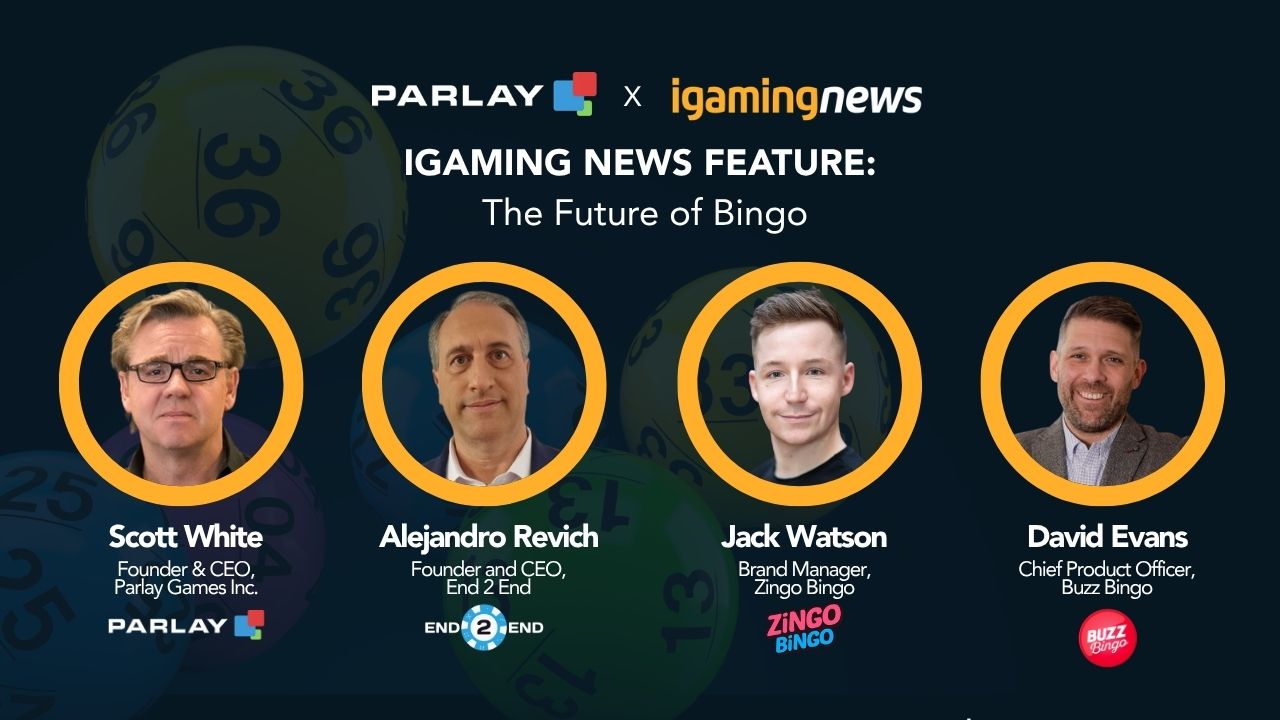
This month, iGaming News takes a closer look at one of the industry’s most established yet rapidly evolving verticals: online bingo.
Once defined by traditional gameplay and strong community roots, bingo has undergone a significant transformation as operators and suppliers adapt to a new generation of players, changing expectations and an increasingly competitive digital landscape. From mobile-first experiences and innovative engagement mechanics to the growing convergence between bingo, casino and wider iGaming entertainment, the sector continues to reinvent itself.
Our latest feature roundtable brings together senior voices from across the online bingo ecosystem to explore where the vertical stands today, the innovations shaping its future and the opportunities that lie ahead.
The discussion will provide industry insight into how bingo is being modernised, how brands are responding to evolving player behaviour and what the next chapter looks like for this enduring iGaming category.
Scott White, Founder & CEO, Parlay Games Inc.
****
Please introduce yourself and tell us about your role and involvement in the bingo sector.
My name is Scott White. I'm the Founder and CEO of Parlay Games Inc., a role I've held since we built what became the world's first fully commercialized online bingo platform back in 1998. I've been involved in this sector for over 25 years now, from the earliest days of licensing our platform to charitable and land-based bingo operators, through to today, where Parlay operates as a B2B software licensor supplying our iBingo platform solution to land-based, online, charitable, and sweepstakes operators internationally.
My involvement with Parlay spans everything from business, product and platform strategy to regulatory, commercial and partnership structuring. Bingo and recently bingo-variants (new games that look like bingo but are faster and more appealing to a younger demographic), has been the constant thread through all of it: it's the game that brought me into this industry, and it's the game I still believe has the most untapped potential of any vertical in iGaming.
Online bingo has evolved significantly in recent years. What do you believe has been the biggest driver behind this modernisation, and how has your business adapted?
If I had to point to one driver, it's the convergence of mobile-first delivery with data-driven personalization. Bingo mechanics themselves haven't changed much - the classic 90-ball, 75-ball, 80-ball and 30-ball games still play the way they always have. What's changed is everything wrapped around the game:
- the ability to pre-buy hundreds of cards across multiple rooms,
- play several games simultaneously,
- receive personalized offers from real time chat moderators, and
- never actually need to be sitting in a room to participate.
Mobile made bingo portable in the same way it made land-based players accessible for the first time, and data personalization made every session feel tailored and personal, rather than generic.
Bingo is less about the game of bingo, and more about the bingo community formed around bingo, which is the engaging and fun part of the bingo session.
We've adapted by rebuilding around a multi-tenant, multi-currency, multi-language platform architecture - our Parlay 7 platform - that lets an operator run fiat, social and sweepstakes currencies side by side, completely automate room scheduling and jackpots, and manage multiple brands or channels from a single environment.
We've also recently pushed hard into omnichannel systems, where we can connect land-based POS-delivered bingo with online play, because a huge part of modernisation isn't just moving bingo online - it's making sure land-based and digital players can move fluidly between both worlds. That mobilization of the retail player creates one of the few underutilized areas of player acquisition, where we assist all operators in the expansion of the iGaming pie; bringing players into the ecosystem that are new to online and social gaming.
How have player expectations changed, and what impact has this had on how bingo products are designed and delivered today?
Today's player expects a living, evolving environment rather than a static game screen. That means:
- a full calendar of scheduled events, managed by localized chat moderators,
- tournaments and leaderboards running alongside the core game,
- side games and mini-games to fill the space between calls, and
- a real sense that something is always happening whether they're actively playing a card or not.
Players also expect to be recognized - to log in and feel like the room and their community already knows who they are and what they like. The iBingo community is unlike any other, it’s a social game where players spend a large part of their day. They are not necessarily there to win – but to see their friends and have a full entertainment experience.
The design impact has been significant. We build and configure systems for sessions that run anywhere from 45 minutes to several hours. Sessions are configured to run all week long - every week - allowing an operator to configure one time and then focus on player support and marketing. This is very different than a single-round slot spin or a punt on a sports product. That means layering in:
- loyalty mechanics,
- guaranteed and consolation prizes so that non-winners still feel rewarded,
- live chat moderated by real people who make players feel like VIPs, and
- enough configurability that operators can tune the experience - RTPs, schedules, bonusing - without waiting months for a platform change.
What innovations (e.g. gamification, live features, social mechanics, mobile-first design) are currently having the biggest impact on bingo engagement?
Gamification and social mechanics are doing the heaviest lifting right now. For example
- Tournaments and cross-game leaderboards that span bingo rooms and slots simultaneously keep players engaged well beyond a single session.
- Live chat - which we pioneered decades ago - remains one of the highest-impact features in the entire product suite, and we're now layering AI and natural language processing on top of it to make moderation faster and chat interactions more responsive at scale.
- Skill-based and sweepstakes-style bingo variants that let regulated and unregulated markets both participate profitably
- QuizBingo, VideoBingo and other regional derivatives built for younger, mobile-native audiences
- POS-delivered bingo that bridges retail and digital play in a single session
- AI-driven recommendation engines personalizing lobbies, promotions and room schedules in real time
Mobile-first design underpins all of it - if a feature doesn't work cleanly on a phone, it doesn't ship. That's non-negotiable given where the bulk of play now happens.
We're seeing increasing crossover between bingo, casino and wider entertainment products. How is this influencing the positioning of bingo within iGaming?
This convergence is exactly what we set out to enable from day one. Bingo has always been one of the most effective acquisition tools an operator has - it draws in players who wouldn't necessarily walk into a casino lobby cold, out of curiosity, community or the promise of a big shared jackpot. Once that player is in the door, our platform lets an operator cross-sell them into slots, lottery, scratch or live tournaments within the same session, on the same account, without ever making bingo feel like an isolated side product.
So rather than sitting as a standalone vertical, bingo is increasingly positioned as a connective layer across an operator's whole entertainment stack - a low-friction entry point and retention engine that sits comfortably alongside casino, live dealer and sweepstakes content. Our multi-tenant platform is built specifically so an operator's bingo brand, casino brand and social brand can share liquidity, players and promotional tools rather than compete for the same wallet.
Bingo has always had a strong community element. How important is the social aspect today, and how can it be strengthened in digital environments?
It's foundational, not decorative. Bingo was a social occasion long before it was a digital product, and the operators who treat chat and community as an afterthought are the ones who struggle with retention. We invented online bingo chat and integrated mini-games specifically to recreate what players used to do at land-based halls - sitting with friends, playing side games between calls, celebrating each other's wins.
Strengthening that digitally comes down to a few things:
- real, experienced chat moderators rather than purely automated messaging, so players feel like individuals rather than accounts;
- private rooms and events where groups of friends can play together;
- leaderboards and team-style competitions that create shared stakes rather than purely solitary outcomes; and now,
- AI-enhanced moderation and NLP that let human moderators scale their attention across more rooms without the interactions feeling any less personal.
Done well, the social layer is what turns a bingo product from a game players try once into a community players return to three or four times a week.
What are the future growth drivers for the bingo space?
Looking ahead, a few forces stand out. Latin America is one of the most attractive growth markets we've seen in years, driven by regulatory maturation, very high mobile penetration and a strong cultural fit for social, community-driven bingo. The US will deliver scale through social and sweepstakes models and as well as Class II gaming, where Tribes continue to assert their authority and where real US-federal liquidity is possible. And Europe - where Parlay built and exited major bingo networks roughly a decade ago - is seeing renewed opportunity as major players step back from the vertical, opening the door for a re-entry built on the regulatory and licensing experience we've carried from those earlier years.
Beyond geography, I'd point to omnichannel expansion connecting land-based and online play, deeper AI integration , chat and content testing, and continued growth of sweepstakes and skill-based models in markets where cash wagering remains restricted.
Bingo has survived - and grown - through every wave of iGaming innovation so far because it keeps finding new ways to bring people together around a shared game. I don't see that changing any time soon.
Alejandro Revich, Founder and CEO, End 2 End
Please introduce yourself and tell us about your role and involvement in the bingo sector.
My name is Alejandro Revich and I lead End 2 End, a company dedicated exclusively to bingo. I have worked in this sector since 2003, mainly in the UK and Spain. In the UK we supplied companies such as Herotech (ThinkBingo.co.uk), Cashcade and Jumpman Gaming. In Spain I was one of the co-founders of Bingosoft, the company behind YoBingo.es, which became the leader of the Spanish online bingo market. We sold YoBingo.es to The Rank Group in May 2018, so from 2011 until 2018 I was also an operator in a regulated market. After that exit I launched End 2 End, building a new generation of multiplayer bingo technology with a clear focus on emerging and newly regulated markets.
Online bingo has evolved significantly in recent years. What do you believe has been the biggest driver behind this modernisation, and how has your business adapted?
Two drivers: regulation and the search for value. Regulatory progress, particularly across Latin America in markets like Brazil, Peru, Colombia and Argentina, has moved bingo from an informal or overlooked game to a certified, fully supervised vertical. At the same time, operators spent years chasing fast, high-volume products such as slots and crash games, and multiplayer bingo was somewhat forgotten. The audience never went away. Operators are now rediscovering that bingo delivers lower volatility, stronger retention and much lower acquisition costs than online casino.
End 2 End adapted on three fronts. We built a scalable, web-based platform that runs real-time multiplayer networks across online and physical retail at the same time. We invested early in certifications such as GLI-19 to be ready for newly opened jurisdictions. And we became part of a larger corporate group, from Aspire Global to NeoGames and now Aristocrat Interactive, which allows us to distribute our technology through major international channels.
How have player expectations changed, and what impact has this had on how bingo products are designed and delivered today?
Players are looking for connection. In a market saturated with fast, solitary slot games, a significant segment of players is experiencing digital fatigue and wants entertainment built around community. They also no longer separate physical play from digital play. They expect to buy a card in a bingo hall, follow the game on their phone, or play online within the same social ecosystem. That is why delivery has to be genuinely omnichannel. Modern bingo products sit on player account management systems that bridge halls and online platforms, so a physical operator can capture the online market without losing the traditional culture of the game.
What innovations (e.g. gamification, live features, social mechanics, mobile-first design) are currently having the biggest impact on bingo engagement?
The innovation with the biggest impact is not a single feature. It is the ability to run one game across every channel at once. When a player in a physical hall and a player on a mobile phone share the same game and the same prize, the experience changes completely. Beyond that, flexibility matters more than novelty. A modern platform has to support both live and RNG formats, and operators need to adjust pacing, mechanics and prize structures to suit each audience and each regulation. Mobile-first design stopped being an innovation some time ago; it is the starting point. And shared liquidity between operators is, in my view, the most underrated development in bingo, because larger networks mean better prizes and stronger communities.
We are seeing increasing crossover between bingo, casino and wider entertainment products. How is this influencing the positioning of bingo within iGaming?
Convergence is repositioning bingo from a side product to an entry door. Bingo attracts a profile of a player who would never start with a sportsbook or a slot. They come for the social experience, become comfortable with the brand, and over time many of them explore other verticals. So bingo does not compete with casino; it feeds it. We also see the opposite movement: online casinos adding bingo as a retention tool, because it gives players a reason to stay for long sessions rather than transactional visits. The operators who understand this have stopped asking whether bingo cannibalises their casino revenue. They are asking how to use bingo to lower acquisition costs and extend player lifetime across the whole platform.
Bingo has always had a strong community element. How important is the social aspect today, and how can it be strengthened in digital environments?
The social aspect is not a feature of bingo. It is the product. Remove the chat, the shared room and the feeling of playing alongside other people, and what remains is a slow lottery. In digital environments, community is strengthened first by liquidity. A room with thousands of players feels alive in a way a room with fifty does not, which is why network models and shared liquidity matter so much. The human layer counts as well; a good chat host in an online room does the same job a caller does in a hall. And omnichannel adds something new. When retail and online players share the same games, the community stops being two separate audiences and becomes one.
Where do you see the biggest opportunities for growth in online bingo over the next 3 to 5 years?
I see three. The first is North America. The United States and Canada combine regulatory maturity with a deep cultural connection to bingo, and tribal operators and charities in particular are well placed to adopt a modern multiplayer solution. The second is Latin America, where regulation keeps advancing. Brazil is the obvious case given the country's history with the game, but a market like Argentina still has an almost untouched online bingo segment despite its strong land-based culture, and we have launches planned in Costa Rica and Ecuador. The third is adjacency. iLottery is a natural extension for a multiplayer specialist, and operators will be able to make the same integration with our lottery product as they do with bingo.
Looking ahead, what role do you see your company playing in shaping the future of the bingo sector?
Our role is to consolidate End 2 End’s position as the specialist. Bingo is a relatively small vertical, and multi-vertical providers will always allocate their resources to sportsbook and casino first. That leaves room for a company that does one thing properly. We are on the third major iteration of our technology, and every version has kept the same principles: fairness, stability, social interaction and scale. Looking ahead, I want End 2 End to be the partner that brings multiplayer bingo into markets where it has been absent or underexploited, whether that is a tribal operator in the US, a newly regulated market in Latin America, or an online casino looking for a retention product. If in five years more players are enjoying bingo because our technology made it viable for their operator, we have done our job.
Jack Watson, Brand Manager at Zingo Bingo
****
Please introduce yourself and tell us about your role and involvement in the bingo sector.
I’m Jack Watson, Brand Manager at Zingo Bingo. We launched Zingo Bingo this year as a new online bingo brand with bingo rooms and branding rooted in nostalgia, retro fun and good times.
Online bingo has evolved significantly in recent years. What do you believe has been the biggest driver behind this modernisation, and how has your business adapted?
The biggest driver behind bingo’s modernisation has been the shift in player behaviour and expectations. Players no longer separate gaming from entertainment as they once did. Many players expect the same level of immediacy, personalisation and cultural relevance they get from platforms like TikTok, Netflix or Spotify - they’ve set the bar for entertainment and mobile experiences and it’s up to us to raise our game.
For operators, that means simply offering bingo rooms and bonuses is no longer enough. The experience around the product matters just as much as the gameplay and dabbing itself.
At Zingo Bingo, we’ve adapted by placing the player experience at the centre of the brand by thinking beyond traditional digital incentives and focusing more on emotionally engaging experiences. We’ve leaned heavily into nostalgia, shared cultural moments and real-world rewards to build a community of players to build experiences that feel memorable and authentic, not just transactional.
That’s why campaigns involving live entertainment, experiences and social-first content have become such a key part of our approach. We see bingo as part of a wider entertainment ecosystem now, not just a standalone gaming product.
How have player expectations changed, and what impact has this had on how bingo products are designed and delivered today?
Player expectations today are far more experience-driven than they were even five years ago. Modern players expect convenience and seamless mobile functionality as standard, but beyond that they want engagement that feels personal, social and rewarding.
There’s also a much greater demand for brands to have personality. Players gravitate towards operators that feel relatable and culturally aware rather than purely promotional.
This has had a major impact on how bingo products are designed and delivered. Products now need to be mobile-first, visually engaging and capable of delivering quick entertainment sessions without losing the community aspect that makes bingo special.
We’re also seeing players respond more positively to layered experiences - things like themed campaigns, social interaction, exclusive content and reward mechanics that extend beyond gameplay. The expectation is no longer just “play and win”; it’s “entertain me and give me something worth talking about,” and we take this very seriously.
What innovations are currently having the biggest impact on bingo engagement?
A number of innovations are having a strong impact on engagement right now, particularly social mechanics, gamification and mobile-led experiences.
Features like missions, streak rewards and personalised promotions help create longer-term engagement rather than one-off sessions.
Social-first content is also becoming increasingly influential. We’ve seen strong engagement from content that sparks nostalgia, conversation and shared memories. Our “Your Era” social media series is a good example of that, where entertainment and community interaction become part of the wider bingo experience rather than separate from it.
Mobile-first design is another huge area. Players expect frictionless gameplay, intuitive interfaces and fast access to entertainment wherever they are. The brands succeeding today are the ones designing experiences specifically for mobile behaviours rather than simply adapting desktop products.
We’re seeing increasing crossover between bingo, casino and wider entertainment products. How is this influencing the positioning of bingo within iGaming?
The lines between bingo, casino and broader entertainment are definitely becoming more blurred.
Players today move fluidly between different forms of entertainment and gaming, so operators have had to rethink how bingo fits into that ecosystem. Bingo is increasingly positioned as part of a broader entertainment experience that includes other games, social content, live events and community interaction.
What’s important, though, is that bingo still retains its unique identity. The social and communal side of bingo remains a major differentiator compared to other verticals. That gives bingo an advantage because community-led entertainment is becoming increasingly valuable in digital spaces.
I think the future of bingo will involve even greater integration with entertainment culture, influencer content, live experiences and social storytelling, while still preserving the familiarity and accessibility that players love about bingo itself.
Bingo has always had a strong community element. How important is the social aspect today, and how can it be strengthened in digital environments?
The social aspect remains one of the most important parts of bingo and arguably one of its biggest strengths.
Even in digital environments, players still want that feeling of connection and shared participation. Bingo has always naturally created moments of conversation, excitement and collective engagement.
The challenge online is recreating those emotional connections authentically. Chat functions and community rooms still matter, but social engagement today extends beyond the product itself. Social media content, live campaigns, nostalgia-led conversations and interactive experiences all contribute to building a stronger sense of community.
That’s something we’ve focused heavily on at Zingo Bingo: creating experiences and content that encourage people to share memories, engage socially and feel part of something larger than just gameplay.
Where do you see the biggest opportunities for growth in online bingo over the next 3–5 years?
Over the next three to five years, I think the biggest growth opportunities will come from brands that successfully combine entertainment, community and personalisation.
Nostalgia-led entertainment is a particularly interesting area because it creates instant emotional connections across different demographics. We’ve seen how strongly audiences respond to shared cultural moments, whether that’s music, television, fashion or live experiences tied to recognisable eras and personalities.
Real-world rewards and experiential campaigns will also continue growing in importance. Players increasingly value memorable experiences over purely digital incentives, especially in a highly competitive market where every operator can offer bonuses.
Looking ahead, what role do you see your company playing in shaping the future of the bingo sector?
Bingo is bingo. The cards and the games are the same across all online brands and local bingo halls. The opportunity for the future of bingo is how you can make yourself stand out and provide experiences worth coming back for.
The future of bingo is about creating entertainment ecosystems that genuinely resonate with players culturally and emotionally. That means continuing to invest in community, nostalgia-driven content, real-world experiences and social engagement that extends beyond the screen.
We believe bingo has a huge opportunity to evolve while still staying true to the core things that have always made it special: accessibility, familiarity and connection. Our goal is to play an active role in pushing the sector forward while keeping those values at the centre of everything we do.
David Evans, Chief Product Officer at Buzz Bingo
****
Please introduce yourself and tell us about your role and involvement in the bingo sector.
My name is David Evans and I'm Chief Product Officer at Buzz Bingo.
I've spent more than 20 years working across gaming, spanning retail, online and omnichannel businesses. At Buzz Bingo I'm responsible for product strategy across both our club and digital propositions, which gives me a unique perspective on how bingo is evolving and where the industry needs to go next.
What excites me most about bingo is that it remains one of the few gaming products where community genuinely sits at the heart of the experience. The challenge for all of us is how we continue to modernise the game whilst preserving the things that have made it successful for generations.
Online bingo has evolved significantly in recent years. What do you believe has been the biggest driver behind this modernisation, and how has your business adapted?
The biggest driver has been customer behaviour.
Customers today expect everything to be available instantly, seamlessly and on the device of their choice. That isn't unique to bingo; it's true across every form of entertainment. The difference is that bingo has traditionally been built around a scheduled, social experience, whereas modern consumers increasingly want flexibility.
The operators that will succeed are the ones that don't force customers to choose between retail and digital, but instead create experiences that allow customers to move effortlessly between the two.
At Buzz, our biggest opportunity has come through our omnichannel strategy. We operate the UK's largest retail bingo estate alongside one of the country's leading online bingo brands, which puts us in a unique position. We've seen active omnichannel customers grow significantly because players increasingly want the flexibility to play wherever, whenever and however they choose.
Products such as Big Money Live demonstrate what the future looks like. Rather than treating retail and online as separate worlds, we're bringing them together into a single shared experience where customers can participate in the same game, regardless of location.
I believe that this model represents one of the biggest opportunities for the sector over the next decade.
How have player expectations changed, and what impact has this had on how bingo products are designed and delivered today?
Customers have become far less tolerant of friction.
Historically, players would accept complicated registration processes, fragmented experiences and products that required a lot of explanation. Today's customers expect simplicity. They want to understand what's happening immediately, they want intuitive experiences and they want to be entertained from the moment they arrive.
At the same time, the social element remains incredibly important. The biggest misconception about bingo is that customers only play for the prizes. In reality, many customers play because they enjoy being part of something.
The challenge for product teams is balancing convenience with community. We need to make bingo easier to access without losing the human connection that makes the game special.
What innovations (e.g. gamification, live features, social mechanics, mobile-first design) are currently having the biggest impact on bingo engagement?
For me, the biggest innovations aren't necessarily the flashiest ones.
The industry often talks about gamification, AI and new mechanics, but I believe the biggest opportunity is making bingo more accessible and easier to understand.
Simplification, better customer journeys, improved mobile experiences and stronger omnichannel integration will have a bigger long-term impact than adding layers of complexity.
That said, live experiences are proving incredibly powerful. Live hosts, streamed content, and shared jackpot moments help recreate the atmosphere that has always been central to bingo clubs.
We're also seeing significant opportunities in personalisation. As technology improves, we can create experiences that are more relevant to individual customers, whilst maintaining the shared community feel that makes bingo unique.
We’re seeing increasing crossover between bingo, casino and wider entertainment products. How is this influencing the positioning of bingo within iGaming?
Bingo occupies a very different position within the gaming landscape.
Casino products are often individual experiences. Bingo has always been a collective experience.
Whilst there is undoubtedly crossover between customer groups, I don't think bingo should try to become casino. Instead, we should double down on the things that make bingo different.
The future of bingo isn't about copying other products. It's about creating a broader entertainment experience around community, interaction, excitement and value.
At Buzz, we think about ourselves as an entertainment business. Whether customers visit one of our clubs or play online, they should feel part of something bigger than the game itself.
Bingo has always had a strong community element. How important is the social aspect today, and how can it be strengthened in digital environments?
I would argue that community is more important today than it has ever been.
We live in a world where people are increasingly connected digitally but often feel less connected socially. Bingo fills that gap.
The challenge is ensuring that digital experiences don't become isolated experiences.
At Buzz, we've focused on creating experiences that connect customers rather than separate them. Our live and omnichannel products allow customers to share moments regardless of whether they're playing from home or from one of our clubs.
Community isn't just about chat functionality. It's about creating shared experiences, shared excitement and shared celebrations.
The operators that succeed in the future will be the ones that understand that bingo is fundamentally a social product.
Where do you see the biggest opportunities for growth in online bingo over the next 3–5 years?
Without question, the biggest opportunity is omnichannel.
For years the industry has spoken about omnichannel, but very few businesses have truly delivered it. Customers don't think in channels; they simply think about their relationship with a brand.
The businesses that create a single customer experience across retail, mobile, web and future channels will be the ones that unlock the greatest growth.
Beyond omnichannel, I believe there is significant opportunity in attracting new audiences through modernised experiences. That doesn't mean changing what bingo is. It means presenting bingo in a way that feels relevant to today's consumers.
We also have an opportunity to continue simplifying the experience and making it easier for customers to discover, understand and enjoy bingo.
Looking ahead, what role do you see your company playing in shaping the future of the bingo sector?
Buzz has already played a significant role in driving innovation across the industry, and I believe that responsibility will continue.
We're investing heavily in both our retail and digital propositions because we are confident in the long-term future of bingo.
Our focus is on continuing to evolve the experience for future generations whilst protecting the community and social interaction that have always made the game special.
Our ambition is simple: to be the leading omnichannel bingo business in the world.
That means continuing to innovate, continuing to invest and continuing to prove that bingo can thrive in a modern entertainment landscape.
If we get that right, I believe the best years for bingo are still ahead of us.