The Future of iGaming Ecosystems: Beyond the Platform
Giorgi Samkharadze, Director at Broadway Platform, shares how the provider is delivering the most player-centric iGaming ecosystem for a new technical landscape.
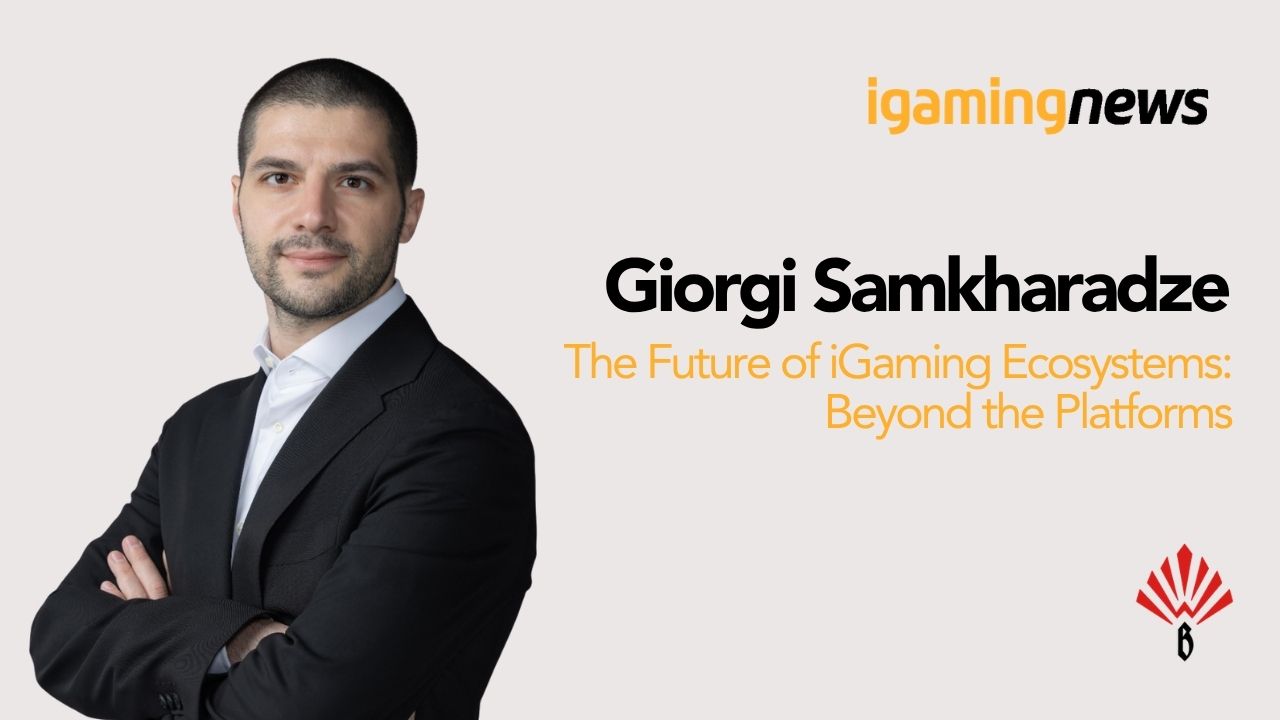
The next wave of leading sportsbook and casino brands will need to re-evaluate how modular platforms offer them a true competitive advantage. Ecosystems that combine a core CMS with gamification, payments, engagement mechanics and platform intelligence into a unified system are increasingly needed to keep pace with higher player activity, global expansion and competition. Giorgi Samkharadze, Director at Broadway Platform, shares how the provider is delivering the most player-centric iGaming ecosystem for a new technical landscape.
How has the landscape changed for operators looking to launch their own casino or sportsbook?
For many years, operators have competed based on who has the most chart-topping games, the best suppliers in their lobbies and the fastest integrations. In 2026, brands can launch quickly, integrate thousands of games and enter multiple markets with relative ease, but true differentiation has become harder to sustain as technology evolves at a rapid pace.
While many businesses have similar content libraries and standard CRM capabilities, performance still varies significantly. This gap comes down to how systems are designed, and, more importantly, how they work together.
Partners now expect seamless, one-stop shops – fully interconnected and intelligent ecosystems that offer everything they need to succeed in one place. Our AI-enhanced platform is a unified hub where infrastructure, content and engagement work effortlessly as one.
What is the biggest misconception of operators building their tech stacks in 2026?
The biggest misconception is that more tools equal better performance. Many operators still approach their tech stack as something to assemble, adding the best solutions for CRM, gamification, risk management, and so on. This can seem like the most flexible approach but in reality, it often leads to the fragmentation noted above. In addition, creating your own technology is intensive, both in cost and time. In an era where speed matters, sinking time, energy, and capital into creating a product – which may not work as well as hoped – is something that requires a significant leap of faith.
How is player behaviour reshaping the way ecosystems need to be designed?
Player behaviour is becoming more fast-paced and dynamic. If we look at the data from regulators such as the UK Gambling Commission, there is a clear trend towards higher engagement intensity. In Q2 2025, the overall number of total bets and spins increased by 3% year-on-year, while average monthly active accounts decreased by 7%. This tells us that even when player numbers are relatively stable, the growth comes from how they interact.
At the same time, modern slot and live betting formats, such as high-frequency, session-driven experiences, generate far more interaction data than traditional products did. It means operators can respond to behaviour, shifts in engagement and indications of churn as they happen – but only if their underlying system supports it. This is why CRMs are evolving into real-time control layers, giving operators immediate visibility into player behaviour, campaign performance and engagement levels, rather than relying on retrospective reporting. In integrated ecosystems, this level of insight is standard.
In 2026, how are the most successful operators adapting their technology?
Traditionally, iGaming platforms were assembled piece by piece, using multiple time-consuming third-party integrations. A PAM came from one provider, CRM from another and payments from a third. This fragmented approach created significant friction, delaying launch times, causing data silos, limiting personalisation capabilities and increasing operational complexity.
Broadway Platform replaces this with something fundamentally different: a composable, fully integrated stack. We bring together casino and sportsbook infrastructure, payments, CRM, CMS and gamification, affiliate and risk management tools and a unified back-office. Each component can be deployed individually or combined to meet operators’ individual needs. Crucially, they work as a single system from day one.
This architectural shift is delivering value, less from individual modules and more from how tightly they work together.