Why PSPs Need a Local Strategy for Africa’s iGaming Market
Africa’s growth creates significant opportunities for PSPs, but operating across the region is also becoming more complex. As the industry develops, regulatory requirements are becoming stricter.
Africa has been described as an “emerging” iGaming market for years. In 2026, that description is becoming increasingly difficult to justify.
The figures point to strong demand. Blask recorded an increase in iGaming demand across 39 of the 42 African markets it monitored in the first half of 2026. Its comparable continental index grew by approximately 24% year on year, with South Africa and Nigeria among the strongest contributors among larger markets.
The FIFA World Cup created another spike in activity. SOFTSWISS reported a threefold increase in Sportsbook activity during the tournament, with 85% of bets placed via mobile devices. This reflects broader betting behaviour across Africa. GeoPoll surveyed 2,866 bettors in Ghana, Kenya, Nigeria, South Africa, Tanzania and Uganda in June and July and found that 95% used mobile devices to bet, while football was the preferred betting sport for 67%.
For operators, periods of increased activity also put additional pressure on payment infrastructure. Systems need to absorb sudden growth in deposit volumes, while withdrawals need to remain reliable once demand normalises. At the same time, payment preferences differ considerably from one African market to another.
Mobile money plays a major role across many countries. Bank transfers remain widely used in Nigeria alongside wallets such as OPay and PalmPay, while Kenya has M-Pesa. Mobile money is also an important part of everyday digital payments in Tanzania, Zambia, Congo and Cameroon. A payment setup that performs well in one market may therefore be much less effective in another.
Growth brings tighter regulation
Africa’s growth creates significant opportunities for PSPs, but operating across the region is also becoming more complex. As the industry develops, regulatory requirements are becoming stricter.
Kenya provides a clear example. The Gambling Control Act 2025 replaced the previous regulatory framework, followed by new regulations in 2026 covering licensing, gambling operations, advertising and foreign-based operators. Existing businesses were given a transition period to comply with the new licensing regime, while restrictions around advertising have also increased.
Greater market maturity typically brings greater regulatory scrutiny. For PSPs, this can affect onboarding and transaction monitoring, while payout requirements may evolve and individual payment routes can become less dependable.
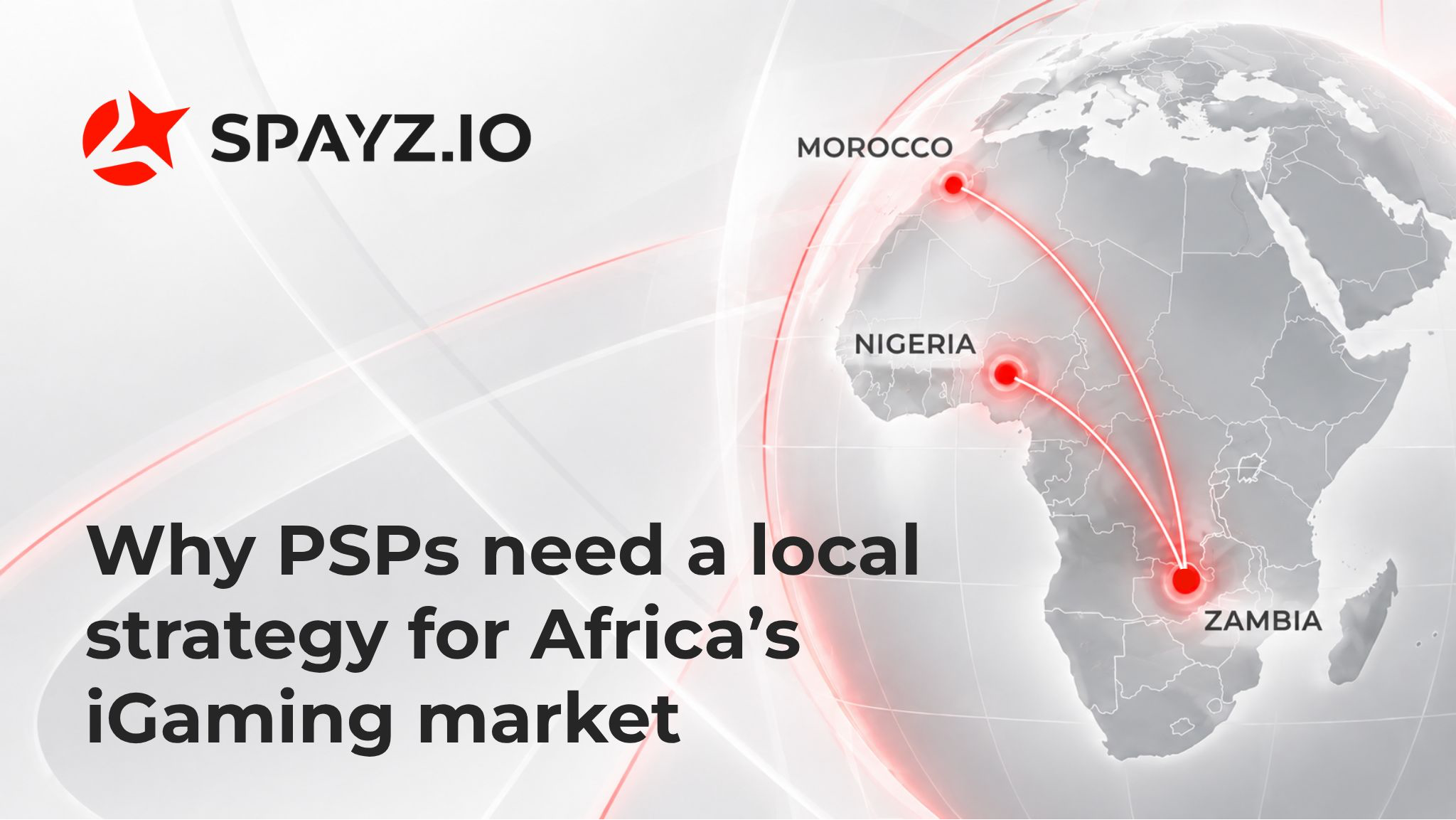
SPAYZ.io has continued expanding its African footprint against this backdrop. Across 2025 and 2026, the company added Tanzania, Zambia, Nigeria, Congo, Cameroon and South Africa to its regional coverage, with Morocco becoming its latest market.
Morocco joins SPAYZ.io’s African coverage
Morocco has several characteristics that make the market particularly interesting to watch. Around 66% of the population is under 35, mobile usage is high and football attracts a significant audience. Industry estimates valued the country’s gambling market at approximately $1.14 billion in 2025, with growth projected to $1.23 billion by 2029. Sports betting alone was estimated at around $172 million in 2025.
The regulatory picture, however, is more complicated. Sports betting remains state-controlled through MDJS, while Morocco does not currently have a general licensing framework for private online gambling operators. Recent taxation and enforcement measures also point towards greater scrutiny of digital betting activity.
For PSPs, these conditions influence how expansion into a new market needs to be approached. Demand by itself is not enough. Payment providers also need reliable local partners, stable payment routes and infrastructure capable of accommodating local regulatory requirements.
“The ideal payment partner is one that users will implicitly trust and that the merchant can rely on operationally” — Tatjana Meluškāne, Chief Commercial Officer at SPAYZ.io
Much of this reliability exists behind the integration itself. Which local provider is processing the traffic? How quickly can payment teams identify a route that is underperforming? Is an alternative route available when market conditions change? These operational details become increasingly important as transaction volumes increase and regulatory requirements become stricter.
SPAYZ.io has therefore taken a selective approach to expansion across Africa. New market coverage depends on identifying providers capable of maintaining stable operations over the long term. The availability of a payment route alone is not sufficient reason to add it.
As Africa’s iGaming industry grows, operating across the region is likely to become more demanding. Markets such as Kenya are already demonstrating this shift. Demand, however, continues to increase, leaving significant opportunities for operators and PSPs capable of adapting their payment infrastructure to the realities of each individual market.