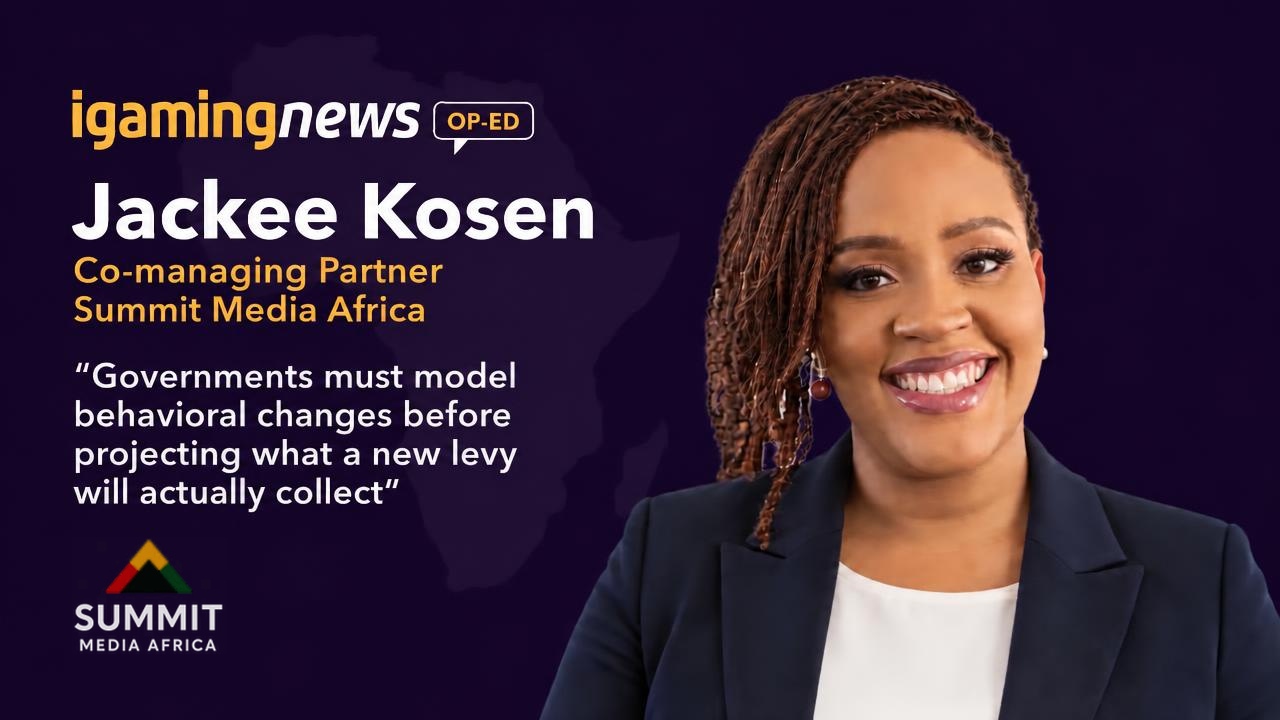
“Governments Must Model Behavioral Changes Before Projecting What a New Levy Will Actually Collect”
Performing impact assessments is necessary before tax hikes are implemented, shares iGaming expert Jackee Kosen of Summit Media Africa
Listen to this article
British female voice
South Africa’s National Treasury has proposed a 20% tax on gross revenue from online gambling, on top of existing provincial taxes. While there is a strong case for asking the industry to help pay for the harm gambling causes, the question remains whether this particular rate will raise additional revenue and improve player protection once operators and customers respond.
Kenya’s history shows how quickly a tax and licensing standoff can reshape a market. In 2019, SportPesa and Betin suspended operations amid licensing disputes and the introduction of a 20% excise duty on stakes, which uses a different tax base from the one South Africa is considering.
This, however, is a clear example of how operators respond to sudden fiscal shifts. While those exits are well documented, they leave open the question of where those customers ultimately went.
Similarly, in the Netherlands, a 2025 tax rate increase drastically missed revenue projections. Regulators noted that the expected tax windfall was neutralized by shifting market dynamics, including the rollout of tighter player protections that suppressed overall gambling revenue. Both cases illustrate why the Treasury must model behavioral changes before projecting what a new levy will actually collect.
Before settling on the 20% figure, the Treasury should publish an impact assessment that accounts for existing provincial taxes, tests several alternative rates and sets a baseline for how much South Africans currently spend with unlicensed sites. In addition, it must also spell out exactly how it plans to disrupt payments to offshore operators and fund addiction prevention and treatment. If a higher rate weakens the licensed market while leaving illegal sites easily accessible, Treasury risks losing both the revenue and the player protections it originally set out to strengthen.
- Jackee Kosen, co-managing partner Summit Media Africa (a Global TV Experts company)
Stay ahead of iGaming
Get the week's key stories, industry insight and exclusive interviews in your inbox.
One email a week. Unsubscribe any time. More about our newsletter