Kalshi CEO Rejects Gambling Comparisons As US Prediction Market Dispute Intensifies
Kalshi CEO Tarek Mansour argues that prediction markets operate differently from sportsbooks as regulators challenge federal oversight of sports event contracts.
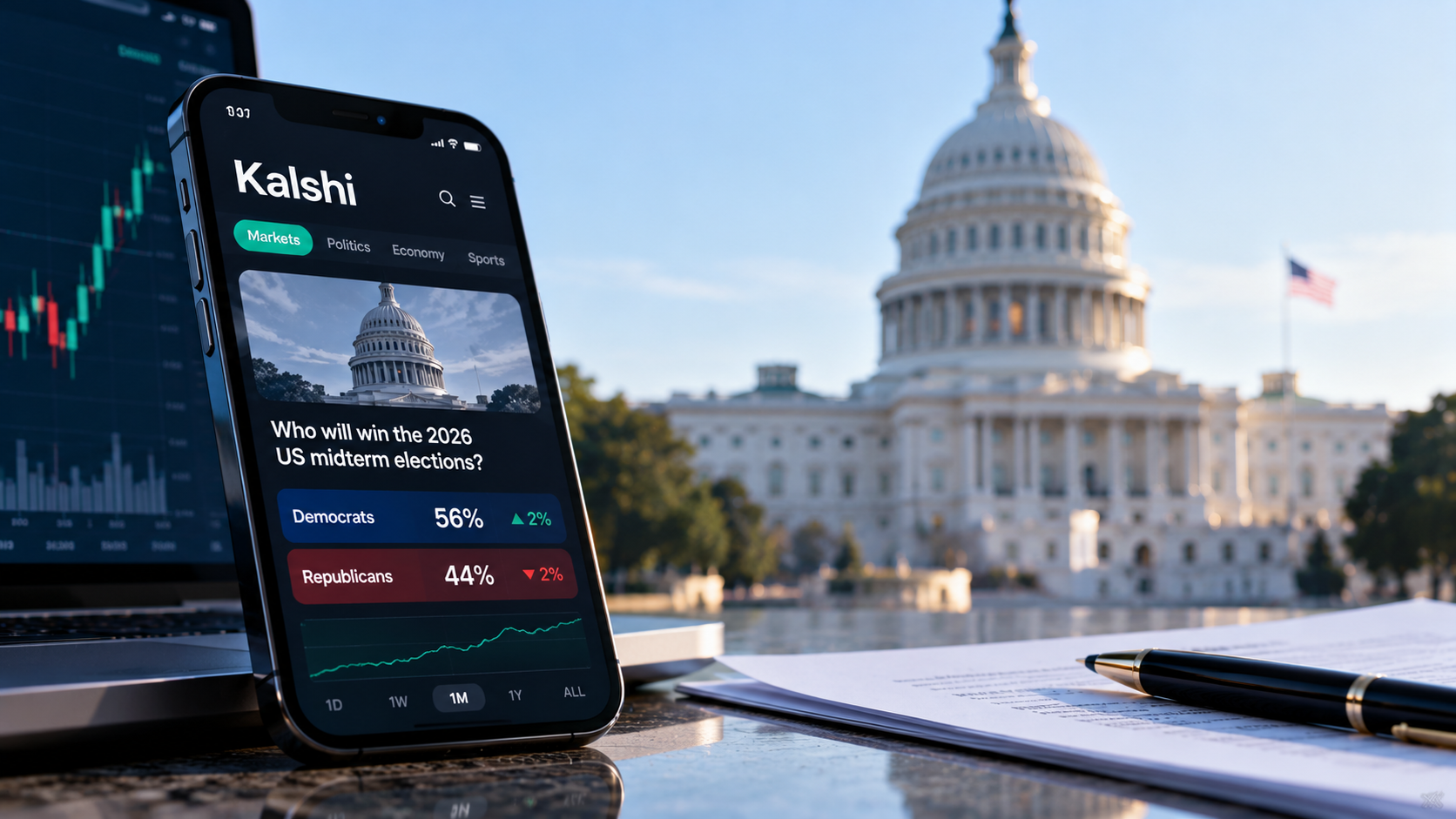
Kalshi CEO Tarek Mansour has defended prediction markets against accusations that they constitute gambling, arguing that fundamental differences between financial exchanges and traditional sportsbooks justify separate regulatory treatment.
Writing in an opinion piece for The Wall Street Journal, Mansour acknowledged the similarities between sports event contracts and conventional betting but maintained that the underlying market structures are significantly different.
His comments come amid an escalating regulatory dispute in the United States, where state gambling authorities are challenging prediction market platforms offering contracts linked to sporting events.
The central disagreement concerns whether these products should remain under the federal jurisdiction of the Commodity Futures Trading Commission (CFTC) or be subject to individual states' gambling legislation.
Kalshi CEO Defends Exchange-Based Model
Mansour argued that prediction markets differ from sportsbooks because participants trade contracts with other market users rather than placing wagers against an operator.
He acknowledged that sports contracts can resemble conventional bets but insisted that the distinction between an exchange and a bookmaker is fundamental to how prices are determined.
“In both casinos and markets, someone is staking money on a contingency. Yet the structural difference is crucial,” Mansour wrote.
He maintained that exchanges allow prices to emerge through transactions between buyers and sellers, whereas traditional sportsbooks establish odds as part of a business model designed to generate operator profits.
“Sportsbook odds will never be as accurate, fair or transparent as the price on a prediction market. They are designed to ensure customers lose more than they win in the aggregate.”
Mansour also criticised sportsbook practices, including restricting successful customers and the use of artificial intelligence in marketing and customer targeting.
He argued that these incentives do not apply in the same way to exchanges, where transactions are cleared and prices are determined through market activity.
However, the distinction between exchange-based trading and gambling is not universally accepted. Betting exchanges have operated within regulated gambling markets for decades, allowing customers to wager against one another rather than directly against a bookmaker.
State Regulators Challenge Federal Oversight
Kalshi and other prediction market operators maintain that event contracts fall within the CFTC's regulatory jurisdiction, including products linked to sporting outcomes.
Several US state regulators have challenged that interpretation, arguing that sports event contracts effectively constitute gambling products and should therefore comply with state betting laws.
The dispute is particularly significant in states where online sports betting remains prohibited, as prediction market platforms may offer access to sports-related contracts without holding conventional state gambling licences.
Mansour has argued that regulation should reflect the structure of the market rather than simply the subject of the underlying event.
“The most sensible way to regulate these activities is based on their market structure,” he wrote.
The disagreement also extends to consumer protection requirements. Critics have highlighted differences between the minimum age of 18 associated with CFTC-regulated trading and the 21-year minimum commonly imposed on regulated sports betting in the United States.
These concerns have contributed to questions about whether prediction market platforms should face gambling-specific restrictions when offering sports contracts.
Supreme Court Dispute Could Reshape Prediction Markets
The regulatory conflict is increasingly expected to require clarification from the US Supreme Court, with the outcome potentially determining how federal commodities legislation interacts with state gambling laws.
A ruling favouring federal oversight could strengthen the position of prediction market operators seeking to offer sports contracts across multiple states.
Conversely, a decision supporting state gambling authorities could require platforms to obtain additional licences or withdraw certain products from jurisdictions where sports betting is restricted.
International gambling regulation provides a contrasting approach. In Great Britain, operators offering comparable sports betting exchange services would generally require a remote betting intermediary licence from the UK Gambling Commission.
The distinction highlights the complexity of Kalshi's argument that an exchange-based structure necessarily places sports event contracts outside gambling regulation.
The stakes are considerable for a rapidly expanding sector. Industry projections cited in the debate suggest prediction markets could grow substantially by 2030, while Kalshi has reportedly reached a valuation of $22 billion.
For Mansour, the regulatory argument centres on preserving the distinction between financial trading and traditional gambling. For state authorities, the question is whether sports-related contracts should remain subject to established betting restrictions regardless of how transactions are structured.
With legal challenges continuing, the classification of sports prediction markets remains unresolved, leaving operators, regulators and established gambling businesses awaiting greater clarity over the industry's future.