Laura Taylor On Bringing Strategic Clarity And Hands-On Marketing Expertise To iGaming
Following her appointment to GameOn’s Fractional CMO team, Laura Taylor discusses her experience at Games Global and Microgaming, brand positioning and how flexible marketing leadership can support iGaming businesses’ commercial ambitions.
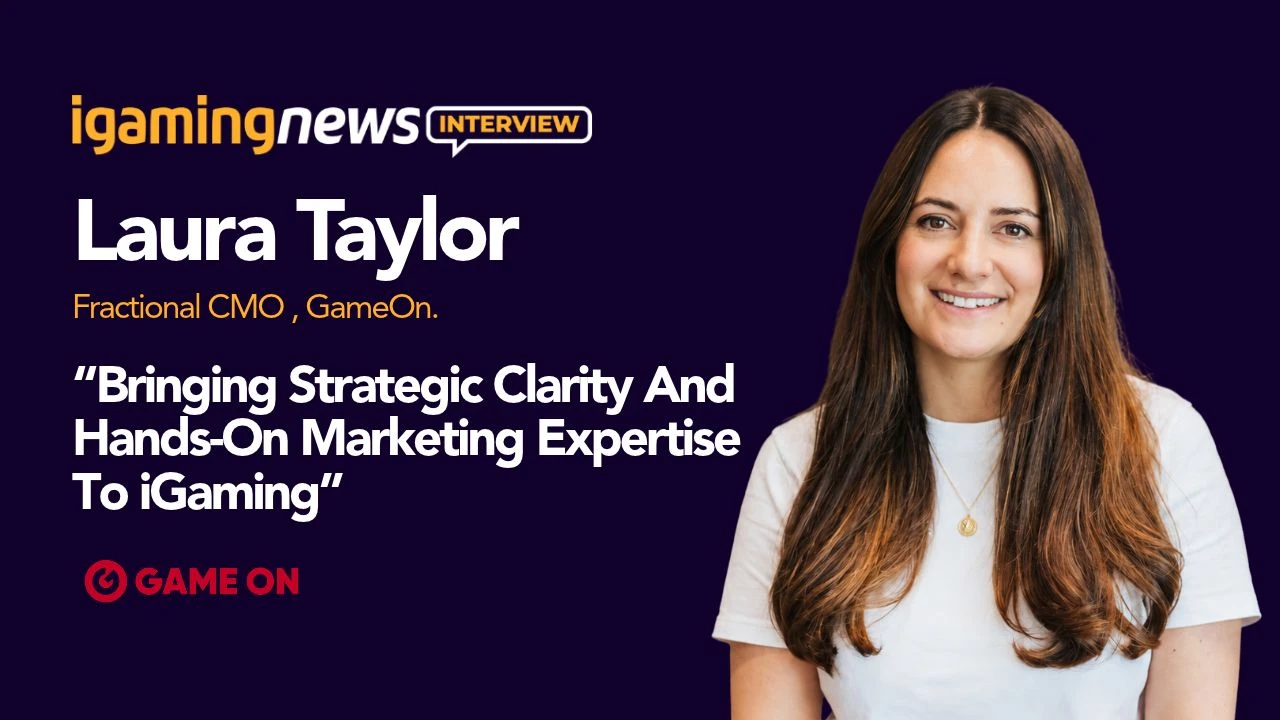
Laura Taylor has joined GameOn’s growing Fractional CMO team, bringing more than 15 years of experience across brand, marketing strategy and communications.
Having held senior marketing roles at Games Global and Microgaming, Taylor has worked with businesses at different stages of growth, from start-ups to global organisations. In her new role, she will help clients develop marketing strategies aligned with their commercial objectives, combining strategic direction with practical support.
In this interview, Taylor discusses the importance of clear brand positioning, the relationship between marketing strategy and execution, and how the fractional model can give iGaming businesses access to senior marketing expertise.
Applying Experience Across The iGaming Sector
You’ve recently joined GameOn’s Fractional CMO team following senior marketing roles at Games Global and Microgaming. What attracted you to the opportunity?
Having spent more than 15 years working across brand, marketing strategy and communications, I was excited by the opportunity to bring that experience to a wider range of businesses across the gaming sector.
What particularly appealed to me was the flexibility of GameOn’s Fractional CMO model. Every business has different priorities, challenges and resources, and I like that we can tailor our support around what each client actually needs.
I’ve worked with businesses at very different stages of growth, from start-ups to global corporates, and there’s no one-size-fits-all approach to marketing. GameOn understands that. It’s about becoming part of the client’s team, understanding their business and providing the right combination of strategic thinking and practical support.
You’ve worked with some of the industry’s most established businesses. What lessons from that experience will you bring to GameOn’s clients?
One of the biggest lessons I’ve learnt is the importance of having a clear strategy and making sure marketing supports the wider objectives of the business.
It’s easy to become focused on individual campaigns or activities, particularly when there are competing priorities. But without a clear understanding of what you’re trying to achieve, it’s difficult to know whether that activity is making a difference.
Working within larger organisations has also shown me how important collaboration is. Marketing doesn’t operate in isolation. It needs to work alongside commercial, product and other teams to support the business’s overall direction.
Equally, my experience with smaller businesses has taught me the value of being adaptable. You don’t always need the biggest budget to make an impact. Sometimes it’s about identifying the right opportunities, focusing your efforts and getting the fundamentals right.
Differentiation Through Brand Positioning
The iGaming industry is incredibly competitive. Where do you think businesses have the biggest opportunity to differentiate themselves through marketing?
I think it starts with being clear about who you are, what makes you different and why that matters to your audience.
There’s so much happening across iGaming, with businesses competing for attention through new products, partnerships and campaigns. It’s tempting to focus on being as visible as possible, but visibility alone doesn’t necessarily mean you’re connecting with the right people.
For me, differentiation comes from understanding what genuinely sets a business apart and communicating that consistently.
That might mean sharpening brand positioning, developing clearer messaging or taking a more focused approach to campaigns. Whatever the activity, it needs to support the business’s commercial objectives.
Consistency is also important. The strongest brands build recognition over time through marketing and communications that work together rather than operating as separate activities.
The Role Of Fractional Marketing Leadership
Not every iGaming business needs a full-time senior marketing leader. How can the Fractional CMO model help bridge that gap?
One of the biggest advantages is giving businesses access to senior marketing expertise in a way that’s flexible and proportionate to their needs.
For some clients, that might mean developing a marketing strategy, reviewing their positioning or identifying where to focus their investment. Others might already have a clear direction but need support turning that into a practical plan, guiding their team or delivering specific projects.
The fractional model allows us to work across those areas without clients necessarily needing to build that capability in-house.
What I particularly like is that it isn’t just about providing advice from the outside. The real value comes from becoming an extension of the client’s team, understanding their commercial priorities and being involved in making things happen.
Those needs can change as a business grows, and being able to adapt the level of support is a real strength of the model.
In your experience, what separates an effective marketing strategy from one that looks good on paper but struggles to deliver results?
For me, it’s the connection between strategy and execution.
You can have a compelling strategy, but if it doesn’t consider the realities of the business, including its resources, people and commercial priorities, it’s going to be difficult to deliver.
Effective marketing starts with asking the right questions. What is the business trying to achieve? Who are we trying to reach? What’s already working? And where can marketing make the biggest difference?
Once you understand those things, you can build an approach that’s focused, realistic and measurable.
I’m also a big believer in not overcomplicating things. Businesses don’t necessarily need to be doing more marketing. Sometimes they need to be doing fewer things, but doing them better and with a clearer purpose.
Priorities For The New Role
Finally, as you settle into your new role, what are your priorities and what are you most looking forward to achieving with GameOn?
My immediate priority is getting close to our clients and understanding their businesses, their challenges and the opportunities ahead of them.
Every client will have different needs, so I want to spend time understanding where they are now, what they’re working towards and where I can add the most value.
I’m particularly looking forward to the variety that comes with the role. Having the opportunity to work with different businesses across the gaming sector, each with its own ambitions and challenges, is something that really excites me.
I’m also looking forward to collaborating with the wider GameOn team and bringing together our different areas of expertise to support clients.
Ultimately, I want clients to feel they have a genuine marketing partner who understands their business, helps them make confident decisions and is equally comfortable shaping strategy or getting involved in delivery.
For me, that’s where the real value lies: building strong relationships and turning commercial priorities into focused, effective marketing activity that makes a meaningful difference.