INTERVIEW - Games Global: Designing Moments Rather than Mechanics
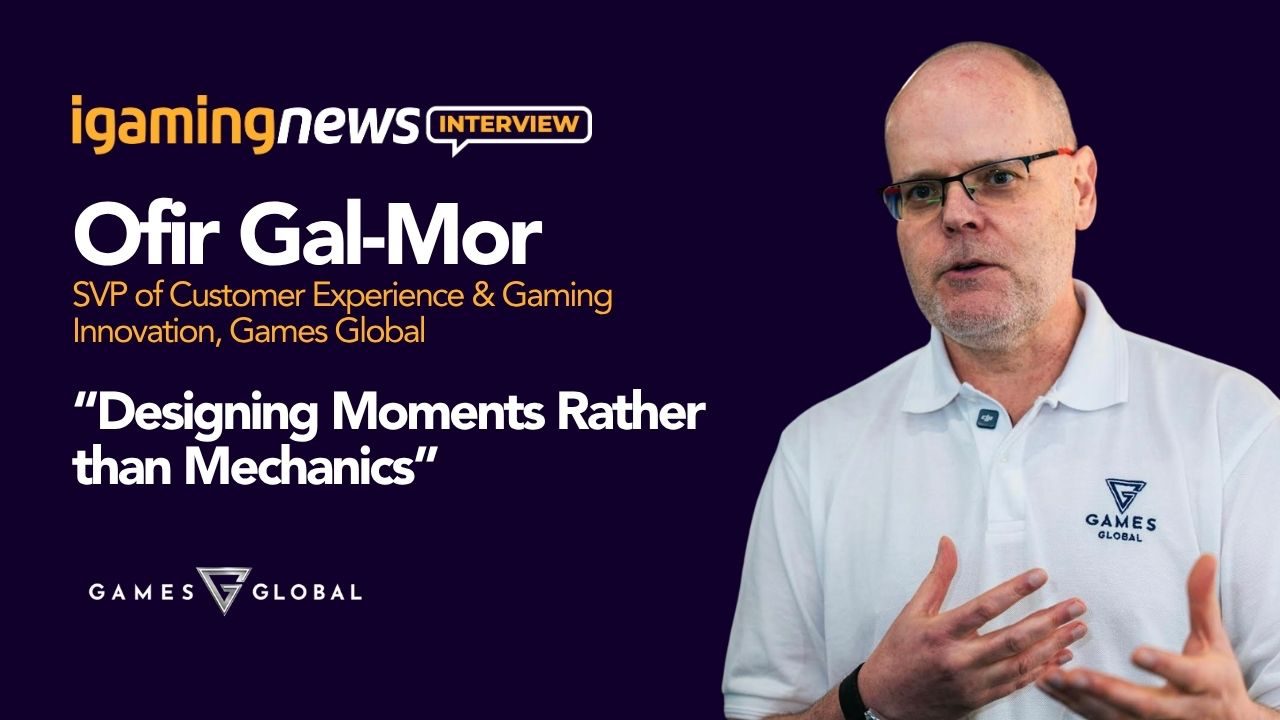
More mechanics do not necessarily mean better engagement. Games Global’s SVP of Customer Experience and Gaming Innovation, Ofir Gal-Mor, explains why understanding the player, keeping experiences simple and creating the right moments around good content will matter more than adding another layer of gamification.
How has the way players engage with iGaming changed, and what does that mean for how operators and suppliers should think about customer experience?
I think the biggest change is that the game is no longer the whole experience. The game is still the most important part – you need good content first – but there is now much more happening around it.
Players have different expectations and, importantly, they're very different from each other. A UK slot player is different from a US sports bettor, and they're different again from an Italian poker player. So, there is no single formula that works for every consumer.
You need to understand the player and then build the right experience around the content. That's really what we're trying to do. We have games that are already engaging players, and then we look at what else we can introduce around those games to create that extra layer of engagement. The objective is quite simple, and that’s to entertain the player, give them a reason to stay longer and, ultimately, give them a reason to come back.
You can see that with our recent Rewards BURST! promotion, for example. It's an always-on promotion rather than something that comes and goes every few months. Players can recognise it throughout the year, while the games included in the promotion can change over time. So, there's a consistent experience, but there's still something new for players to engage with.
Your role is focused heavily on customer experience and innovation. How do you approach designing experiences that are genuinely memorable?
I always come back to the player. My thinking is always: what does this actually mean for them? What are they getting out of it?
It's very easy in our industry to look at a mechanic and call it innovative, but the player doesn't really care whether we think the mechanic is innovative. They care whether it's fun, whether they understand it and whether it gives them something they want.
That's why it’s best to start with the experience and work backwards. Yes, the game itself must be good because these tools don't compensate for lacklustre content. But, when you have a game that players already enjoy, you can add a layer around it that gives them another reason to engage with it. That's where you can create extra moments that make the overall experience more enjoyable.
When considering Rewards BURST!, we're taking popular Games Global titles and adding more opportunities around them through Prize Drops and tournaments. Across its first year, the promotion will deliver 650,000 prizes worth €5 million, giving players more opportunities to win while engaging with content they already enjoy.
Can you create loyalty through the experience itself, rather than relying on the underlying game or the value of the reward?
The reward is obviously an important factor, but I don't think loyalty comes from the size of the reward alone. What makes people come back is the overall journey. There might be something happening every week, a promotion they recognise when they return, or an opportunity to compete or win while playing a game they are already familiar with.
That's why consistency is crucial. You want to give players something they recognise, while still keeping it interesting. If everything changes constantly, you lose that familiarity, but if nothing changes, people will inevitably get bored.
From a customer experience point of view, that's where you must find the right balance. And there’s a two-way win we look for: the player gets a better experience, and the operator gets better retention and lifetime value.
Is there a danger that gamification becomes over-engineered, with too many mechanics, challenges and layers competing for the player's attention?
Yes, absolutely. I think there is a danger of gamification becoming too complicated. Players can end up having feature fatigue, particularly when they are repeatedly presented with the same tournaments, prize drops or other promotional mechanics. If the gameplay starts to feel repetitive, naturally, less attention will be paid, which is why you need to keep refreshing the toolbox.
But keeping things fresh doesn't mean adding more and more mechanics or layers. The experience still needs to be straightforward. If someone has to spend time working out what they need to do before they can take part, then you've probably lost them already.
It’s important to remember that the most effective mechanics are often the simplest ones. The player should be able to see the value and get involved without having to think too much about it. Once that is clear, the entertainment can take over.
I think we need to be careful about this as an industry. There can be a temptation to keep adding to the experience because we think more will create more engagement. But that isn't necessarily the case. If the mechanic is doing its job and the player is enjoying themselves, you don't need to keep adding to it.
What can iGaming learn from other entertainment industries that can help shape the future of gamified products?
There are lots of things we can learn from outside iGaming, particularly when it comes to familiar ways of engaging people. Raffles are a good example. They're a very familiar mechanism in the offline world. You take part, you earn tickets, and then there is a draw. The more tickets you have, the better your chances of winning. It's very easy to understand, and players already know how it works.
I think that's an important ethos for iGaming. We don't always need to invent something completely new. There are mechanisms that have worked very well in other industries, and we can look at how they can be adapted for players here.
At the same time, you have to recognise that everyone is different. What works for one person or market won't necessarily work for another, so you need a range of tools rather than relying on one approach. The important thing is making sure those tools add to the experience rather than getting in the way of it.