Lords Committee Calls For Comprehensive Gambling Advertising Ban
The House of Lords Liaison Committee has recommended a comprehensive ban on gambling advertising, alongside a series of alternative measures if the Government does not adopt the proposal.
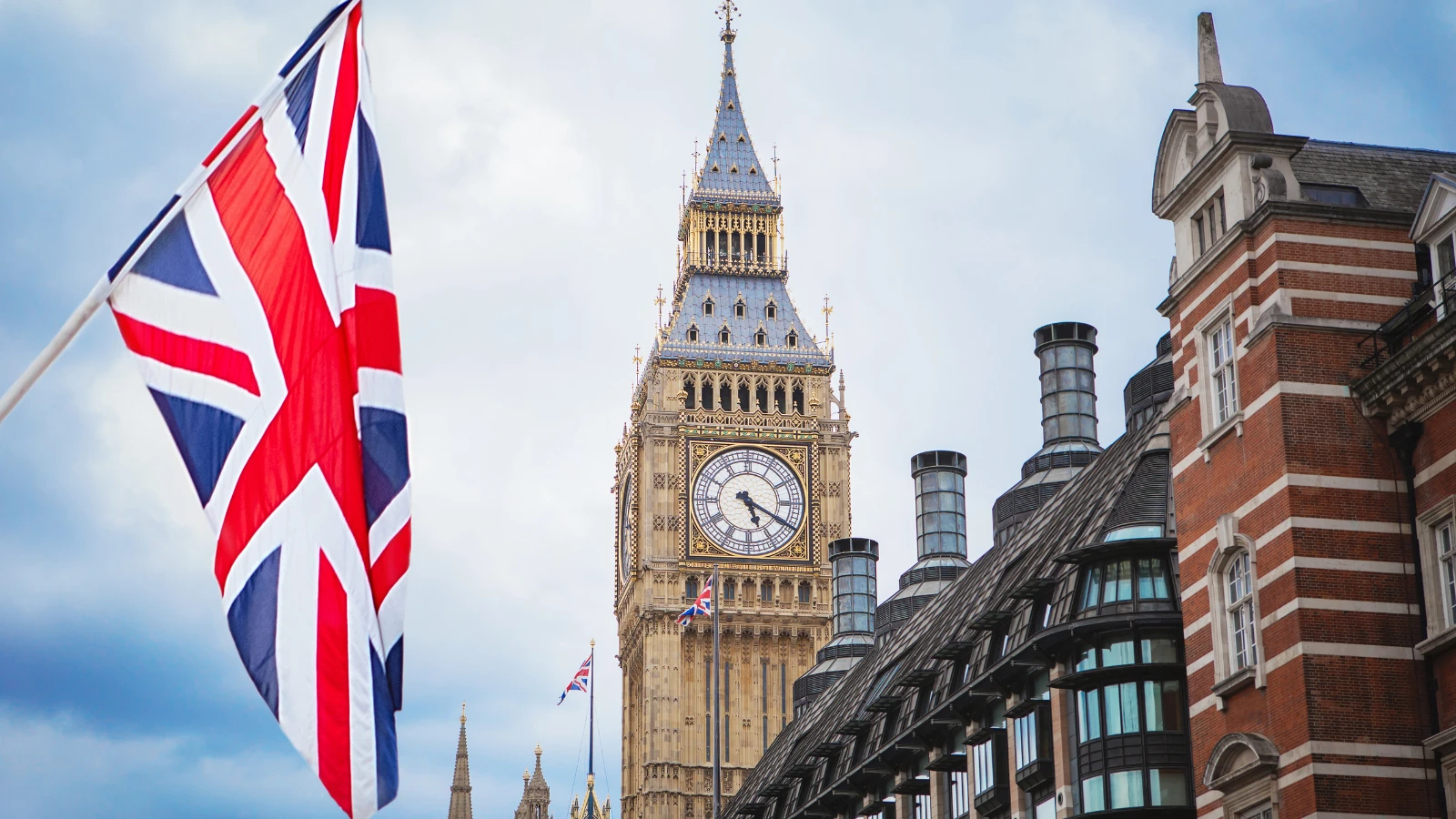
The House of Lords Liaison Committee has called on the Government to introduce a comprehensive ban on gambling advertising as part of a follow-up to its 2020 inquiry into gambling-related harm.
The committee published its Gambling Harm—Time for Action: Follow-up report on 17 September 2026 as HL Paper 52. The report contains 175 conclusions and recommendations based on 18 written submissions and an evidence session held on 17 June.
The committee said a comprehensive advertising ban would be the most effective policy option for reducing gambling-related harm and called on the Government to assess how such a ban could be implemented.
It also recommended that ministers drop the objective of facilitating growth in the gambling industry, stating that it had not received convincing evidence that industry growth could be pursued alongside harm reduction.
Committee Sets Out Alternative Advertising Measures
The report includes a series of measures that it recommends if the Government does not introduce a comprehensive ban, or while a ban is being implemented.
These include establishing a single statutory regulator for all gambling advertising, with powers to enforce restrictions on specific advertising channels and categories. The committee said the Gambling Commission appeared to be the most suitable body for this role.
The committee also called for an end to gambling advertising on sports team kits and at sporting venues, including training kits and sports programmes.
It recommended that ministers consult on a transition period lasting several years for clubs outside the Premier League and for other sports.
Other proposals include restrictions on gambling advertising during televised sporting events, regardless of the watershed, including on-demand broadcasts. Dedicated horse racing and greyhound racing programming would be exempt under the recommendation.
The committee also called for comprehensive bans on inducements, direct marketing and content marketing. The proposed direct marketing restriction would cover operators and third-party affiliates, while the content marketing measure would include operators’ own social media accounts.
It further recommended that the Committee of Advertising Practice (CAP) prohibit the use of the term “free bet” and related formulations.
The report proposes a licensing regime for affiliates operated by the Gambling Commission, with licensed affiliates permitted to promote only licensed gambling operators.
The committee also asked ministers to consider prohibiting influencers and content creators from promoting licensed operators.
Under-25 Gambling Advertising Restrictions Proposed
The committee’s recommendations include a specific restriction on gambling advertising directed at younger adults.
It called for a mandatory restriction on serving gambling advertising to people under 25 and proposed that the CAP and Broadcast CAP (BCAP) codes be amended so that their “strong appeal” test protects under-25s rather than under-18s.
Lottery advertising has been excluded from the recommendations for now. The committee said it had not taken evidence specifically on lottery advertising and called on the Government to assess the associated risks before deciding whether it should be included in any wider ban.
Committee And Industry Dispute Evidence
The report highlights disagreements over the evidence surrounding gambling harm and advertising.
It cited the Gambling Commission’s third annual Gambling Survey for Great Britain, published on 16 July 2026, which found that approximately 2.4% of adults aged 18 and over scored eight or more on the Problem Gambling Severity Index. The figure equates to between 1.0 and 1.5 million adults and has remained stable across the survey’s three years.
For people aged 11 to 17, the committee cited the 2025 Young People and Gambling survey, which found that 1.2% scored four or more on a youth-adapted screening measure, equivalent to around 68,000 young people.
Dan Waugh of Regulus Partners questioned the methodology behind the youth measure, arguing that its criteria primarily identify risky behaviours rather than gambling-related harm. The Gambling Commission defended the methodology, describing its 2025 report as “robust, in line with best practice in the field”.
Advertising expenditure was also disputed.
Dr Raffaello Rossi of the University of Bristol told the committee that the gambling industry spends around £2bn a year on advertising.
The Betting and Gaming Council disputed the figure, arguing that it does not distinguish between regulated and illegal gambling advertising expenditure. It cited World Advertising Research Centre (WARC) analysis estimating around £1.1bn in regulated-sector spending and £800m to £900m from the illegal market.
The committee concluded that gambling advertising expenditure appeared to be decreasing but remained significant, while the volume of online advertising had increased since 2020.
Government Says Evidence On Harm Remains Unclear
Baroness Twycross, minister for museums, heritage and gambling, told the committee during its June evidence session that the Government had no current plans to legislate on gambling advertising.
“However, just going back to the point I made earlier about the need for evidence-based policy-making, it is currently hard, despite the plethora of research, to establish a very clear causal link that suggests that advertising does lead to increased levels of gambling-related harm.”
Twycross pointed to a levy-funded research fellow working within the Department for Culture, Media and Sport (DCMS) on gambling advertising, as well as the Illegal Gambling Taskforce.
The Government also faces a legislative constraint over online gambling advertising. Section 328 of the Gambling Act 2005 allows the Secretary of State to regulate gambling advertising through secondary legislation, while section 333(6) prevents those powers from applying to online advertising carried by platforms established in the European Economic Area.
The committee said the Government should prioritise addressing this restriction and establish a clear timetable.
Economic Impact Of Advertising Restrictions
The committee acknowledged that a comprehensive advertising ban would have economic consequences for the gambling sector.
It concluded that restrictions would be highly likely to have a negative net economic impact on the industry, while arguing that this should be considered alongside potential long-term benefits from reduced gambling-related harm and the reallocation of consumer spending.
Lord Foster of Bath, a member of the former committee and its acting former chair, cited research led by Dr Damon Morris and published in Addiction in 2026.
“A ban on most gambling advertising would reduce gambling and therefore reduce problem gambling and the serious harm it causes. We are clear that this would shrink, rather than grow, the gambling sector and that this would make a positive difference to millions of people across the country.
“There are clear health and economic benefits to reducing participation in gambling, with a recent study by the Sheffield Centre for Health and Related Research estimating that a 10% reduction in spending on gambling could lead to an increase in GVA of £1.25 billion and create over 22,000 jobs.”
The Betting and Gaming Council has separately estimated that the regulated gambling sector supports more than 109,000 jobs, contributes £6.8bn to the UK economy and generates more than £4bn in annual tax.
Government Response Expected
The committee said it expects a Government response within the usual two-month timeframe for select committee recommendations.
The recommendations are not binding on ministers, and the report does not establish a timetable for implementation.
The committee has identified the Government’s ability to regulate online advertising as one issue requiring further action, while also calling for its proposed alternative restrictions to be considered if a comprehensive ban is not introduced.