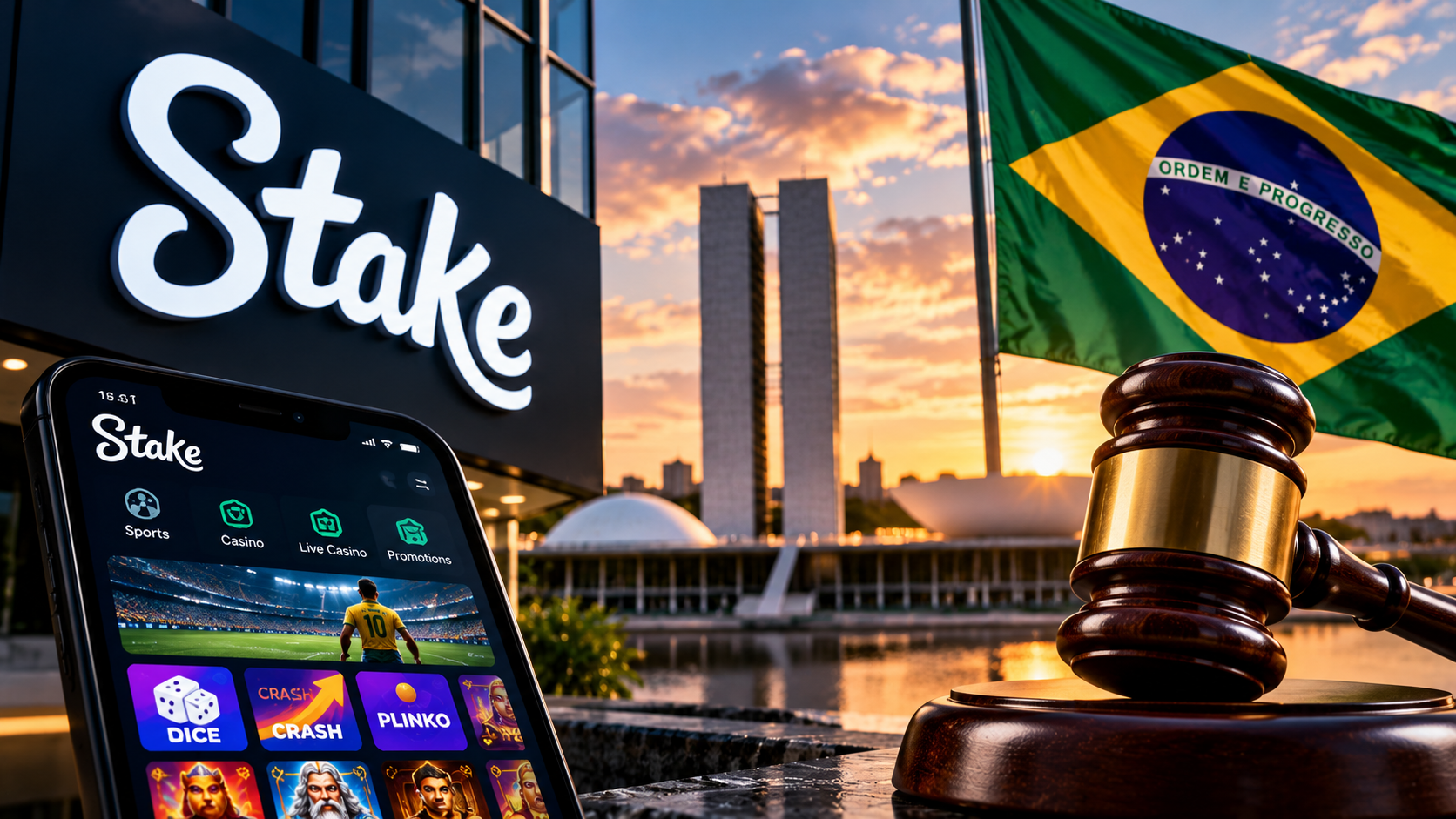
Brazil Orders Direct Bank Controls To Disrupt Illegal Gambling Flows
Brazil’s Secretariat for Prizes and Betting has introduced new procedures requiring financial institutions to identify, report and block transactions linked to unlicensed gambling operators.
Brazil’s Secretariat for Prizes and Betting (SPA) will introduce new measures aimed at identifying and disrupting financial transactions connected to unlicensed operators targeting the country’s online gambling market.
Published on 14 September, Ordinance SPA/MF No. 2,750/2026 establishes procedures for addressing the financial flows supporting illegal gambling activity.
The rules set out responsibilities for licensed financial institutions and payment services, including banks, payment processors, intermediaries and online wallets handling transactions involving individuals and gambling operators.
Financial service providers must monitor suspicious transactions, report evidence of illegal betting to the SPA, comply with account-blocking notifications and establish mechanisms to prevent further payments from directly or indirectly financing unauthorised activities.
Financial Monitoring And Account Blocking
The monitoring requirements identify several indicators that could point to attempts to support or circumvent restrictions on illegal gambling.
These include frequent small or medium-value transfers from multiple senders, sudden increases in transaction volumes, references to betting or games in payment descriptions and repeated replacement of Pix keys, QR codes, payment links or recipient accounts.
Other indicators include financial activity that does not correspond with a company’s declared business, newly established companies receiving large numbers of transfers, transactions concentrated in intermediary accounts and the use of new accounts, third-party recipients or replacement intermediaries after an account has been blocked.
The measures require institutions to assess wider changes in payment activity rather than examining individual transactions in isolation.
Responsibilities are divided between financial providers and the SPA. Institutions must analyse suspicious activity and report evidence of illegal betting, while the SPA will issue formal findings identifying the operator, its websites, applications and domains, as well as associated accounts and transactions.
Those findings will provide the basis for notifications instructing financial and payment institutions to block accounts belonging to identified operators and prevent further movement of funds.
The ordinance also establishes cooperation procedures. Communications should preferably be conducted through the Central Bank’s secure electronic system, while information relating to account blocks may be forwarded to the National Secretariat of Public Security (Senasp).
Carlos Renato Xavier de Resende, SPA undersecretary for monitoring and oversight, said the ordinance strengthens coordination with participants in Brazil’s National Financial System and Brazilian Payment System.
Writing on LinkedIn, Resende said enforcement needed to address the financial infrastructure used by illegal operators alongside action against their websites.
“Combating the illegal fixed-odds betting market also means reducing its ability to receive and move funds, and remain economically viable,” he wrote.
The ordinance sets out three response deadlines. Financial institutions have up to 45 days from publication to complete an analysis of suspicious activity.
Where evidence of illegal betting or attempts to evade restrictions is identified, institutions must report the case to the SPA by the next business day.
Following an SPA notification, institutions holding accounts belonging to an identified operator must implement the block within 24 hours. They must then confirm compliance with the SPA within 48 hours of the blocking action.
Finance Minister Calls For Tighter Gambling Controls
The new measures come as Brazil continues to debate the future of its regulated betting framework under the country’s Bets Law.
Finance Minister Dario Durigan has expressed support for tighter controls on online gambling while arguing that taxation should be applied on the basis of equal treatment between businesses.
“It’s not that I want to collect taxes because I need the money. I want to collect taxes for the sake of equality: if a company sells cars, it pays taxes; if it sells drinks, it pays taxes. If it’s authorised to operate, it has to pay.”
The comments follow figures from Receita Federal showing approximately R$7.3bn (£1bn) in federal tax receipts from betting and online gambling during the first half of 2026.
The agency expects tax receipts from the sector to more than double in 2026, exceeding the R$10bn (£1.4bn) collected during 2025.
Durigan has also said he is monitoring developments in Congress and the Senate as the government considers the future of the Bets Law ahead of the October general election.
While the Finance Minister does not support an immediate ban on online gambling, he has reiterated his preference for “treating the activity similarly to tobacco, using tighter regulation and taxation to discourage participation”.
Durigan said the Ministry of Finance had not taken a position on the future of online gambling in Brazil. The ministry will therefore have to implement whatever changes lawmakers ultimately make to the country’s betting legislation, regulatory protections and enforcement framework.