Is Vendor Lock-In Holding the iGaming Industry Back?
An Op-ed by Charlie Noble, COO at Betable
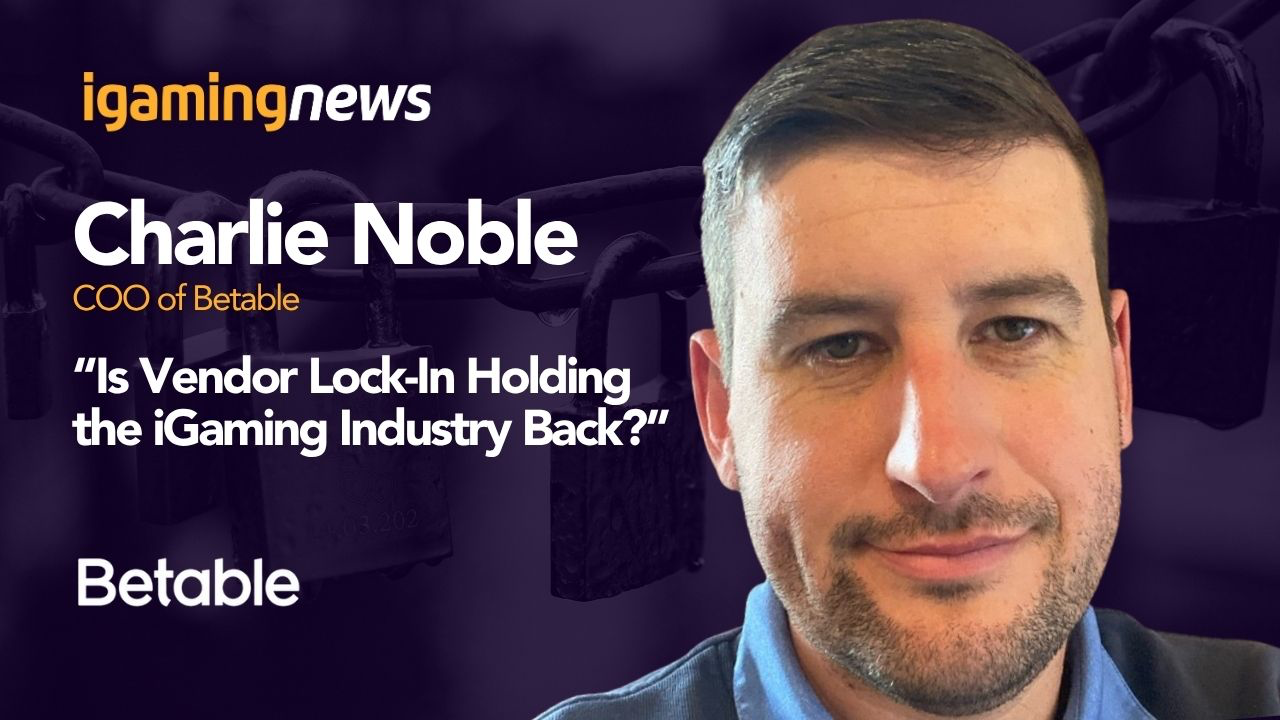
Exploring whether operators have sacrificed flexibility for convenience
For years, the iGaming industry has operated on a relatively simple model: find a technology provider that can deliver what you need, integrate with its platform and focus on growing the business.
On the surface, it makes sense.
Building technology internally is expensive and time-consuming, while partnering with an established provider can give an operator access to the infrastructure, products and expertise it needs without having to build everything from scratch.
But there is a point where convenience can become dependency.
As operators have grown across markets and product verticals, many have found themselves increasingly reliant on a small number of technology providers. What initially looked like an efficient solution can eventually become a constraint, particularly when an operator wants to change direction.
This raises an important question for the industry: have operators sacrificed flexibility for convenience?
The Convenience of a Single Provider
There are obvious advantages to working with a single technology partner.
One relationship can mean fewer integrations, a simpler commercial structure and a more straightforward implementation process. For a new operator, that can be particularly attractive.
Instead of selecting individual providers for every part of the operation, a business can access multiple capabilities through one platform.
The problem appears when that relationship becomes difficult to change.
Once an operator has built its sportsbook, casino, payments, CRM, reporting and player management around a particular ecosystem, moving one component can have implications across the entire operation.
The technology that once simplified the business can begin to define it.
The Cost of Being Locked In
Vendor lock-in isn't necessarily obvious at the beginning.
It develops gradually.
An operator adds another product. Then another integration. Data becomes increasingly embedded within the platform. Internal teams become familiar with particular systems and processes, while commercial operations are built around what the technology provider offers.
Eventually, switching providers can feel too disruptive to consider.
That creates a very different commercial relationship.
The operator may technically have a choice, but the cost and complexity of exercising that choice can make it unrealistic.
This matters because the iGaming market changes quickly.
The provider that is the right fit today may not necessarily be the right fit three or five years from now. New payment technologies emerge, new gaming suppliers become important, regulatory requirements evolve and operators' own strategies change.
Technology should be able to evolve with those decisions.
Flexibility Is Becoming a Competitive Advantage
The industry has traditionally focused heavily on what a platform offers.
How many games does it have? Which markets does it support? Which payment methods are available?
Those questions still matter, but there is another one operators should be asking:
How easy is it to change?
An operator may not want to replace its entire platform. It may simply want to add a specialist payment provider, introduce a new gaming vertical or integrate a particular CRM solution.
If doing so requires significant redevelopment, flexibility becomes theoretical rather than practical.
This is where API-first architecture can change the equation.
Rather than forcing every component into a single ecosystem, APIs allow different technologies to connect while giving operators greater freedom over the individual providers they use.
The objective isn't to remove the platform.
It is to make the platform less restrictive.
Control Over the Technology Stack
Greater choice also gives operators more control over their own businesses.
Not every operator has the same strategy, player base or target markets. A technology stack that works exceptionally well for one business may be completely unsuitable for another.
Operators should therefore have the ability to select the products and services that support their individual commercial objectives.
That could mean choosing a particular payment provider because it performs better in a specific market, adopting a specialist CRM solution or adding new technology without having to replace the underlying platform.
This level of control becomes particularly important as operators expand internationally.
Different markets create different requirements, and a rigid technology stack can make international growth unnecessarily complicated.
A flexible architecture allows operators to adapt their technology to the market rather than forcing the market to fit the technology.
Integration Shouldn't Mean Dependency
There is an important distinction between integration and dependency.
Integration is essential to modern iGaming. No platform exists in isolation, and operators will continue to rely on specialist technology providers across their businesses.
The issue is what happens when those integrations become difficult to change.
A healthy technology ecosystem should allow operators to add, remove or replace components without destabilising the entire operation.
That requires clear APIs, accessible data and an architecture designed around interoperability rather than exclusivity.
The more easily systems can communicate with one another, the more freedom an operator has to make decisions based on what is best for its business.
The Role of the Platform Provider
This also creates a responsibility for technology providers.
The strongest platform relationships shouldn't depend on making an operator difficult to leave.
They should be based on delivering technology that continues to create value.
At Betable, we believe operators should have the freedom to control their technology strategy rather than being forced into an all-or-nothing model.
That means creating a platform where third-party providers can be integrated, different products can work together and operators can adapt their technology as their businesses evolve.
A platform should be an enabler, not a barrier.
Convenience Still Has a Place
None of this means operators should avoid integrated platforms.
There is genuine value in having technology that works together, particularly for businesses looking to launch quickly or simplify their operations.
The question is whether convenience comes at the expense of long-term flexibility.
A platform can provide both.
The best architecture should give operators the simplicity of an integrated environment while retaining the freedom to make changes when their strategy demands it.
That is ultimately what modern operators need: convenience without dependency.
Building Businesses That Can Change
The iGaming industry is unlikely to become less competitive or less complex.
Operators will continue to enter new markets, adopt new technologies and look for ways to differentiate themselves in an increasingly crowded environment.
That makes flexibility more than a technical consideration.
It is a commercial advantage.
Operators evaluating their technology should therefore look beyond the immediate benefits of a platform and ask:
Can we change individual components without rebuilding everything?
Do we control our data and technology strategy?
How difficult would it be to replace a provider if our business needs changed?
If the answer to those questions isn't clear, convenience may already be coming at a cost.
Vendor relationships should help operators move faster, not make it harder to change direction.
The future of iGaming technology isn't necessarily about having fewer providers.
It is about creating an ecosystem where operators have the freedom to choose the right providers, connect them effectively and change them when necessary.
Convenience can help an operator launch.
Flexibility is what allows it to keep evolving.