AI is Speeding up Software Development. Can iGaming Platforms Keep Up?
An Op-ed by Adam Mateja, CEO and Co-Founder of Blurify
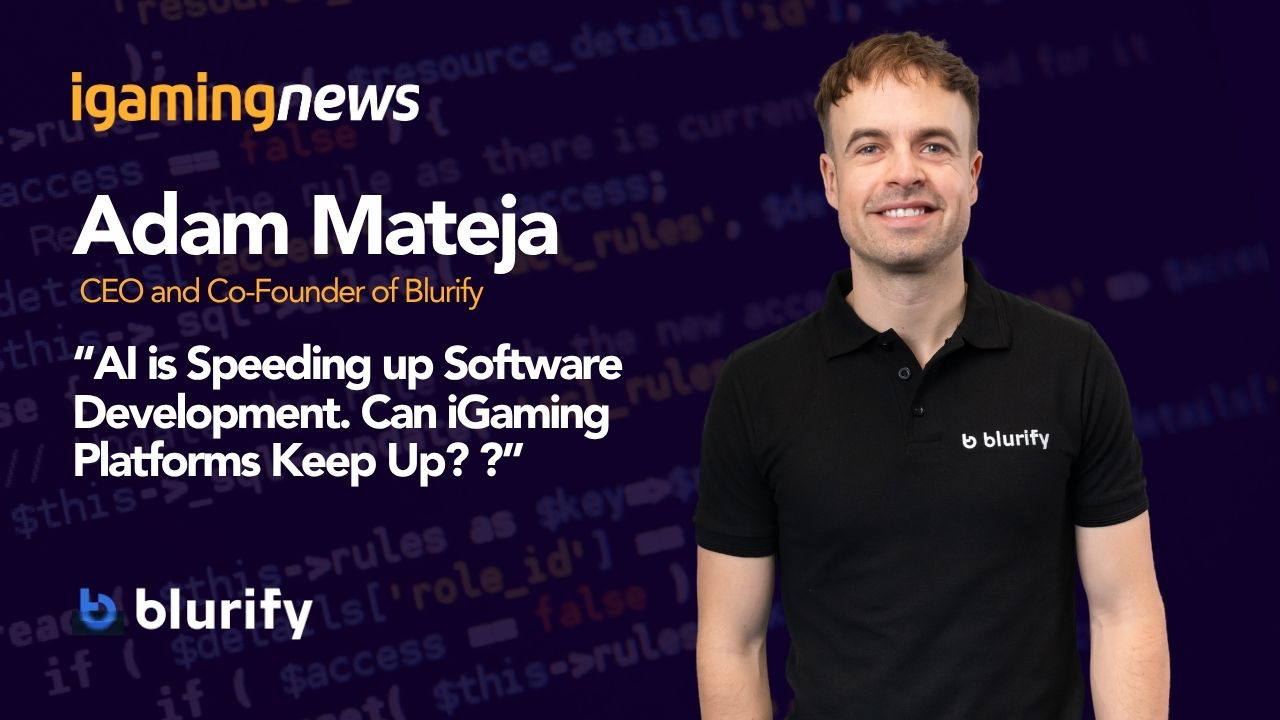
Adam Mateja, CEO and Co-Founder of Blurify, looks at what faster software development means for iGaming platforms, and why the architecture underneath them will play a growing role in how quickly operators can act.
Coding agents are already reducing the time involved in parts of software development. For an iGaming operator, however, producing software more efficiently only gets you so far if the technology around it cannot accommodate the same pace of development.
Plenty of iGaming infrastructure predates this way of working. Platforms have accumulated integrations and custom functionality over years of operation, with components becoming closely connected along the way. Operators using third-party platforms may also find their own development priorities competing for space on a supplier’s roadmap.
Take something relatively routine such as changing a payment provider. AI can help an engineering team build the new integration more quickly, but it still has to work with the operator’s wallet and the wider platform. If introducing it creates significant work elsewhere in the stack, some of the time saved during development is quickly lost.
For us, this is where AI raises an interesting question for iGaming: how easy is the platform itself to change?
The platform bottleneck
Faster engineering can expose limitations that were easier to live with when development itself took longer. A tightly connected platform can turn a relatively contained product requirement into a much larger piece of work.
This has influenced how we are developing Openora.ai, Blurify’s open-source iGaming AI-native casino platform framework. Its architecture is modular, so individual components can be changed without unnecessarily affecting the rest of the platform. For an established operator, that also creates scope to modernise individual areas without committing to a full migration.
The payment example is a useful one. Openora defines how its wallet communicates with a payment provider, with the provider-specific implementation handled separately through an adapter. An operator can therefore replace that implementation without redesigning the wallet around a new provider. The interface is already part of Openora, with a production PSP reference implementation on the roadmap.
The same approach allows Openora to sit alongside existing systems. An operator can introduce a capability where it is needed and address other parts of its technology over time.
Giving AI context
Architecture also affects how useful coding agents can be.
An engineer joining a development project needs to understand how the system works before making significant changes. Coding agents need that context too. Source code provides part of it, alongside information about how the component they are working on is supposed to behave and how it connects to the wider platform.
We have tried to make that knowledge explicit within Openora. Contracts define how parts of the framework communicate, while individual modules provide coding agents with information relevant to the area they are working in. Openora’s development tooling can also make information about the framework available in a machine-readable form.
This gives an agent a clearer picture of the environment before it starts implementing a change. Engineers remain responsible for reviewing what is produced, but less time needs to be spent providing the basic context behind each task.
AI-native development starts with an architecture that gives AI the context it needs to work effectively.
Continuous evolution
iGaming platforms have often accumulated changes over long periods until the limitations of the existing technology make a larger migration necessary. Faster development creates more scope to modernise the platform along the way, provided individual components can be updated without creating disproportionate work elsewhere.
Major migrations will remain the right decision for some operators. For others, replacing a component or introducing a new capability as the need arises avoids turning every modernisation project into a platform-wide exercise.
This idea of progressive evolution is central to where we are taking Openora. The framework is still developing, and its roadmap envisages AI agents assisting with more of the work involved in its development and operation over time. How much an agent can do will depend on the task and the level of human oversight required.
As AI reduces the time involved in software development, the value for operators will depend on how readily the resulting work can makes its way into the product. A platform capable of evolving in smaller, well-defined parts gives that faster development cycle somewhere to go.