Why Regional Player Preferences Still Decide What Works in iGaming
By Olha Pronak, Head of KAM of Evoplay
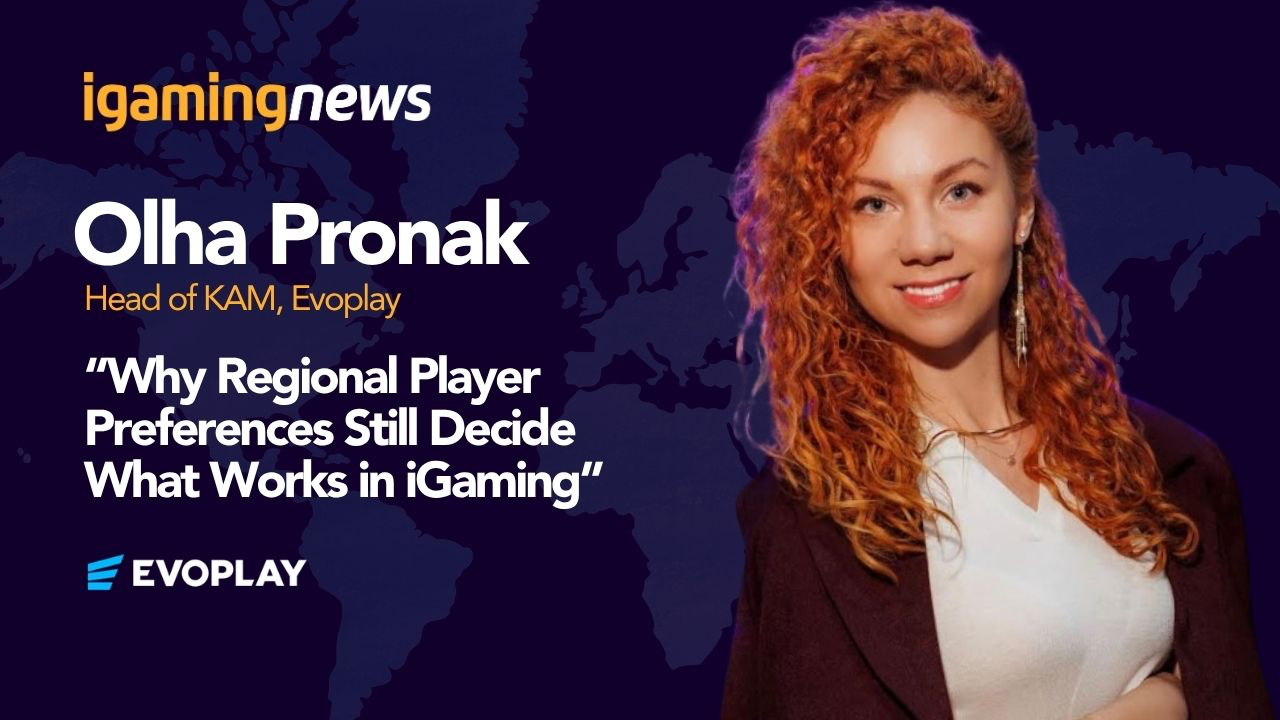
A game that resonates in one market can fall flat in the next, and the reasons rarely come down to language alone. Olha Pronak argues that Evoplay’s approach starts with adapting what already works rather than building region-specific titles from a blank page.
The myth of the universal game across all regions
A lot of iGaming content is still built as if one version can work everywhere, with the same theme, pacing and bonus structure rolled out across every market a supplier operates in. It is efficient on paper, and some titles genuinely do travel well, resonating with a large share of players across very different markets. But that is rare, and even those games rarely land equally everywhere. Session length and theme preference shift once you cross a border, so building a connection with players in a new market usually comes down to how well a supplier understands the local audience: their culture, traditions and preferences, and how well that understanding shows up in the game itself.
Pace and theme aren’t always felt the same way
In parts of Latin America, there is a real appetite for high-volatility, fast-paced formats where the payoff is quick and visible, crash games being the most famous example. Players want tension to build and resolve within seconds, not long-winded gameplay sessions.
European markets often lean toward steadier, more measured play, shaped by longer regulatory histories and player bases with more time to settle into specific game types. In several African markets, mobile-first experiences matter as much as the mechanic itself, since access shapes engagement before the theme enters the conversation. Across parts of Asia, there is a stronger pull toward social and competitive elements, leaderboards and features that reward playing well.
A theme that works well in one region, such as Asia, can often perform just as strongly in a market like Brazil. The point isn’t that themes need to be different everywhere, it’s that a game tends to land harder when it is enhanced with localised elements that make it feel more familiar and engaging to the audience playing it.
Adapting rather than starting from scratch
This is why we have moved away from treating region-specific development as a from-scratch exercise. Building an entirely new title for every market isn’t sustainable. The more effective route is identifying mechanics that already resonate broadly, then adapting theming, tone, difficulty and presentation to fit a market’s cultural reference points.
Our Brazilian crash title, Caramelo Dog: Lucky Run, is a useful example. The mechanic itself, a rising multiplier with a cash-out decision, isn’t new but what has changed is the character running through it. The game focuses on Taco, named after the infamous Caramelo stray dog that roams the streets in Brazil, that has become a genuine fixture of Brazilian culture.
That kind of local recognisability does a lot for retention because it signals a game made with a market in mind rather than dropped into it. A four-tier difficulty system, from Easy through to Hardcore, also lets players self-select their own pace and volatility, which matters in a market already saturated with mechanic-first crash titles.
We have taken a similar approach with our Penalty Shoot-out series too, where the core format stays consistent, but presentation and pacing differ depending on where and when it is deployed.
Football across different markets
The recent 2026 World Cup is another good stress test for this theory. Even as one of the biggest global sporting events, engagement around it doesn’t behave uniformly. In some markets, football-themed content spikes hardest around specific matches and national teams, with strong but short-lived attention. In others, interest is steadier and less tied to results, more about the broader occasion than any single fixture. A supplier building one football push for every territory will inevitably overserve some markets and underserve others.
Building for the right market
Scale is still an important factor but treating every market the same way to get there isn’t the answer. In order to pull ahead, suppliers need to work out which parts of a game can stay fixed and which need to change every time it crosses a border. That is the question we ask before any title goes into a new market, and it is usually a better use of time than starting again from a blank page.