Why More Features Won’t Fix a Legacy Platform
By Tom Cantello, Head of Product at Betable
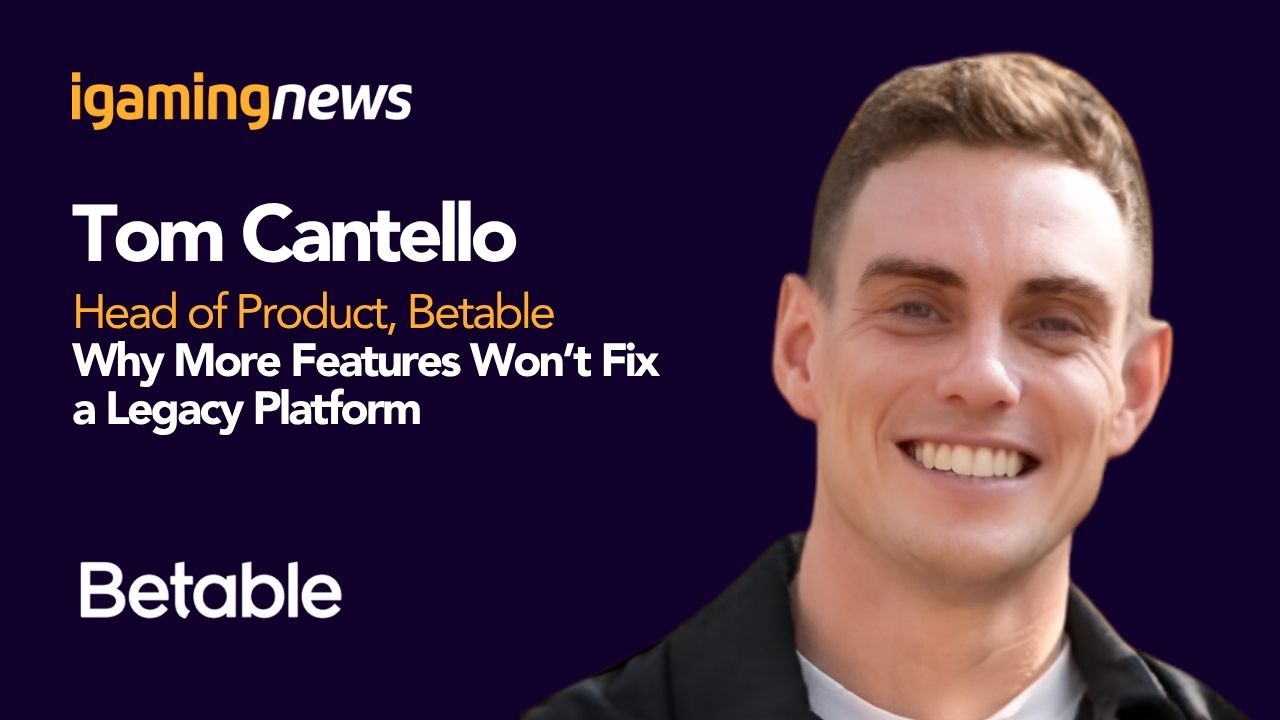
This op-ed has been written by Tom Cantello, Head of Product at Betable
For years, the iGaming platform conversation has revolved around feature lists. Operators compare game portfolios, payment providers, licensing capabilities and integrations, believing that ticking enough boxes equates to choosing the right technology partner.
The reality is that the industry's biggest challenge today isn't a lack of features. It's the underlying architecture that powers them.
As regulated markets continue to emerge and player expectations evolve, operators are placing greater pressure on their technology stacks than ever before. Launching in multiple jurisdictions, managing compliance, integrating new products and responding to market trends all require platforms capable of adapting at speed.
Unfortunately, many operators are discovering that their existing platforms were never designed for today's demands.
Many of the platforms supporting today’s operators began life in a very different market before multi-jurisdictional expansion, real-time personalisation and today’s compliance requirements became standard considerations.
While they've evolved over time, many have done so through acquisitions, third-party integrations and layers of additional functionality. The result is often a fragmented ecosystem where sportsbook, casino, CRM, compliance and reporting operate as separate components rather than as one unified platform.
Initially, this may not seem like an issue. But as an operator grows, these architectural compromises begin to surface.
Every new market requires additional development. Every new vertical introduces further complexity. Reporting becomes inconsistent across products, while marketing teams rely on disconnected data sources to understand player behaviour. Even seemingly straightforward changes can require significant technical effort because the underlying infrastructure simply wasn't designed with flexibility in mind.
The cost isn't just operational. It impacts growth.
Technology should remove friction, not create it.
One of the most interesting shifts we're seeing across the industry is a growing recognition that operators need greater control over their own technology stack. Rather than accepting an all-or-nothing platform, businesses increasingly want the freedom to choose the providers, products and services that best suit their commercial strategy.
This is where modern API-first architecture changes the conversation.
Instead of forcing operators into a rigid ecosystem, API-led platforms allow businesses to integrate sportsbook providers, payment solutions, game studios and emerging verticals without rebuilding their entire operation. It creates genuine flexibility while reducing long-term dependency on any single supplier.
Architecture is not only about how easily different components connect. It also reflects which product a platform was originally designed to optimise. That distinction matters because the commercial centre of gravity for many operators has shifted.
Historically, sportsbook shaped the design of many platform architectures because it was considered the primary growth driver. Today, however, casino is increasingly delivering stronger margins, greater player lifetime value and higher levels of engagement. As a result, operators are beginning to ask a different question: is their platform simply capable of supporting casino, or was it designed to maximise its commercial potential?
For many operators, casino delivers higher margins, stronger player lifetime value and greater retention opportunities than sportsbook alone. As a result, we're seeing increased demand for technology that treats casino as the foundation of the business, rather than a secondary product sitting alongside sports betting.
When casino sits at the heart of the platform, everything from player account management and promotional mechanics to reporting and CRM becomes significantly more cohesive. Operators gain a clearer view of customer behaviour and can deliver more personalised experiences without relying on multiple disconnected systems.
Compliance is another area undergoing significant change.
As regulation expands across new jurisdictions, operators require platforms that can support multiple licensing frameworks without introducing unnecessary complexity. Compliance can no longer be viewed as a standalone function that sits outside the player journey. It needs to be embedded within the platform itself, ensuring responsible gambling controls, KYC processes and regulatory reporting operate seamlessly across every product and market.
Scalability also deserves greater attention.
Launching an operator is one challenge. Scaling that operator across multiple brands, territories and product verticals is another entirely. Infrastructure should be capable of handling growth without requiring extensive redevelopment every time the business reaches a new milestone. Elastic cloud architecture, automated deployment and unified reporting are becoming fundamental requirements rather than premium features.
At Betable, this has led us to approach product development around a straightforward principle: operators should be able to change direction without having to fight their underlying platform. That means treating scalability, compliance and integration as architectural considerations from the outset, not features to be added once the business has already grown.
More importantly, we believe operators should never feel constrained by their platform. Technology should enable strategic decisions, not dictate them. Whether that's entering a new regulated market, adding another gaming vertical or integrating specialist third-party providers, the platform should evolve alongside the business.
The next generation of operators won't be defined solely by their brands or marketing strategies. They'll be defined by the flexibility of the technology that sits behind them.
The industry has reached a point where simply adding more features to legacy systems is no longer enough. The conversation is shifting from functionality to architecture, from integration to cohesion and from maintaining platforms to building businesses that are ready for long-term growth.
Operators evaluating a platform should therefore ask three questions:
- How quickly can we change it?
- How much of it can we control?
- What happens when our business model evolves?
Features matter, but they describe what a platform can do today. Architecture determines what the operator will be able to do tomorrow.