SPRIBE’s Giorgi Tsutskiridze on Aviator, Operator Trust and Leading Under Pressure
SPRIBE’s Chief Commercial Officer discusses life behind Aviator, earning operator trust, empowering his team and the challenge of switching off in iGaming.
Listen to this article
British female voice
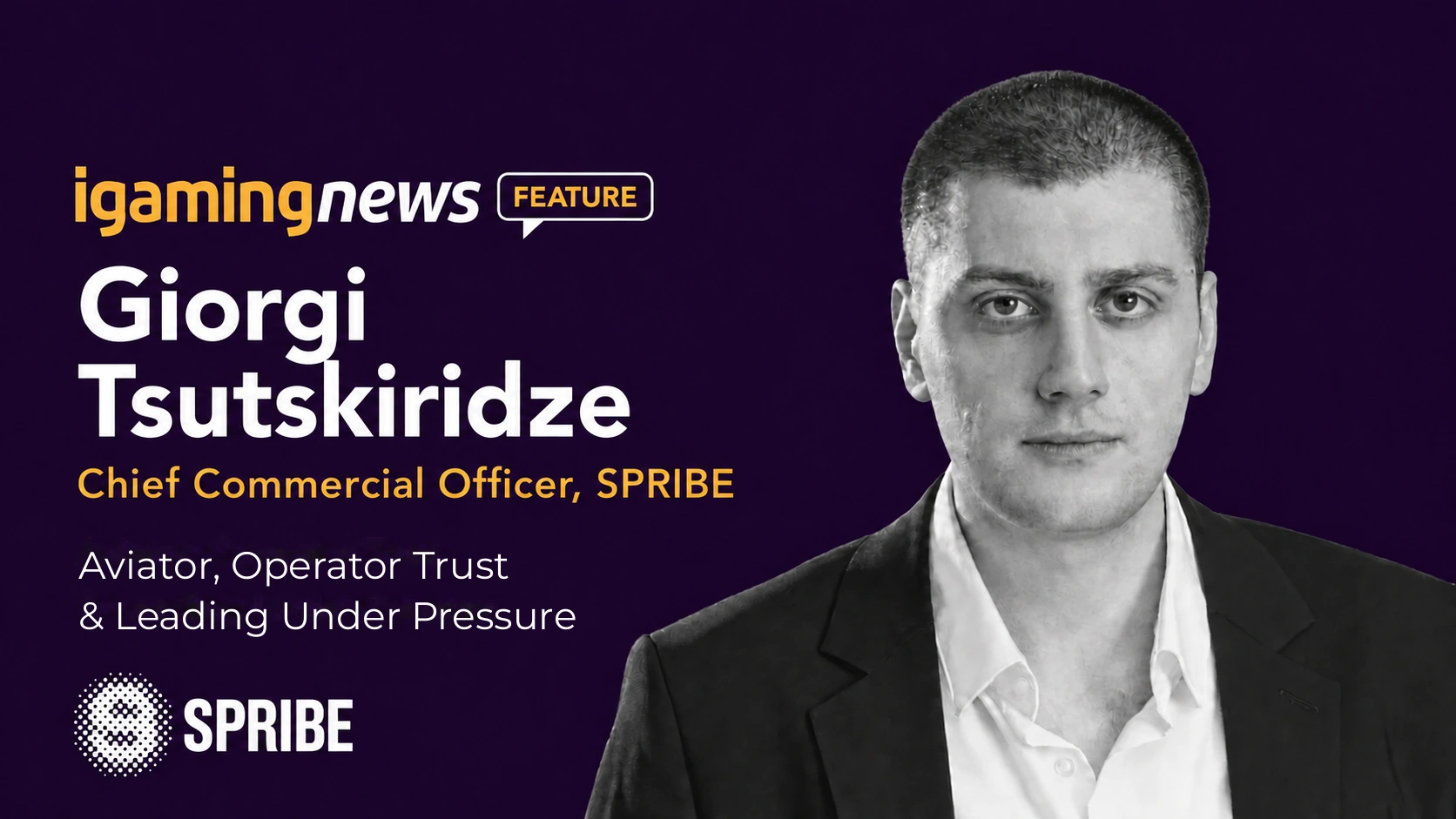
Working with one of iGaming’s most recognisable games brings opportunity, scrutiny and a constant need to keep improving. For Giorgi Tsutskiridze, Chief Commercial Officer at SPRIBE, the commercial role is as much about listening, earning trust and supporting a team as it is about performance.
In this interview with iGaming.News, Giorgi reflects on his route into the industry, the unpredictability of a normal working week and the responsibility that comes with Aviator’s scale. He also discusses why operator relationships are tested when things go wrong, what he values in a leader and the challenge of switching off in a business that never really stops.
How did you first end up in iGaming? Was it a plan, or did it happen to you?
I wouldn't say it was part of some carefully mapped-out career plan. What attracted me to iGaming was the pace of the industry and the combination of technology, entertainment and business. It's a sector where things move incredibly quickly, and where you can genuinely see the impact of your decisions.
What kept me interested was the people and the constant evolution. There's always a new market, a new challenge or a different way of doing things. I enjoy environments where you have to think on your feet, and iGaming certainly gives you plenty of opportunities to do that.
What does a normal week look like for you at SPRIBE, and how often does it actually go the way you planned?
I usually start the week with a fairly clear idea of what needs to happen, but by Tuesday, there's a good chance those plans have already changed.
A big part of my time goes into conversations with operators, partners and our internal teams. We're working across multiple markets, so there's always something happening, whether it's a new partnership, a product development discussion or an opportunity that needs a quick decision.
What I enjoy most is that no two weeks are identical. Of course, there are meetings, targets and commercial strategies to manage, but some of the most valuable conversations happen unexpectedly. You have to leave room for those moments rather than trying to control every minute of your calendar.
Aviator is one of the most recognisable games in the industry. What's it like to work on something that so many people already have an opinion about?
It's a privilege, but it also comes with a certain amount of pressure. When you work with a product as successful as Aviator, everyone has expectations. Operators expect strong performance, players expect a great experience, and competitors are constantly watching what you do next.
The interesting thing is that success doesn't make your job easier. In many ways, it raises the bar. We have more than 77 million monthly active users, and that scale brings a huge responsibility to keep improving.
I'm proud of what we've achieved, but I try not to spend too much time celebrating past successes. The moment you start believing you've figured everything out is probably the moment someone else starts catching up.
A commercial role lives or dies on relationships. What have you learned about earning an operator's trust that no amount of data could have taught you?
That trust is built through consistency, not presentations. You can walk into a meeting with impressive numbers, excellent performance metrics and a convincing commercial proposal, but none of that matters much if people don't believe you'll deliver on your promises.
I've learned that sometimes the most important thing you can do is listen rather than sell. Every operator has different challenges, priorities and expectations. Understanding those details is what turns a commercial agreement into a genuine partnership.
And perhaps most importantly, you have to be there when things aren't going perfectly. It's easy to be a great partner when everything is running smoothly. How you handle difficult conversations is what people actually remember.
Who has had the biggest influence on how you work? It doesn't have to be someone from the industry.
I've learned something from almost everyone I've worked closely with, but the people who have influenced me most are those who lead by example rather than by title.
I've always respected people who can stay calm under pressure, make difficult decisions without unnecessary drama and treat everyone with the same level of respect, regardless of their position.
One thing I've come to appreciate is that being the loudest person in the room doesn't make you the strongest leader. Often, the people who have the biggest impact are the ones who ask the right questions, listen carefully and know when to let others take the lead.
How would your team describe you as a boss? Feel free to answer honestly.
Hopefully, they'd say I'm approachable, straightforward and that I trust them to do their jobs. Although I'm sure they'd also mention that I can be demanding and that I tend to ask a lot of questions.
I believe in giving people ownership. If someone is responsible for something, they should have the freedom to make decisions and bring their own ideas to the table. I don't see much value in hiring talented people and then telling them exactly how to do everything.
At the same time, I have high expectations, particularly when it comes to accountability and communication. We work in a fast-moving business, and I think everyone understands that we need to be ambitious without making things unnecessarily complicated.
And yes, I probably send more messages than my team would ideally like.
What do you do to switch off, and does work ever manage to follow you there?
Switching off completely is probably one of the hardest parts of the job. When you're working with partners across different time zones and an industry that operates around the clock, there's almost always something happening somewhere.
I try to make time for the people close to me and for activities that take my attention away from screens and meetings. I think having that balance is important, not just personally, but professionally as well. You make better decisions when you have some distance from the day-to-day pressure.
That said, I'd be lying if I claimed I never check my phone during my time off. I'm still working on that part.
Interview: iGaming.News. Responses supplied by Giorgi Tsutskiridze. The monthly active user figure is SPRIBE’s stated figure. Portrait and SPRIBE logo sourced from the company’s official website.
Further reading: Founders Unfiltered with SPRIBE’s David Natroshvili · More People interviews and news
Stay ahead of iGaming
Get the week's key stories, industry insight and exclusive interviews in your inbox.
One email a week. Unsubscribe any time. More about our newsletter