Brazil Supreme Court Sets 3 November Hearing On Nationwide Betting Ban
Brazil's Supreme Federal Court will hear arguments from gambling operators, government authorities and football clubs as the legal challenge to President Lula's betting ban continues.
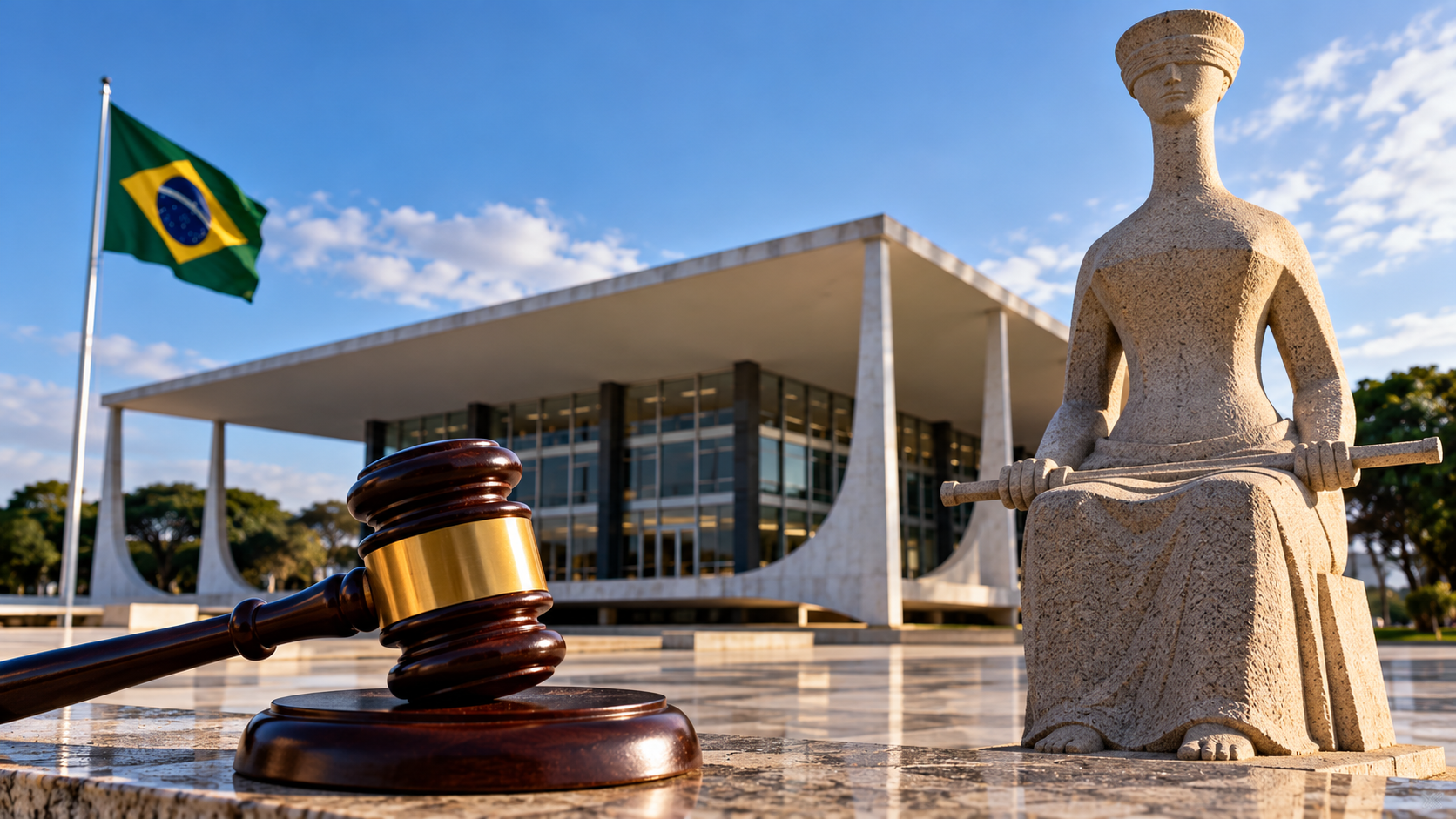
Brazil's Supreme Federal Court (STF) has scheduled a public hearing for 3 November to examine the legal challenges surrounding the country's nationwide betting ban, marking a significant development in the dispute over President Luiz Inácio Lula da Silva's gambling restrictions.
Supreme Court Justice Luiz Fux confirmed that the hearing will begin at 10:00 AM local time in the court's Second Chamber, bringing together government representatives, gambling industry associations, football clubs and other interested parties.
The proceedings will consider Provisional Measure 1,394/2026, introduced in September, which prohibits the operation, offering, intermediation and advertising of betting services across Brazil.
The legislation has prompted widespread legal challenges from licensed operators and industry organisations, which argue that the restrictions undermine the regulatory framework established for Brazil's online gambling market.
Supreme Court Moves Forward Following Elections
Justice Fux, who is overseeing several cases concerning gambling regulation, had previously indicated that he would avoid taking action during Brazil's election period to prevent the proceedings from being interpreted as political interference.
With the elections concluded, the court has now moved to examine the legal arguments surrounding the provisional measure and its wider implications.
Fux highlighted the urgency of the proceedings, citing the deadlines attached to the legislation and its potential economic consequences for Brazilian football and other sectors.
Legal certainty is also a central concern, particularly given the investments made by gambling companies following the introduction of Brazil's regulated online betting market in January 2025.
The hearing was requested by the Attorney General's Office (AGU), parties involved in Direct Action of Unconstitutionality (ADI) 8.027 and organisations admitted to the proceedings as amici curiae.
The Supreme Court has previously examined the social consequences of gambling, including addiction and consumer protection concerns. Those discussions formed part of earlier proceedings in which Fux highlighted the potential harms associated with betting.
Gambling Industry Challenges Constitutionality Of Ban
The National Association of Games and Lotteries (ANJL) and the Brazilian Institute of Responsible Gaming (IBJR) are among the organisations seeking to overturn the restrictions.
Both associations have requested the suspension of the provisional measure, arguing that the government's decision to prohibit licensed betting raises constitutional concerns.
The dispute centres partly on the sudden reversal of Brazil's gambling policy, with operators having obtained licences and invested in the regulated market before the restrictions were introduced.
The AGU has defended the government's position, asking the Supreme Court to maintain the ban in full.
Its legal arguments include the federal government's authority to determine which lottery and betting activities may be permitted in Brazil.
The hearing will also inform several related constitutional proceedings, including ADIs 7.721, 7.723, 7.749, 8.024, 8.028 and 8.035.
Consequently, the court's examination will extend beyond the immediate challenge to Provisional Measure 1,394 and address broader questions surrounding gambling regulation.
Brazilian Football Clubs Join Proceedings
The potential financial consequences for Brazilian football will feature prominently, with several leading clubs confirmed among the participants.
Flamengo, Fluminense, Botafogo, Cruzeiro, São Paulo and Corinthians are among the organisations invited to present their positions, alongside Ponte Preta, Vitória, Guarani and Portuguesa.
The Brazilian Football Confederation (CBF) will also participate, reflecting the importance of betting sponsorship and commercial partnerships to the country's football industry.
The restrictions have already created uncertainty around existing sponsorship agreements, including those involving international clubs competing in Brazil.
Other participants include the Ministry of Finance, the National Confederation of Industry, the Brazilian Association of Radio and Television Broadcasters and representatives of state lottery operators.
Their involvement reflects the broader economic and regulatory implications of the ban, extending beyond online gambling operators to media businesses, sports organisations and public authorities.
Hearing Could Shape Future Of Brazil's Betting Market
The 3 November session will provide an opportunity for the Supreme Court to examine competing arguments about the legality, economic impact and public interest implications of Brazil's betting restrictions.
However, the hearing itself does not constitute a final ruling on the constitutionality of the provisional measure, and the court has not confirmed when a substantive decision will follow.
For licensed gambling operators, the proceedings represent an important stage in efforts to restore regulatory certainty after the abrupt suspension of betting activities.
The outcome could also have significant consequences for football clubs, media companies and other businesses whose commercial arrangements depend on the country's gambling sector.
With the government defending the restrictions and industry organisations seeking their suspension, the Supreme Court's forthcoming examination will be closely watched by stakeholders across Brazil's regulated betting market.