The Curaçao Era is Over: Where iGaming Operators Move Next
The regulatory map has changed substantially. These days, three jurisdictions are driving most of our conversations with clients: Anjouan, Tobique, and Tuvalu. But to understand why, we first need to address what happened to Curaçao.
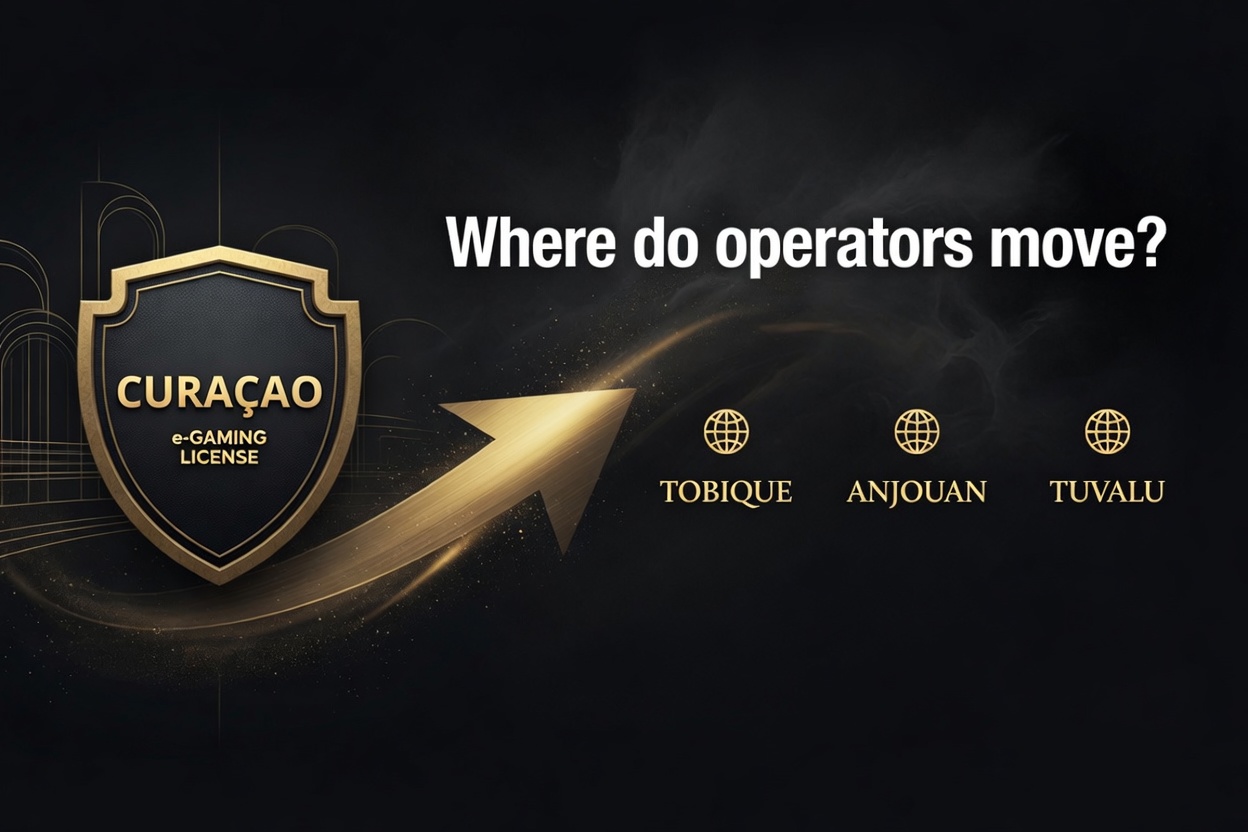
The era of the "easy" offshore license has ended. Across the industry, operators are opening letters from the CGA with a mounting sense of dread: a sudden mandate for a physical local office and a looming €50,000 annual fee just to keep the lights on. The Curaçao of five years ago – the accessible, low-friction jurisdiction that launched a thousand platforms – is gone. Today, we spend our weeks breaking the news to operators who arrive with outdated business plans, hoping for the old Curaçao, only to discover they are chasing a ghost.
The regulatory map has changed substantially. These days, three jurisdictions are driving most of our conversations with clients: Anjouan, Tobique, and Tuvalu. But to understand why, we first need to address what happened to Curaçao.
The End of the Curaçao Default
For decades, Curaçao was the undisputed launchpad for iGaming. You paid a low fee for a sub-license from a Master License holder, set up a basic corporate structure, and you were live.
That model no longer exists.
With the enactment of the National Ordinance on Games of Chance (LOK), the transition period has ended. Sub-licenses have been abolished in favor of direct licensing from the Curaçao Gaming Authority (CGA). Practically, the barrier to entry has multiplied. Operators are now looking at annual fees north of €50,000+, mandatory physical office space on the island, local hiring requirements, ADR requirements, and strict local server mandates.
Staying in Curaçao is not only expensive and slow – it has become a severe operational hazard. If you fail to meet the new, stringent local substance and Alternative Dispute Resolution (ADR) requirements, you face the immediate risk of license suspension. A sudden halt doesn't just freeze revenue; it destroys player trust, voids banking agreements, and forces operators to migrate in a panic.
Curaçao is actively aligning itself with Malta's strict compliance requirements. In doing so, it has priced out the agile operators that built its reputation in the first place. For anyone needing a fast, cost-effective market entry, Curaçao is simply no longer a viable option.
“If your business is stuck in endless talks with the CGA, you have options. We routinely help operators navigate these regulatory dead ends, legally manage their Curaçao obligations, and deploy alternative solutions without interrupting their cash flow.” — Vladyslav Yarovoi, CEO at Rikk Law Firm.
But where is the industry going instead?
The Fast-Entry Option: Anjouan
With Curaçao out of the picture for early-stage operators, Anjouan has absorbed much of that demand.
The appeal is straightforward: one license covers B2C casinos, lotteries, and sportsbooks. There is a 0% Gross Gaming Revenue (GGR) tax, and we regularly see licenses issued within 6 to 8 weeks.
It’s important to keep a realistic view of Anjouan. Its accessibility is both its strength and its limitation – it lacks the legacy prestige that instantly opens doors at major European banks. If you go with Anjouan, you may face issues getting your merchant accounts approved by some PSPs.
Anjouan is best suited to early-stage B2C casino and sportsbook operators, crypto-first platforms, and MVP launches where speed to market is the primary commercial priority. It is a poor fit for operators targeting regulated European markets, seeking tier-one card-processing relationships, or planning to accept deposits in EUR or other currencies via major acquiring banks.
Banking Credibility via Canada: Tobique
When a mid-sized operator wants to target Latin America, the EU, parts of Asia, or Canada, but they need to maintain credibility with their players and payment providers, Canada is an option.
Operating under a First Nations gaming commission, Tobique provides the trust factor of a G7-adjacent jurisdiction. It avoids the heavy bureaucracy of provincial regulators while offering a universal license, zero GGR tax, and a fast launch window.
Tobique filters out low-budget projects. Licensing fees are €43,000 for the first year, dropping to €25,000 annually thereafter. You need more capital upfront, but in return, you face far fewer hurdles when sitting down with acquiring banks.
Tobique is best suited to mid- to large-sized casino and sportsbook operators generating €200K–€200M+ in monthly GGR, particularly those targeting the EU. LatAm, Canada, or Southeast Asia who need reliable fiat payment processing. It is also a strong secondary license for Curaçao migrants who want to maintain operational continuity while upgrading their banking relationships. It is less appropriate for sub-€500K-monthly GGR operators where the licensing fee would represent a disproportionate overhead.
Built for Decentralized Teams: Tuvalu
Tuvalu is the most recent addition to the offshore licensing landscape, and it has drawn particular interest from the Web3 and blockchain sectors.
Tuvalu built its modernized offshore framework specifically for how digital companies operate today. It costs roughly $15,850 annually with zero corporate tax. Crucially, they do not force operators to maintain local physical servers or hire onshore directors. It is built for fully remote, decentralized teams.
But the most attractive thing in the Tuvalu license is an option to obtain a Principal license. It’s a unique option on the iGaming market where you can issue a license on your own. So this is the safest option for TurnKey and White Label providers that other offshore licenses couldn't propose to you.
Because the framework is new, its standing with financial institutions remains largely untested. The regulator takes a deliberately light-touch approach, which sounds attractive, but it transfers the compliance responsibility entirely to the operator. However, all operators must strictly follow AML and KYC policies.
Tuvalu is best suited to: Web3 casino operators, NFT-based gaming platforms, fully remote teams, and B2B turnkey software providers operating in crypto-accepting markets. Its minimal substance requirements make it the most cost-effective option for pre-revenue or early-revenue projects (typically under €100K monthly GGR) where minimizing fixed overhead is critical. It is not suitable for operators requiring fiat merchant accounts, payment providers demanding stricter jurisdictional credentials, or platforms targeting the EU.
Jurisdiction Comparison at a Glance
Here is how the primary alternatives stack up against the new Curaçao conditions:
Jurisdiction | Setup Speed | Annual Fee (Approx.) | GGR Tax | Local Substance Needed? | Best For | GGR Range |
Curaçao (LOK) | 3–6 Months | €50,000+ | Variable | Yes (Office & Staff) | Operators with heavy capital & EU-level compliance | €3M+ / month |
Anjouan | 4–8 Weeks | €30,000 (Year 1) | 0% | No | Crypto casinos & lean startups | Pre-revenue – €200K / month |
Tobique | 4–6 Weeks | €43,000 (Year 1) | 0% | No | Mid-sized operators needing strong banking | €200K – €200M+ / month |
Tuvalu | 3–4 Weeks | $15,850 | 0% | No | Web3 & decentralized teams | Pre-revenue – €100K / month |
If you need help with selecting a jurisdiction for your project – the Rikk team helps iGaming operators identify the right licensing path based on their revenue profile, target markets, and payment infrastructure needs. You can book a free meeting to discuss business licensing and get a bonus guide to make the right choice.
Migration Without Losing Players
A common fear among operators is that leaving Curaçao means starting from scratch. This is a misconception. A professionally managed migration keeps business fully operational.
“Transitioning to another license can be seamless. The platform stays live. We secure the new license and establish parallel corporate structures before surrendering the Curaçao license.
Operators do not lose player databases. The domain, player balances, connected PSP’s and open banking, and brand identity move with you. Updating the Terms and Conditions is typically all required to officially notify users.
By properly structuring the process with Payment Agent and re-onboarding a new license, the deposit and withdrawal systems continue to function without interruption during the switch.
We recently partnered with a mid-sized, EU-focused casino generating €6.2M in monthly turnover. They received a notice from the CGA demanding a local officer and an island-based physical office.
Staying in Curaçao meant absorbing ~€100,000 in unforeseen local substance costs and risking immediate suspension if deadlines weren't met. Our first step was to buy them time. We negotiated a six-month deferral with the regulator, giving them a safe period to keep operating while we planned the transition. Only then did we start the migration. We initiated a structured pivot to Tobique. Within 4 weeks, their new corporate structure and gaming license were approved.
The operator migrated with zero operational downtime. They saved ~€65,000 annually in administrative bloat and leveraged the Tobique license to unlock a robust tier-one payment provider they previously couldn’t sign up with due to local directors' rejection in signing documents, and finally fully managed their business by themselves without struggling to deal with a local director.” — Vladyslav Yarovoi, CEO at Rikk Law Firm
A License Is Not a Business
Many corporate service providers treat a license as a standalone product. A gaming license is not that different from an expensive piece of paper if you cannot open an EMI/PSPs account and process players' deposits.
The market is moving. Operators who treat jurisdiction selection as a one-time administrative task – rather than a live part of their commercial strategy – tend to find that out the hard way.
“If you are currently battling the CGA, facing excessive new fees, or simply waiting for a change in regulations – don’t be afraid to migrate. It is possible to switch licenses without halting operations, losing traffic or payment processing. Book a call with our legal team to discuss your current situation in Curaçao and map out your migration strategy.”— Vladyslav Yarovoi, CEO at Rikk Law Firm