Welcome Bonus Or Loyalty Bonus? How Sweden And Finland Ended Up With Opposite Rules
Sweden and Finland share similar goals around channelisation and gambling harm, but their regulatory approaches to bonuses have resulted in two contrasting models.
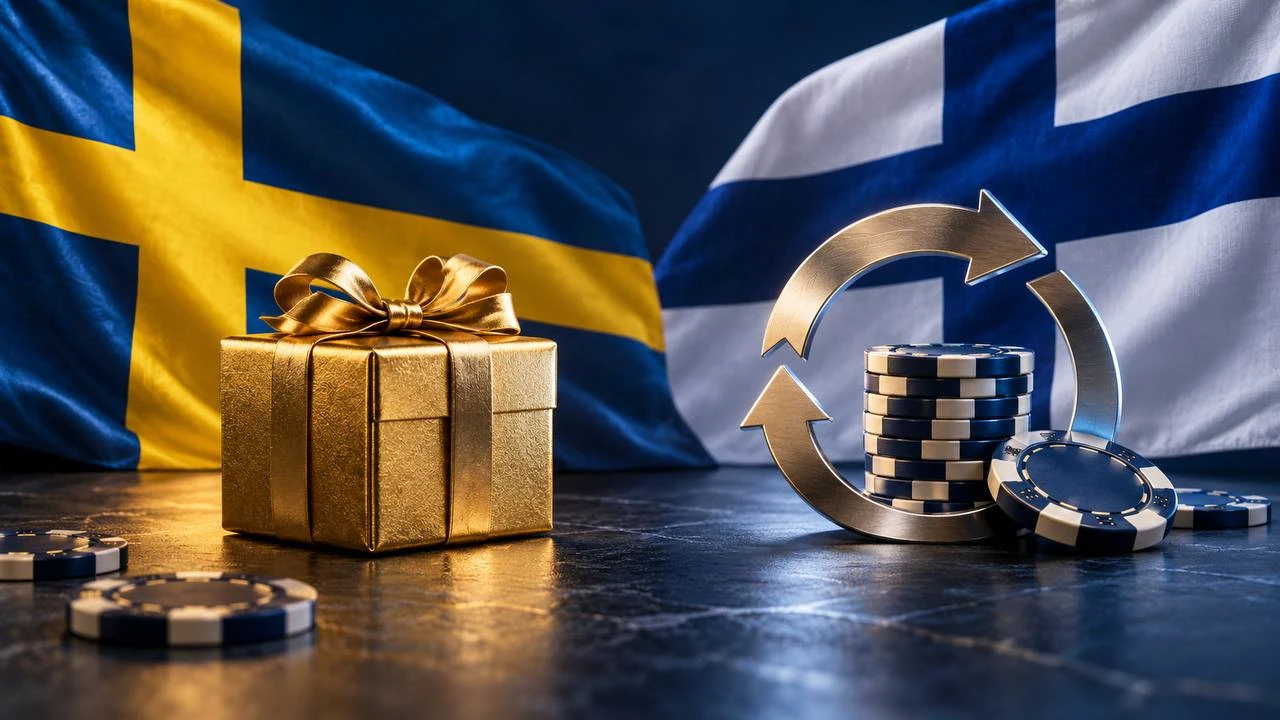
When Finland opens its online casino and betting market to licensed operators on 1 July 2027, it will bring an end to one of Europe’s remaining gambling monopolies.
Around 75 operators had already applied for a licence by late September, exceeding initial expectations from Finnish officials.
Many of those operators already have experience in the Nordic region, particularly Sweden, which introduced its licensing system in 2019. However, Finland has taken a markedly different approach in one important area: bonuses.
Sweden permits a welcome bonus but prohibits subsequent incentives. Finland, meanwhile, will prohibit welcome bonuses while allowing limited incentives for existing customers.
The neighbouring markets share stated objectives around channelisation and harm reduction, but have reached contrasting conclusions over how gambling promotions should be regulated.
Sweden: One Bonus, Once
Sweden’s bonus rule is relatively straightforward but has significant implications for operators and players.
Under Chapter 14, Section 9 of the Gambling Act, a licence holder may only offer a bonus on the first occasion that a player gambles with it. After that, further bonuses are prohibited.
The definition of a bonus is broad and covers deposit matches, free spins, cashback and most other financial incentives linked to gambling. This prevents operators from offering reload bonuses, loyalty rewards and conventional VIP incentives.
The restriction applies per licence holder rather than per individual gambling website.
Several gambling groups operate multiple casino brands under a single Swedish licence, meaning a player who has already claimed a welcome bonus from one brand cannot receive another from a sister site operating under the same licence.
This structure has also created a role for comparison platforms. Guides covering casino bonuses in Sweden can identify brands operating under shared licences, allowing players to determine where they remain eligible for an introductory offer.
Swedish regulator Spelinspektionen has repeatedly reminded licensees that the restriction applies across different forms of financial incentives, with regulatory breaches potentially resulting in orders, fines or licence action.
Finland: No Welcome Bonus, Limited Loyalty Offers
Finland’s new Gambling Act, Rahapelilaki 10/2026, was passed by Parliament in December 2025.
Licence applications opened in March 2026, with licensed operators able to launch from 1 July 2027. Veikkaus will retain exclusive rights over lotteries, scratch cards and physical slot machines.
Finland’s approach to bonuses begins from the opposite position to Sweden.
Promotions designed to attract new customers will be prohibited when the licensed market opens. This means operators will not be able to offer deposit matches on registration, free spins for signing up or introductory first-bet promotions.
Existing customers, however, can receive bonuses.
Amendments introduced by Parliament’s Administration Committee allow licensees to provide “moderate” bonus money to existing players, with wagering requirements capped at 5x.
The restrictions will operate alongside a broader regulatory framework that includes a prohibition on affiliate marketing for online casino operators, a 22% tax rate, mandatory player identification, deposit limits and a national self-exclusion register.
Two Different Approaches To Bonuses
The Swedish and Finnish models reflect different approaches to where regulators perceive the risks associated with promotional incentives.
Sweden | Finland From July 2027 | |
|---|---|---|
Welcome bonus | Allowed once per licence holder | Banned |
Bonuses for existing players | Banned | Allowed if “moderate”, with maximum 5x wagering |
Affiliate marketing | Allowed | Banned for online casinos |
Licensed market since | 2019 | 2027 |
Sweden’s model focuses on restricting repeated incentives. Operators can use a one-off introductory offer, but cannot continue incentivising customers with bonuses after they begin playing.
Finland instead focuses its restrictions on acquisition. Operators will not be permitted to attract new customers using sign-up promotions, but can provide limited incentives to established players.
As a result, each jurisdiction permits a form of bonus that the other prohibits.
UK Takes A Third Approach
The UK provides another point of comparison.
Since January 2026, the Gambling Commission has capped wagering requirements attached to bonuses at 10x. Unlike Sweden, however, the UK does not restrict operators to a single bonus.
This creates three distinct regulatory approaches.
Sweden limits how frequently a player can receive bonuses, while the UK focuses on the conditions attached to them. Finland will combine elements of both approaches by prohibiting acquisition bonuses while imposing tighter conditions on incentives available to existing customers.
Channelisation Remains Central To Debate
Both Sweden and Finland have sought to direct players towards locally licensed operators, making channelisation a central part of the debate surrounding bonus restrictions.
The issue is particularly relevant because offshore operators can continue using larger promotional packages when targeting players outside the licensed framework.
In Finland, representatives of the gambling industry have raised concerns about whether restrictions on marketing and promotional offers could affect the ability of licensed operators to compete with offshore companies.
Mika Kuismanen, CEO of trade body Rahapeliala Ry, has warned that restrictions on marketing and bonuses could result in players continuing to use the grey market.
The Finnish Competition and Consumer Authority has estimated that around half of online gambling spending in Finland currently goes to foreign companies.
Finland’s new system will also use taxation as part of its approach to channelisation.
Finnish players can currently receive tax-free winnings from casinos licensed elsewhere in the European Economic Area. From 1 July 2027, the exemption will instead be tied to the Finnish licence.
Winnings from an operator targeting Finland without a Finnish licence will therefore become taxable income, including where the operator holds a licence elsewhere in the EEA.
Two Supreme Administrative Court rulings in August 2026 also addressed the taxation of chance-based online casino winnings from operators that do not qualify for an exemption.
As Nordic Law’s Jon Hautamäki explained in iGaming Expert, the rulings mean taxation can be calculated by playing session without losing sessions being deductible against winning ones.
This creates an additional consideration for players comparing licensed and unlicensed operators once Finland’s new regime takes effect.
Could Sweden And Finland Change Course?
Sweden’s regulated market provides several years of experience with the one-bonus model, but debate around the restriction continues.
In a recent survey of the Swedish gambling industry, most respondents expected the country’s bonus rules to be relaxed by 2030. Gambling researcher Anders Nilsson was among those taking a different view, predicting that the one-bonus restriction would remain.
Finland’s system will face its first practical test after the licensed market opens in July 2027.
Jari Vähänen of The Finnish Gambling Consultants has suggested that if channelisation does not meet expectations, legislators could eventually reconsider restrictions around affiliates and potentially welcome bonuses.
For now, Sweden and Finland offer two contrasting experiments in bonus regulation: one allowing acquisition incentives while restricting retention offers, and the other doing almost exactly the reverse.