German And European Court Rulings Open Door To Billions In Gambling Loss Claims
Thousands of German gamblers could seek compensation from online operators that accepted wagers without domestic licences before the country's gambling reforms in 2021.
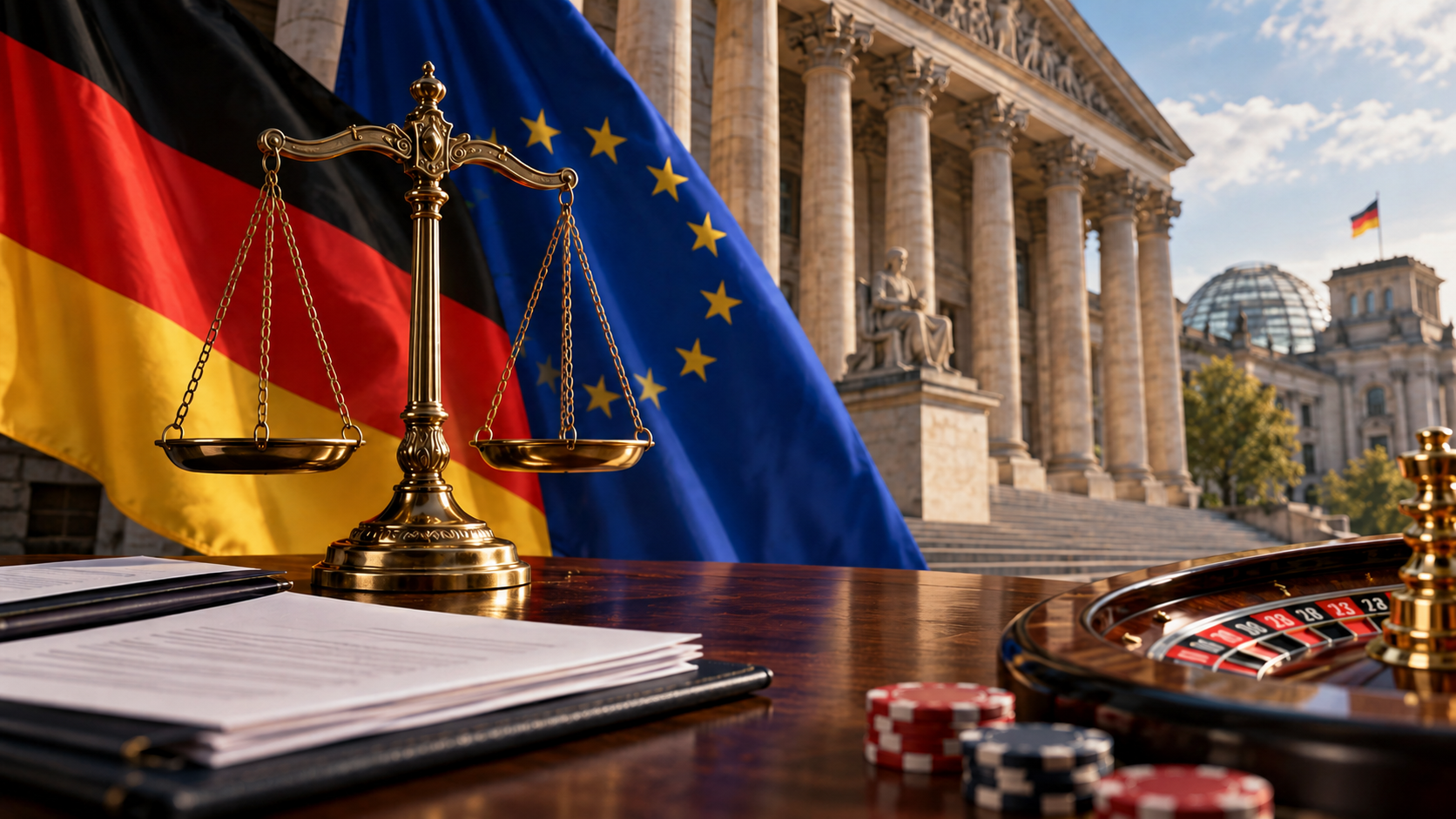
Online gambling operators could face billions of euros in compensation claims following a series of German and European court rulings that have strengthened the legal position of players seeking to recover historical gambling losses.
The developments concern gambling activity between 2008 and 2021, when much of Germany's online gambling market operated under restrictions that prohibited operators from offering certain products without appropriate domestic authorisation.
According to Deutsche Welle, thousands of players could potentially pursue claims against companies that continued serving German customers under licences issued elsewhere in the European Union, particularly Malta and Cyprus.
The legal developments have raised the prospect of coordinated compensation claims, although the outcome of individual cases remains dependent on their circumstances and further judicial decisions.
Tipico Case Strengthens Players' Legal Position
One of the central disputes involves Tipico Games, the Malta-based gambling operator facing a claim from a player in Baden-Württemberg who sought reimbursement of losses incurred between 2020 and 2022.
In September 2025, the Stuttgart Higher Regional Court ruled in favour of the claimant, finding that the operator had received payments without a sufficient legal basis during the period when the relevant gambling activity was prohibited in Germany.
Tipico subsequently appealed to Germany's Federal Court of Justice (BGH), which considered the dispute during a preliminary hearing in September 2026.
The BGH indicated support for the central argument that players may be entitled to recover losses from operators that lacked valid German authorisation. However, a final decision in the Tipico proceedings is not expected until January 2027.
The legal position has also been influenced by an April 2026 ruling from the Court of Justice of the European Union (CJEU), which affirmed the ability of individual EU member states to impose national restrictions on online gambling.
This distinction is important because an operator holding a gambling licence in Malta or another EU jurisdiction does not automatically possess the right to offer equivalent services in Germany.
Law Firms Prepare Large-Scale Compensation Claims
The court developments have encouraged legal firms to explore coordinated claims against operators that accepted German customers before the introduction of the country's revised gambling framework in July 2021.
Thomas Dünchheim, a gambling law specialist at Greenberg Traurig, said lawyers were already gathering potential claimants, with some using artificial intelligence to identify cases that could form part of larger legal proceedings.
“The pendulum is swinging more and more towards the consumer. It’s a bit like in the United States. We are seeing a mass phenomenon similar to the Dieselgate lawsuits against Volkswagen,” Dünchheim said.
He suggested that litigation funding companies could also become involved, helping law firms pursue substantial numbers of relatively small claims against gambling businesses.
Nevertheless, recovering losses will not necessarily be straightforward. German law raises questions about whether players knowingly participated in prohibited gambling activities, an argument that operators may use when defending compensation claims.
“The betting company’s defense will naturally say, ‘You also participated in an illegal game, therefore you were acting illegally.’ And this interpretative issue is not simple,” Dünchheim explained.
Gambling Harm Concerns Accompany Potential Payouts
Beyond the financial implications for operators, the prospect of substantial compensation payments has prompted discussion about the potential consequences for individuals affected by gambling addiction.
Tobias Hayer, a psychologist at the University of Bremen, highlighted the accessibility and anonymity of online gambling, alongside the frequency of games and ease of digital payments, as factors associated with gambling-related harm.
He suggested that compensation could provide financial relief to individuals who had experienced gambling problems, while also warning that receiving significant payments might create additional risks for those who had not addressed their gambling behaviour.
The potential scale of claims remains uncertain, with no definitive industry-wide compensation figure established. However, the legal developments could create considerable financial exposure for operators that served German customers without the required authorisation.
Attention will now turn to the BGH's expected January 2027 decision in the Tipico case, which could provide further clarity on the circumstances in which German gamblers can recover historical losses.