Compliance Shouldn't Slow Innovation
An Op-ed by Frazer McNaughton, Director of Compliance at Betable
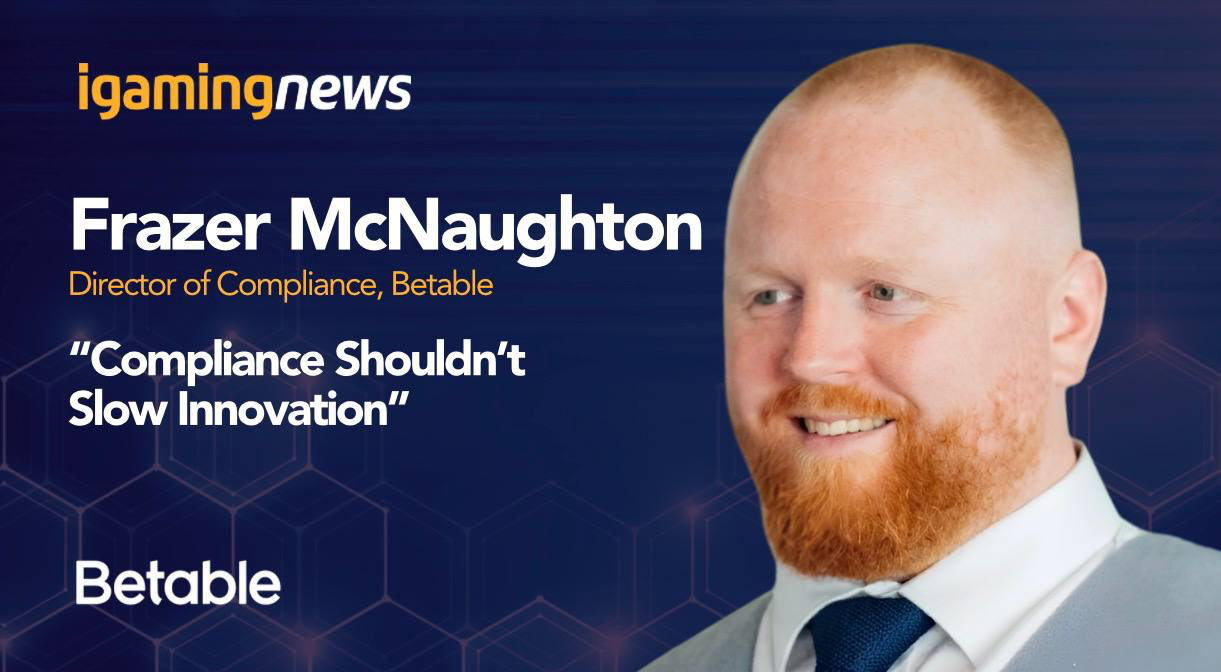
Why regulation and agility can coexist with the right platform architecture
Compliance has always been one of the defining challenges of operating in iGaming. As more markets become regulated and existing frameworks evolve, operators are facing increasing complexity with licensing, responsible gambling, KYC, reporting and player protection.
At the same time, the industry is moving faster than it ever has before.
Operators are expected to enter new markets, introduce new products, respond to changing player expectations and adopt emerging technologies, all while maintaining increasingly demanding regulatory standards.
It can sometimes feel as though compliance and innovation are working against each other. But they shouldn't be.
The real challenge isn't regulation itself. It is whether the technology supporting an operator can manage regulatory complexity without making every change slow, expensive or technically difficult.
That comes down to platform architecture.
Compliance Starts With the Platform
One of the biggest mistakes operators can make is treating compliance as something that sits alongside their technology rather than being built into it.
If KYC, responsible gambling, reporting and market-specific requirements are managed through separate systems, complexity quickly increases. Every new jurisdiction can mean additional integrations, workflows and technical requirements.
Over time, even relatively simple changes can become difficult to implement.
A modern platform needs to approach compliance differently. Regulatory requirements should be considered as part of the underlying architecture from the beginning, rather than added as another layer once the platform is already built.
This creates a more cohesive environment where compliance can operate across the business without constantly interfering with product development.
The goal isn't simply to be compliant. It is to build a platform that can remain compliant as the business changes.
Regulation Is Constantly Evolving
Compliance is also not a one-time exercise.
Regulations change. Markets introduce new requirements. Existing frameworks are updated, while regulators continue to place greater expectations on areas such as player protection and responsible gambling.
For operators working across multiple jurisdictions, this creates a significant technology challenge.
A feature that works in one market may need to be restricted or configured differently somewhere else. The same can apply to payments, promotions, player verification and responsible gambling controls.
If every regulatory change requires significant redevelopment, operators can quickly find themselves spending more time maintaining their technology than improving it.
This is where flexibility becomes important.
A platform should allow operators to manage market-specific requirements without forcing them to create entirely separate technology environments for every jurisdiction.
The underlying infrastructure remains consistent, while the operator has the flexibility to adapt the experience and controls to meet local requirements.
Flexibility Doesn't Mean Less Control
There is sometimes a perception that flexibility means sacrificing control.
In reality, the opposite can be true.
Operators increasingly want greater control over their technology stack. They want the freedom to select the payment providers, gaming content, CRM tools and specialist technologies that best fit their strategy.
An API-first architecture can support this approach by allowing different components to connect without requiring the operator to rebuild its entire platform every time a new provider or product is introduced.
This becomes particularly important from a compliance perspective.
Operators can choose the technology they need while maintaining appropriate controls across the wider platform.
The result is greater flexibility without creating a fragmented technology environment.
Speed Matters
Agility is usually discussed in terms of commercial opportunity. How quickly can an operator launch? How quickly can it enter a new market or introduce a new product?
But speed is equally important when dealing with compliance.
When regulations change, operators need to be able to respond quickly and confidently.
That doesn't mean rushing changes through without appropriate oversight. It means having technology that makes controlled changes possible without extensive redevelopment.
Automation can help with repetitive compliance processes, while unified data can give operators greater visibility across their businesses.
The objective is not to automate compliance simply because technology allows it. It is to remove unnecessary manual processes so teams can focus their time and expertise where it matters most.
Compliance Is Part of the Player Experience
Regulatory requirements also increasingly form part of the player journey.
KYC, age verification, responsible gambling tools and other controls can directly affect how players interact with an operator.
If these processes are disconnected from the wider platform, the experience can quickly become frustrating.
Players don't see the technology behind an identity check or deposit limit. They simply experience the process.
That makes integration important.
A cohesive platform can help operators apply the right controls at the right points in the player journey while reducing unnecessary repetition and friction.
Compliance should protect players without unnecessarily damaging the experience operators are trying to create.
Innovation Needs the Right Foundations
The same principle applies to emerging technologies.
AI, personalisation and new gaming products all create opportunities for operators, but innovation needs to happen within an appropriate regulatory framework.
The answer isn't to avoid new technology because regulation exists.
It is to build an environment where innovation can happen responsibly.
That requires compliance to be considered alongside product development rather than treated as a separate function that becomes involved at the end of the process.
At Betable, we believe this starts with giving operators a platform designed for change.
Whether an operator is entering a new jurisdiction, introducing a new product or responding to a regulatory development, the technology should make that process easier rather than create another barrier.
Building for What Comes Next
The regulatory environment isn't going to become simpler.
More markets will regulate, existing frameworks will continue to evolve and expectations around player protection will increase.
But that doesn't mean innovation needs to slow down.
The right platform architecture can give operators the control and flexibility they need to manage regulatory complexity while continuing to grow.
The question for operators should therefore be bigger than whether a platform is compliant today.
They should be asking:
How quickly can we adapt when regulations change?
How much control do we have across different markets?
Can we innovate without rebuilding the technology underneath our business?
Compliance and innovation shouldn't be competing priorities.
With the right architecture, regulation can provide the framework while technology gives operators the flexibility to keep moving forward.